Remember when the most complex thing about farming was deciding between corn and soybeans? Those were simpler times. Now we're yield farming digital tokens across multiple blockchains, and Uncle Sam wants his paperwork filled out correctly. Welcome to the wild intersection of FinCEN BSA requirements and DeFi yield farming – where regulatory compliance meets cutting-edge finance.
If you're earning yields on your crypto through liquidity pools, staking protocols, or automated market makers, you need to understand your reporting obligations. This guide breaks down everything you need to know about FinCEN BSA compliance for DeFi yield farming without the legal jargon that makes your eyes glaze over.
What Are FinCEN BSA Requirements?
The Financial Crimes Enforcement Network (FinCEN) enforces the Bank Secrecy Act (BSA), America's primary anti-money laundering law. Originally designed for traditional banks, these requirements now extend to cryptocurrency activities, including DeFi yield farming.
Core BSA Reporting Obligations
Currency Transaction Reports (CTRs) apply to cash transactions over $10,000. For DeFi participants, this rarely applies directly since you're dealing with digital assets, not physical currency.
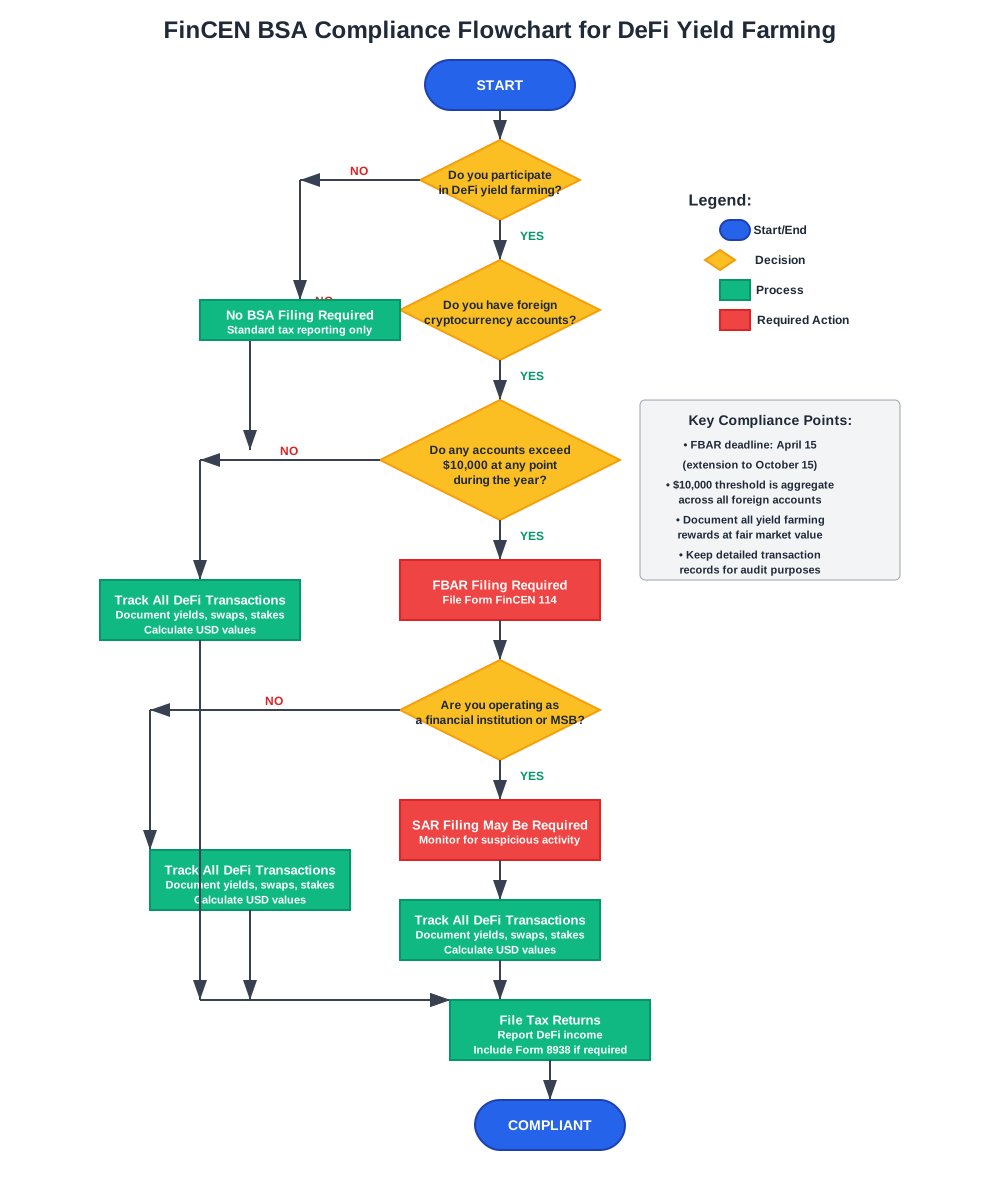
Suspicious Activity Reports (SARs) require financial institutions to report unusual transaction patterns. Most individual yield farmers won't file SARs unless they're operating as money service businesses.
Report of Foreign Bank and Financial Accounts (FBAR) becomes crucial for DeFi users. If your foreign cryptocurrency accounts exceed $10,000 at any point during the year, you must file Form FinCEN 114.
DeFi Yield Farming: Compliance Complexity Unleashed
DeFi yield farming involves providing liquidity to decentralized protocols in exchange for token rewards. Popular platforms include Uniswap, Compound, Aave, and Curve Finance. Each interaction creates potential reporting obligations.
Common Yield Farming Activities
Liquidity provision to automated market makers (AMMs) generates trading fees and governance tokens. These rewards count as income at fair market value when received.
Staking protocols like Ethereum 2.0 or Cardano provide validation rewards. Each reward payment creates a taxable event requiring documentation.
Lending protocols such as Compound or Aave generate interest payments in cryptocurrency. These payments require tracking for both income reporting and basis calculations.
Step-by-Step FinCEN BSA Compliance for DeFi
Step 1: Track All DeFi Transactions
Document every yield farming transaction with these details:
// Example transaction record structure
const yieldFarmingRecord = {
  timestamp: "2025-01-15T14:30:00Z",
  protocol: "Uniswap V3",
  action: "addLiquidity",
  tokenPair: "ETH/USDC",
  amountToken0: "2.5",
  amountToken1: "8750.00",
  txHash: "0x1234...5678",
  gasUsed: "0.0125",
  rewardTokens: ["UNI"],
  rewardAmounts: ["15.7"],
  usdValueAtTransaction: "17500.00"
}
Step 2: Determine FBAR Filing Requirements
Calculate your maximum aggregate foreign cryptocurrency account balance:
# FBAR threshold calculation
def calculate_fbar_requirement(monthly_balances_usd):
    max_balance = max(monthly_balances_usd)
    fbar_threshold = 10000

    if max_balance > fbar_threshold:
        return {
            "fbar_required": True,
            "max_balance": max_balance,
            "filing_deadline": "April 15 (with extension to October 15)"
        }
    return {"fbar_required": False}

# Example calculation
monthly_balances = [8500, 9200, 12500, 11800, 10200]
fbar_status = calculate_fbar_requirement(monthly_balances)
print(f"FBAR Required: {fbar_status['fbar_required']}")
Step 3: Classify Your DeFi Platform Relationships
Foreign cryptocurrency exchanges require FBAR reporting if they meet the $10,000 threshold. Platforms like Binance, KuCoin, or foreign DeFi protocols fall into this category.
Domestic platforms like Coinbase Pro or domestic DeFi protocols typically don't trigger FBAR requirements but still require income reporting.
Self-custody wallets holding foreign protocol tokens may require FBAR filing depending on the protocol's jurisdiction and your control level.
Step 4: Complete Required Forms
Form FinCEN 114 (FBAR) filing process:
- Access the BSA E-Filing System at
bsaefiling.fincen.treas.gov - Create your user account with two-factor authentication
- Select "Report of Foreign Bank and Financial Accounts"
- Enter account details for each qualifying DeFi platform
- Include maximum account values in USD
- Submit before the April 15 deadline
Form 8938 (FATCA) may also apply for higher-value foreign financial assets. This form attaches to your tax return and has different thresholds than FBAR.
DeFi-Specific Reporting Challenges
Smart Contract Interactions
Automated transactions through smart contracts create reporting complexity. Each yield harvest, compound event, or liquidity adjustment generates taxable events requiring documentation.
Gas fee tracking becomes crucial since transaction costs affect your basis calculations and net income from yield farming activities.
Multi-Chain Yield Farming
Cross-chain protocols operating on Ethereum, Polygon, Avalanche, or other networks may trigger FBAR requirements on multiple foreign platforms simultaneously.
Bridge transactions moving assets between chains create additional taxable events with complex basis tracking requirements.
Token Reward Valuations
Fair market value determination at the time of receipt requires accessing reliable price data for newly issued or low-liquidity governance tokens.
Impermanent loss calculations affect your net income and basis adjustments when providing liquidity to AMM protocols.
Common Compliance Mistakes to Avoid
Ignoring small-balance accounts that collectively exceed $10,000 triggers FBAR violations. Aggregate all foreign cryptocurrency balances, not individual platform balances.
Missing the FBAR deadline results in significant penalties starting at $12,921 per account for non-willful violations and up to $129,210 or 50% of the account balance for willful violations.
Treating yield farming rewards as capital gains instead of ordinary income creates tax classification errors. Most DeFi rewards count as ordinary income at fair market value when received.
Practical Documentation Tools
Transaction Tracking Software
Koinly integrates with major DeFi protocols and exchanges to automate transaction import and tax calculations.
CoinTracker provides DeFi-specific features including yield farming categorization and FBAR reporting assistance.
TaxBit offers enterprise-grade compliance tools with audit trail documentation for institutional DeFi participants.
Manual Record-Keeping Templates
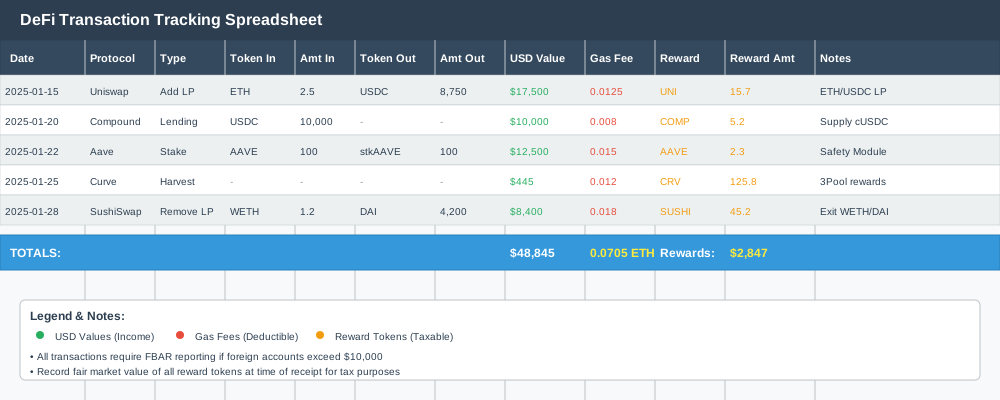
Date,Protocol,Transaction Type,Token In,Amount In,Token Out,Amount Out,USD Value,Gas Fee,Reward Tokens,Reward Amount,Notes
2025-01-15,Uniswap,Add Liquidity,ETH,2.5,USDC,8750,17500,0.0125,UNI,15.7,ETH/USDC LP Position
2025-01-20,Compound,Lending,USDC,10000,,,,0.008,COMP,5.2,Supply to cUSDC
Regulatory Guidance Updates
FinCEN's 2021 guidance clarified that cryptocurrency activities fall under BSA requirements when they involve foreign financial accounts or exceed reporting thresholds.
IRS coordination with FinCEN ensures consistent enforcement across tax and anti-money laundering regulations. Discrepancies between tax returns and BSA filings trigger audit attention.
State-level requirements may impose additional reporting obligations depending on your jurisdiction and the volume of your DeFi activities.
Professional Consultation When Needed
Complex DeFi strategies involving multiple protocols, cross-chain activities, or institutional-scale farming require professional tax and compliance advice.
Audit protection becomes valuable when dealing with novel DeFi structures that lack clear regulatory precedent.
Business classification questions arise for large-scale yield farming operations that may qualify as trading businesses with additional reporting requirements.
Conclusion
FinCEN BSA requirements for DeFi yield farming aren't going away, and the regulatory landscape continues evolving. Success requires proactive compliance planning, detailed record-keeping, and staying current with guidance updates.
The key takeaway: document everything, calculate your FBAR thresholds carefully, and don't let the complexity of DeFi protocols become an excuse for incomplete compliance. Your future self will thank you when tax season arrives, and you're not scrambling to reconstruct months of yield farming transactions.
Start implementing these DeFi compliance practices today, and transform regulatory headaches into routine administrative tasks. The decentralized future of finance demands centralized attention to regulatory details – embrace the paradox and farm those yields responsibly.