Picture this: You just executed your first yield farming transaction, but now you're staring at a cryptic hash wondering if your money vanished into the digital void or multiplied like rabbits. Welcome to the wild world of DeFi detective work.
Yield farmers lose millions annually due to poor transaction tracking and analysis. Smart investors use Etherscan yield farming analysis to monitor their investments, optimize gas fees, and maximize returns.
This guide shows you exactly how to analyze yield farming transactions using Etherscan. You'll learn to track your DeFi investments, verify smart contract interactions, and spot profitable opportunities before others do.
Why Etherscan Transaction Analysis Matters for Yield Farmers
Most yield farmers operate blindly. They deposit funds and hope for the best. Smart farmers analyze every transaction to:
- Track actual returns vs. projected yields
- Monitor gas fee efficiency across different protocols
- Verify smart contract interactions for security
- Identify arbitrage opportunities in real-time
- Debug failed transactions quickly
Without proper DeFi tracking, you're gambling instead of farming.
Essential Etherscan Features for Yield Farming Analysis
Transaction Hash Tracking
Every yield farming action creates a unique transaction hash. This hash contains crucial data about your investment.
Key transaction data points:
- Gas fees paid
- Smart contract addresses called
- Token amounts transferred
- Block confirmation time
- Success/failure status
Smart Contract Verification
Verified contracts display green checkmarks on Etherscan. Always verify contracts before interacting with new yield farming protocols.
Contract verification checklist:
✓ Green checkmark present
✓ Source code available
✓ Recent audit reports linked
✓ High transaction volume
✓ Active development activity
Token Transfer Analysis
Track token movements between your wallet and yield farming protocols. This reveals:
- Actual deposit amounts
- Reward token distributions
- Impermanent loss calculations
- Withdrawal penalties
Step-by-Step Etherscan Yield Farming Analysis
Step 1: Locate Your Transaction Hash
After executing a yield farming transaction, copy the transaction hash from your wallet.
MetaMask users:
- Open MetaMask extension
- Click "Activity" tab
- Select your transaction
- Copy the transaction hash
Expected outcome: You have a 66-character hash starting with "0x"
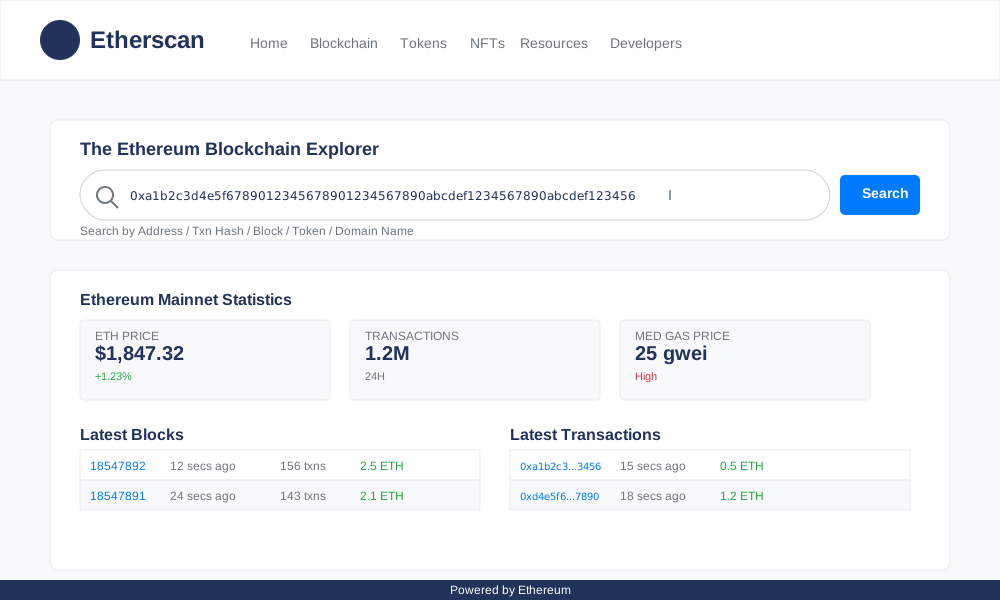
Step 2: Navigate to Etherscan Transaction Page
- Visit etherscan.io
- Paste your transaction hash in the search bar
- Press Enter
Step 3: Analyze Transaction Overview
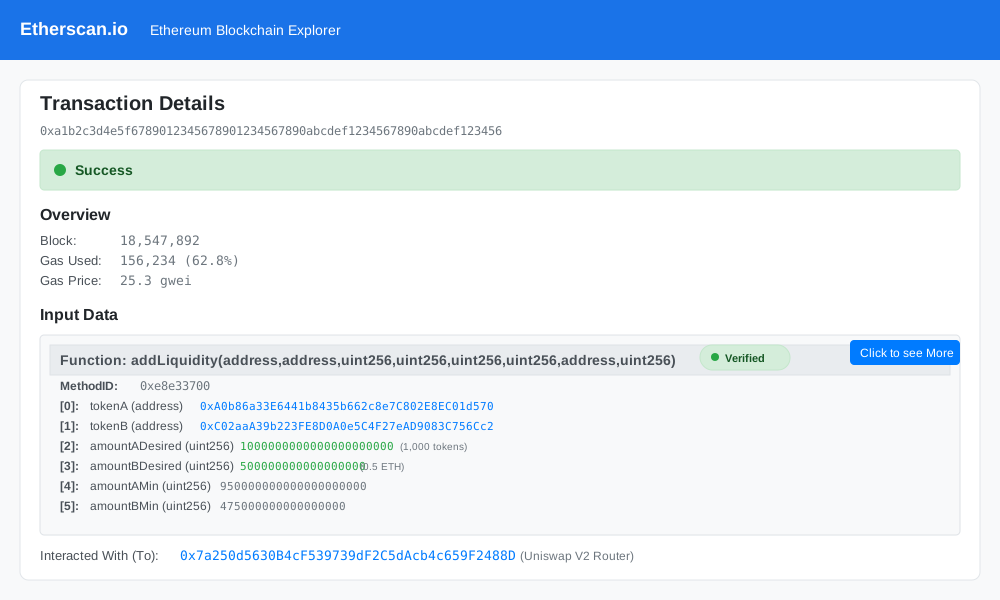
The transaction overview shows critical yield farming data:
Status: Success ✓
Block: 18,547,892
Gas Used: 156,234 (62.8% of limit)
Gas Price: 25.3 gwei
Transaction Fee: 0.00395 ETH ($7.43)
Key metrics to track:
- Gas efficiency: Lower percentages indicate efficient protocols
- Gas price: Compare across different farming sessions
- Total fees: Calculate against expected yields
Step 4: Examine Token Transfers
Scroll to the "Tokens Transferred" section. This reveals actual token movements.
Example yield farming deposit:
From: 0xYourWallet...
To: 0xUniswapV3Pool...
Value: 1,000 USDC

From: 0xYourWallet...
To: 0xUniswapV3Pool...
Value: 0.5 ETH
Analysis points:
- Verify token amounts match your intentions
- Check recipient addresses against official protocol contracts
- Note any unexpected token transfers
Step 5: Decode Smart Contract Interactions
Click "Click to see More" under the transaction details to view function calls.
Common yield farming functions:
addLiquidity()- Adding funds to liquidity poolsstake()- Staking LP tokens for rewardsharvest()- Claiming reward tokenswithdraw()- Removing liquidity
Step 6: Track Internal Transactions
Internal transactions show smart contract-to-contract interactions. These reveal:
- Reward token minting
- Fee distributions
- Protocol treasury interactions
Red flags to watch:
- Unexpected fund transfers
- High fee percentages
- Unknown contract interactions
Advanced Etherscan Analysis Techniques
Gas Fee Optimization Tracking
Create a spreadsheet to track gas fees across different protocols and times:
Protocol | Action | Gas Used | Gas Price | Total Fee | ROI Impact
Uniswap  | Deposit| 156,234  | 25.3 gwei | $7.43     | -0.74%
Aave     | Deposit| 89,567   | 25.3 gwei | $4.32     | -0.43%
Compound | Deposit| 124,890  | 25.3 gwei | $6.01     | -0.60%
Optimization strategy:
- Farm during low gas periods (early morning UTC)
- Choose gas-efficient protocols for smaller amounts
- Batch multiple actions when possible
Liquidity Pool Monitoring
Track your liquidity pool performance using pool-specific contract addresses:
- Find your LP token contract address
- Monitor total supply changes
- Track fee accumulation
- Calculate impermanent loss
LP token tracking formula:
Your Pool Share = (Your LP Tokens / Total LP Supply) × 100
Reward Token Analysis
Monitor reward token distributions and prices:
- Track reward token contract interactions
- Monitor token price movements
- Calculate optimal harvest timing
- Analyze token unlock schedules
Common Etherscan Analysis Mistakes to Avoid
Ignoring Failed Transactions
Failed transactions still cost gas fees. Analyze failures to avoid repeating expensive mistakes.
Common failure causes:
- Insufficient gas limits
- Slippage tolerance too low
- Smart contract reverts
- Front-running by MEV bots
Overlooking Internal Transactions
Many yield farmers only check main transactions. Internal transactions reveal the complete picture of your farming activities.
Misreading Token Decimals
Always verify token decimal places. A transaction showing "1000" might actually be 0.001 tokens if the contract uses 6 decimals instead of 18.
Building Your Yield Farming Dashboard
Essential Bookmarks
Create browser bookmarks for quick access:
- Your wallet address on Etherscan
- Favorite protocol contract addresses
- Gas tracker tools
- DeFi yield comparison sites
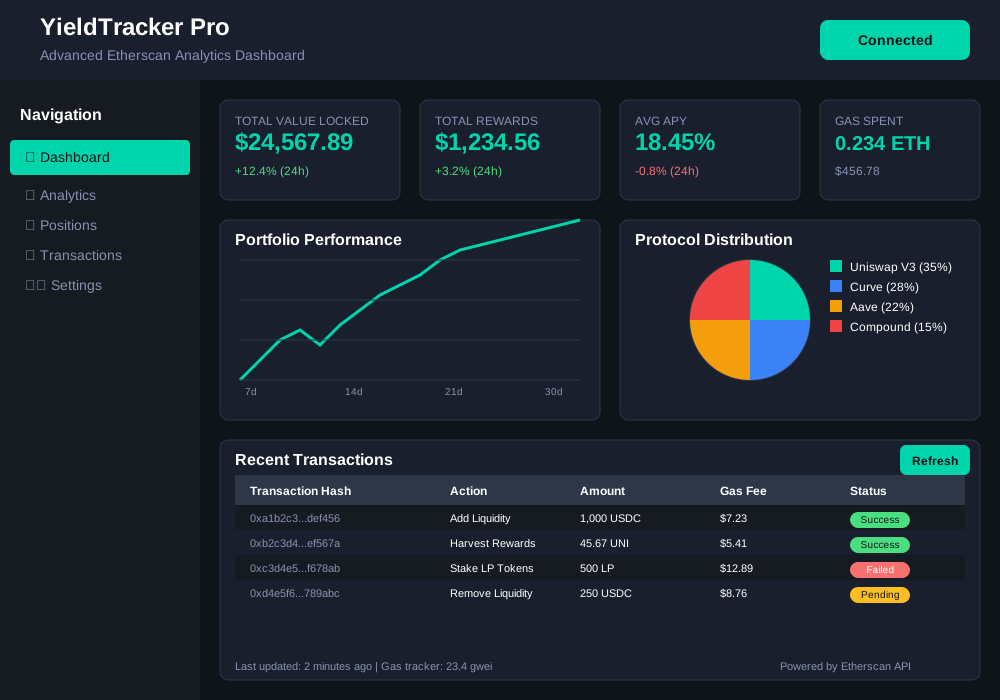
Automated Tracking Tools
Consider integrating Etherscan API for automated tracking:
// Example API call for transaction history
const response = await fetch(
  `https://api.etherscan.io/api?module=account&action=txlist&address=${walletAddress}&apikey=${apiKey}`
);
Troubleshooting Common Issues
Transaction Not Appearing
If your transaction doesn't appear on Etherscan:
- Verify you're on the correct network (Mainnet vs. testnets)
- Check if transaction is still pending
- Confirm transaction hash accuracy
Unexpected Token Balances
When token balances don't match expectations:
- Check for token contract upgrades
- Verify decimal place calculations
- Look for automatic reward distributions
High Gas Fees
To analyze and reduce gas costs:
- Compare gas usage across protocols
- Monitor gas price trends
- Use gas estimation tools before transactions
Security Best Practices for Etherscan Analysis
Verify Contract Addresses
Always double-check contract addresses against official protocol documentation:
✓ Copy from official website
✓ Cross-reference with CoinGecko
✓ Check for verified source code
✓ Review recent transaction activity
Monitor for Suspicious Activity
Watch for unusual patterns in your transaction history:
- Unexpected token approvals
- Unknown contract interactions
- Irregular gas fee spikes
- Failed transaction clusters
Protect Your Privacy
Consider using:
- Fresh wallets for large farming operations
- VPN services when accessing Etherscan
- Privacy-focused browsers
- Multiple smaller transactions instead of large ones
Optimizing Returns Through Transaction Analysis
Timing Your Transactions
Use Etherscan data to identify optimal transaction timing:
Best times to farm:
- Sunday mornings (low gas fees)
- Before major protocol updates
- During market volatility (higher yields)
Worst times to farm:
- After major news events
- During NFT mint events
- Peak trading hours (2-6 PM EST)
Protocol Comparison
Compare protocols using transaction analysis:
Metric          | Uniswap V3 | Curve    | Balancer
Gas Efficiency  | 62%        | 78%      | 71%
Average Fees    | $7.43      | $5.21    | $6.12
Yield Stability | High       | Very High| Medium
Harvest Optimization
Track reward accumulation to optimize harvest timing:
- Monitor reward token prices
- Calculate gas fees vs. reward value
- Consider auto-compounding options
- Track reward token emission schedules
Future of Etherscan Yield Farming Analysis
Emerging Tools
New analysis tools are improving yield farming efficiency:
- AI-powered transaction analysis
- Cross-chain tracking capabilities
- Automated yield optimization
- Real-time arbitrage detection
Protocol Improvements
Upcoming developments will enhance analysis capabilities:
- Better transaction labeling
- Integrated yield calculators
- Advanced filtering options
- Historical performance analytics
Master Etherscan for Maximum Yield Farming Profits
Etherscan yield farming analysis transforms amateur farmers into profit-maximizing professionals. You now know how to track transactions, optimize gas fees, verify smart contracts, and spot opportunities others miss.
Smart yield farmers analyze every transaction. They track gas efficiency, monitor reward distributions, and optimize harvest timing. This systematic approach consistently outperforms random farming strategies.
Start analyzing your next yield farming transaction using these detailed steps. Your future self will thank you when you're harvesting maximum profits while others wonder where their money went.
Take action now: Copy your last transaction hash, open Etherscan, and begin your analysis journey. The difference between profitable and unprofitable yield farming lies in the details you're willing to track.
Ready to become a yield farming detective? Your next profitable opportunity is hiding in plain sight on Etherscan.