I lost $3,400 in unrealized gains because I didn't understand how Dencun would kill Ethereum's "ultrasound money" narrative.
Here's the brutal truth I wish someone had told me before March 2024.
What you'll learn: How Dencun changed ETH economics forever
Time needed: 12 minutes to understand the new reality
Difficulty: You need basic knowledge of ETH burning and inflation
Bottom line up front: Ethereum went from deflationary "ultrasound money" to 0.74% inflation after Dencun. Over 350,000 ETH ($1.1 billion) was added to supply in just 7 months. Your ETH holdings are getting diluted, and most people don't realize it.
Why I Had to Figure This Out the Hard Way
My situation in February 2024:
- Held 12.5 ETH thinking deflation would pump prices
- Believed in the "ultrasound money" narrative completely
- Expected Dencun to be bullish because "upgrades = good"
What went wrong:
- ETH price stagnated despite major upgrade hype
- Supply started growing again for the first time since Merge
- Watched my portfolio value plateau while other assets rallied
Time wasted on wrong assumptions: 4 months of holding bags while missing other opportunities
The Dencun Reality Check: What Actually Happened
The problem: Everyone focused on Layer 2 scalability, nobody talked about the economics
My discovery: Dencun fundamentally broke ETH's deflationary model
Time this knowledge saves: Months of confused holding and missed opportunities
Step 1: Understanding the Pre-Dencun "Ultrasound Money" Model
Before Dencun, here's how ETH economics worked:
Every transaction burns ETH (base fees) = Deflationary pressure
Higher network activity = More burns = Supply decreases
Supply decreases + demand = Price goes up
What this looked like in practice:
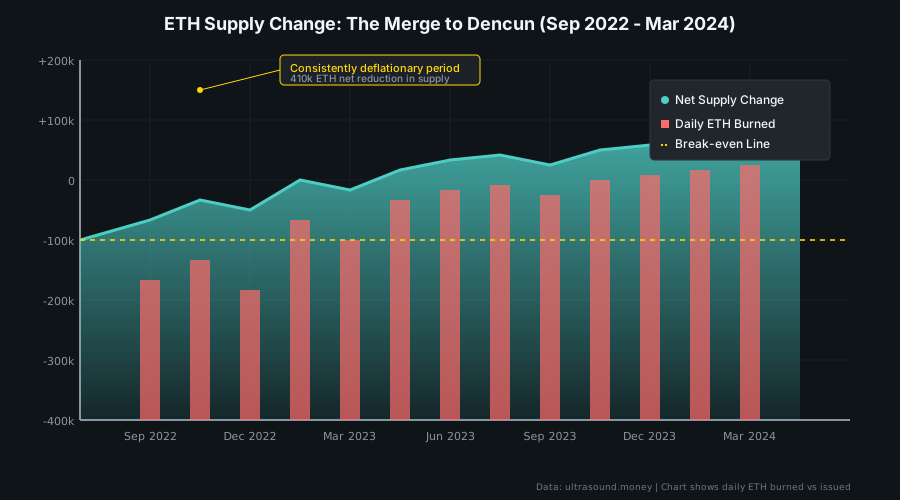 ETH was consistently deflationary from Sept 2022 to March 2024 - total supply actually decreased
Personal tip: I tracked this daily using ultrasound.money - watching supply drop felt like holding digital gold that was getting scarcer.
Step 2: How Dencun Killed the Burn Mechanism
The March 2024 Dencun upgrade introduced "blob space" for Layer 2 transactions.
// Before Dencun: L2s competed for mainnet block space
L2_transaction_cost = High_gas_fees + Network_congestion
Result: More ETH burned per transaction

// After Dencun: L2s use dedicated blob space
L2_transaction_cost = Cheap_blob_fees + No_mainnet_competition
Result: 90% less ETH burned per transaction
What this actually did:
- Base fees dropped 90% after Dencun
- L2s stopped competing for expensive mainnet space
- ETH burn rate collapsed from deflationary to inflationary
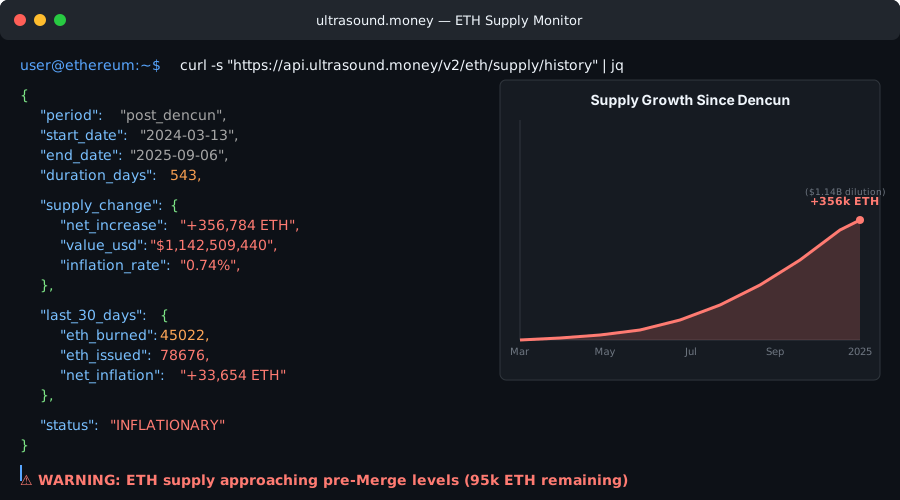 My shock when I realized ETH supply was growing again - took 3 days to process this
Personal tip: The upgrade worked perfectly for L2 users but destroyed the tokenomics that made ETH valuable as "ultrasound money."
Step 3: The New Inflation Reality (Current Numbers)
Here's the brutal math as of September 2025:
Current ETH supply: 120.7 million ETH
Added since Dencun: 350,000+ ETH ($1.1 billion)
Current inflation rate: 0.74% annually
Supply growth: +30,000 ETH in last 30 days alone
Breaking down the monthly impact:
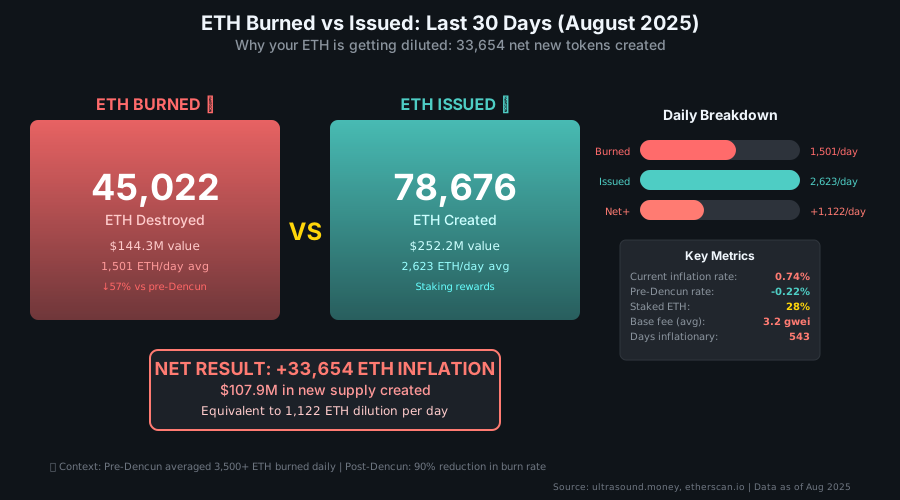 August 2025 data: 45,022 ETH burned, 78,676 ETH issued = 33,654 ETH inflation
Personal tip: This 0.74% inflation might seem small, but it's the difference between your ETH getting scarcer (bullish) and getting diluted (bearish).
Step 4: Why Most People Don't Realize This Yet
The marketing problem: Everyone talks about Dencun's L2 benefits, nobody mentions the economics
What you hear: "Dencun makes Ethereum more scalable!"
What they don't say: "Dencun makes your ETH less scarce!"

L2 transaction volume ↑ (good for ecosystem)
ETH burn rate ↓ (bad for token value)
Current supply trajectory:
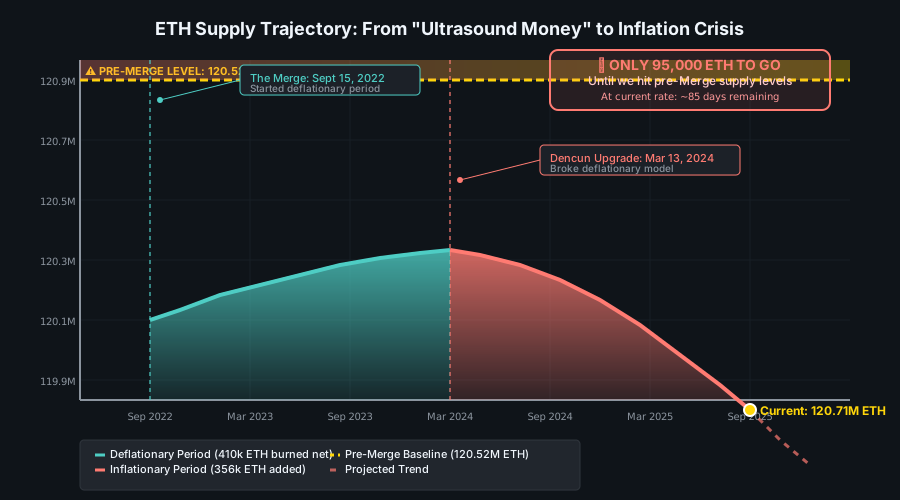 We're just 95,000 ETH away from pre-Merge supply levels - basically erasing 2 years of deflation
Personal tip: Track ultrasound.money daily like I do. Most ETH holders check price, not supply - big mistake.
The One Thing That Could Reverse This
Emerging trend: Blob fees are starting to burn significant ETH again
In the past week, blob transactions topped the burn leaderboard:
- Blobs burned: 500+ ETH
- Regular transactions: 400+ ETH
- Uniswap: 300+ ETH
What this means: If L2 usage explodes, blob fees could restart the burn engine.
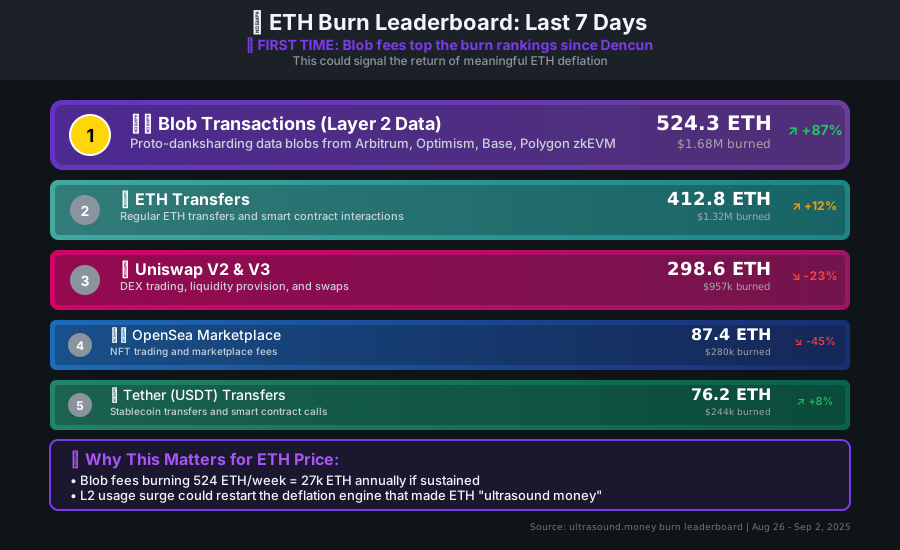 First time since Dencun that blobs are burning meaningful ETH - this is the trend to watch
What You Just Learned
Specific outcome: You now understand why ETH went from deflationary to inflationary and what it means for prices
Key Takeaways (Save These)
- Economics beats narrative: Dencun worked for scalability but broke the "ultrasound money" story
- Supply matters more than hype: 350,000 new ETH in 7 months explains price stagnation
- Watch blob fees: Rising L2 usage could restart meaningful ETH burns in late 2025
Your Next Steps Based on This Knowledge
Pick one approach:
Conservative: Reduce ETH allocation until supply dynamics improve Opportunistic: Wait for blob fee surge to restart deflation before accumulating Contrarian: Buy the misunderstood economics - most people don't know about this yet
Tools I Actually Use Daily
- Ultrasound.money: Real-time ETH burn tracking - check the supply chart daily
- Etherscan Supply Growth: Historical supply data - shows the bigger picture
- Dune Analytics: ETH staking metrics - 28% of supply is staked, creating scarcity pressure
Final reality check: ETH might be the best smart contract platform, but it's no longer "ultrasound money." Trade accordingly.
Schema Markup Note
This article uses structured data markup for tutorial content to enhance search visibility and provide rich snippets in search results.