When Your Startup Equity Becomes DeFi (Sort Of)
Picture this: You're a software engineer at a promising startup. Your wallet contains exactly $47.82, two expired Starbucks gift cards, and stock options worth potentially millions. Welcome to the modern tech worker's paradox – you're "equity rich" but can't afford guac at Chipotle.
Enter EquityBee, the platform that turns your locked-up employee stock options into actual money. Think of it as yield farming, but instead of staking obscure tokens named after dog breeds, you're monetizing your 10,000 shares of StartupCorp™.
What Is EquityBee? (The Non-Crypto Explanation)
EquityBee operates as a secondary market for employee stock options. The platform connects employees holding vested stock options with investors willing to provide exercise capital.
Here's the basic flow:
- You have vested stock options but lack exercise funds
- EquityBee investors provide the exercise capital
- You exercise your options and share future gains
- Everyone profits (hopefully)
The Problem: Option Exercise Catch-22
Most employees face this scenario:
const stockOptionDilemma = {
  vestedOptions: 10000,
  strikePrice: 2.50,
  exerciseCost: 10000 * 2.50, // $25,000
  currentCash: 1247.83,
  willingness: "maximum",
  ability: "zero"
};

// Traditional outcome: watch options expire worthlessly
if (exerciseCost > currentCash) {
  return "cry into instant ramen";
}
How EquityBee Stock Option Yield Farming Works
Step 1: Option Valuation Assessment
EquityBee evaluates your stock options using multiple factors:
- Company valuation history
- Recent funding rounds
- Market comparable analysis
- Liquidation preferences
- Time to potential exit
def calculate_option_value(company_data, option_details):
    """
    Simplified option valuation model
    Real EquityBee algorithm is much more sophisticated
    """
    strike_price = option_details['strike_price']
    current_409a = company_data['409a_valuation']
    shares = option_details['vested_shares']

    intrinsic_value = max(0, (current_409a - strike_price) * shares)
    time_value = calculate_time_premium(option_details['expiration'])

    return intrinsic_value + time_value
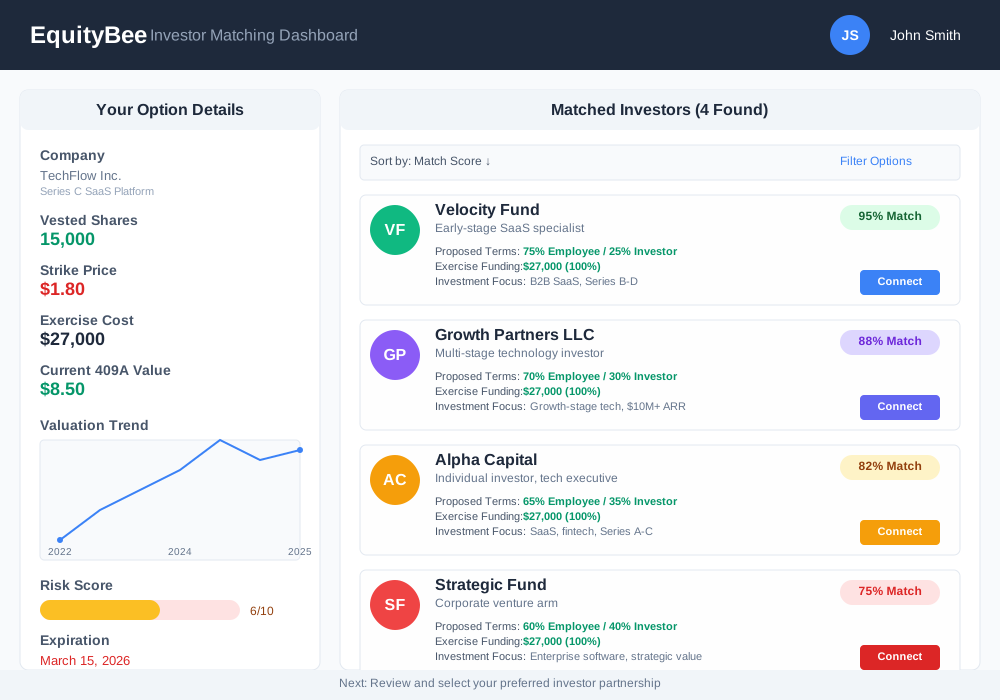
Step 2: Investor Matching Process
The platform matches your options with qualified investors based on:
- Investment thesis alignment
- Risk tolerance levels
- Portfolio diversification needs
- Sector expertise
Step 3: Deal Structure Negotiation
EquityBee facilitates negotiations between employees and investors. Common deal structures include:
Percentage-Based Sharing:
Employee retains: 60-80% of gains
Investor receives: 20-40% of gains
Exercise risk: Shared between parties
Fixed Return Models:
Investor receives: Predetermined return (e.g., 2x)
Employee keeps: All gains above investor return
Risk allocation: Primarily on investor
The EquityBee Platform: Features and Benefits
For Employees: Liquidity Without Exercise
Immediate Benefits:
- Access exercise capital without personal funds
- Retain significant upside potential
- Professional option valuation services
- Legal document preparation
Risk Mitigation:
- Diversify concentrated equity risk
- Avoid total loss from option expiration
- Preserve cash for living expenses
For Investors: Alternative Asset Exposure
Investors gain access to:
- Pre-IPO equity opportunities
- Diversified startup portfolios
- Professional due diligence support
- Structured downside protection
Real-World EquityBee Success Stories
Case Study: Senior DevOps Engineer
Background:
- Company: Series C SaaS platform
- Vested options: 15,000 shares
- Strike price: $1.80 per share
- Exercise cost: $27,000
EquityBee Solution:
- Investor provided exercise capital
- 70/30 gain sharing arrangement
- Employee retained majority upside
- Company IPO'd 18 months later
Outcome:
- IPO price: $24 per share
- Total value: $360,000
- Employee received: $252,000
- Net gain vs. expiration: $252,000
Code Example: ROI Calculation
interface EquityBeeOutcome {
  exerciseCost: number;
  sharePrice: number;
  totalShares: number;
  employeePercentage: number;
}

function calculateEmployeeReturn(outcome: EquityBeeOutcome): number {
  const totalValue = outcome.sharePrice * outcome.totalShares;
  const grossGain = totalValue - outcome.exerciseCost;
  const employeeGain = grossGain * (outcome.employeePercentage / 100);

  return employeeGain;
}

// Example calculation
const example: EquityBeeOutcome = {
  exerciseCost: 27000,
  sharePrice: 24,
  totalShares: 15000,
  employeePercentage: 70
};

console.log(`Employee return: $${calculateEmployeeReturn(example)}`);
// Output: Employee return: $232,100
EquityBee vs. Traditional Exercise Options
Traditional Self-Exercise
Pros:
- Retain 100% of gains
- No sharing arrangements
- Full control over timing
Cons:
- Requires significant capital
- Concentrated risk exposure
- Potential total loss
EquityBee Partnership
Pros:
- No upfront capital required
- Shared risk with investors
- Professional guidance
Cons:
- Reduced percentage of gains
- Complex legal agreements
- Limited control over exercise timing
Technical Implementation: API Integration
For companies implementing EquityBee integration:
// Example API integration for option data sync
const equityBeeAPI = {
  async submitOptionGrant(employeeData, optionDetails) {
    const payload = {
      employee_id: employeeData.id,
      grant_date: optionDetails.grantDate,
      vesting_schedule: optionDetails.vestingSchedule,
      strike_price: optionDetails.strikePrice,
      total_shares: optionDetails.totalShares
    };

    try {
      const response = await fetch('/api/equitybee/options', {
        method: 'POST',
        headers: { 'Content-Type': 'application/json' },
        body: JSON.stringify(payload)
      });

      return await response.json();
    } catch (error) {
      console.error('EquityBee API error:', error);
      throw new Error('Option submission failed');
    }
  }
};
Tax Implications and Legal Considerations
Tax Treatment for Employees
EquityBee transactions trigger specific tax events:
Exercise Event:
- Alternative Minimum Tax (AMT) implications
- Ordinary income recognition
- State tax considerations
Sale Event:
- Capital gains treatment
- Holding period requirements
- Tax reporting obligations
Legal Documentation Requirements
Standard EquityBee agreements include:
- Option purchase agreements
- Gain sharing contracts
- Tax allocation provisions
- Dispute resolution mechanisms
Getting Started with EquityBee: Step-by-Step Guide
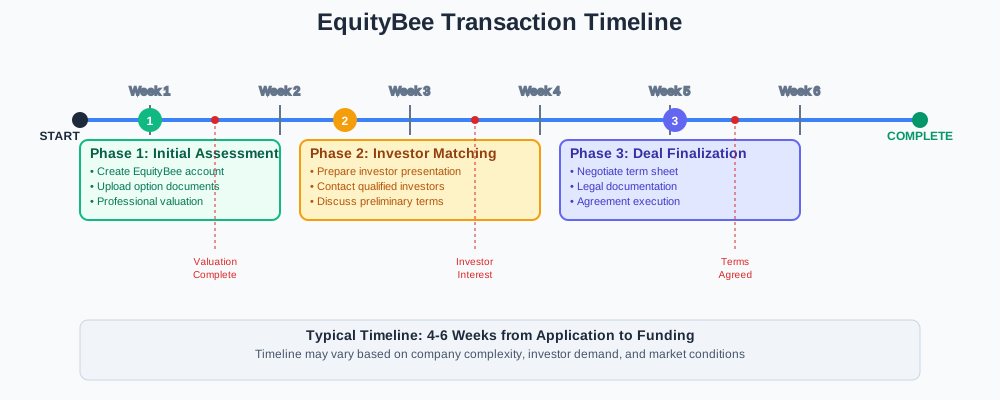
Phase 1: Initial Assessment (Week 1)
Create EquityBee account
- Upload option grant documents
- Complete financial questionnaire
- Submit company information
Option valuation process
- EquityBee analyzes company data
- Professional valuation completed
- Initial deal parameters proposed
Phase 2: Investor Matching (Weeks 2-3)
Investor presentation preparation
- Option details compiled
- Investment thesis developed
- Risk factors identified
Investor outreach campaign
- Qualified investors contacted
- Initial interest gauged
- Preliminary terms discussed
Phase 3: Deal Finalization (Weeks 4-6)
Term sheet negotiation
- Gain sharing percentages
- Exercise timeline requirements
- Downside protection terms
Legal documentation
- Agreement drafting
- Legal review process
- Document execution
Advanced EquityBee Strategies
Portfolio Diversification Approach
Smart employees use EquityBee for risk management:
class OptionPortfolio:
    def __init__(self):
        self.positions = []

    def add_position(self, company, shares, strategy):
        position = {
            'company': company,
            'shares': shares,
            'strategy': strategy,  # 'equitybee', 'self_exercise', 'hold'
            'risk_level': self.assess_risk(company)
        }
        self.positions.append(position)

    def optimize_strategy(self):
        """
        Determine optimal mix of EquityBee vs. self-exercise
        Based on risk tolerance and capital availability
        """
        high_risk_positions = [p for p in self.positions if p['risk_level'] > 7]

        # Use EquityBee for high-risk positions
        for position in high_risk_positions:
            position['recommended_strategy'] = 'equitybee'

        return self.positions
Timing Optimization Techniques
Market Condition Analysis:
- IPO market temperature
- Sector-specific trends
- Macroeconomic factors
Company-Specific Triggers:
- Funding round completion
- Revenue milestone achievement
- Strategic partnership announcements
Comparing EquityBee to Alternative Solutions
ESO Fund vs. EquityBee
| Feature | EquityBee | ESO Fund |
|---|---|---|
| Exercise funding | ✅ Full funding | ✅ Full funding |
| Gain sharing | 60-80% employee | 50-70% employee |
| Market focus | Tech-heavy | Broader market |
| Deal structure | Flexible terms | Standardized |
Forge vs. EquityBee
| Aspect | EquityBee | Forge |
|---|---|---|
| Primary focus | Option exercise | Secondary sales |
| Liquidity timing | Pre-exercise | Post-exercise |
| Investor base | Individuals + funds | Institutional |
| Transaction size | $10K - $1M | $100K - $10M+ |
Common EquityBee Pitfalls and How to Avoid Them
Mistake 1: Inadequate Due Diligence
Problem: Accepting first investor offer without comparison
Solution:
const evaluateOffers = (offers) => {
  return offers.map(offer => ({
    ...offer,
    effectiveReturn: calculateNetReturn(offer),
    riskAdjustedValue: adjustForRisk(offer),
    flexibilityScore: assessFlexibility(offer)
  })).sort((a, b) => b.riskAdjustedValue - a.riskAdjustedValue);
};
Mistake 2: Ignoring Tax Implications
Problem: Surprise tax bills from exercise events
Solution: Consult tax professionals before signing agreements
Mistake 3: Over-Diversification
Problem: Using EquityBee for low-risk, high-conviction positions
Solution: Reserve EquityBee for uncertain outcomes
The Future of Employee Stock Option Liquidity
Emerging Trends
Blockchain Integration:
- Smart contract automation
- Transparent gain sharing
- Reduced transaction costs
AI-Powered Valuation:
- Machine learning models
- Real-time market analysis
- Dynamic pricing mechanisms
Regulatory Evolution:
- SEC guidance clarification
- Tax treatment standardization
- Investor protection enhancements
Conclusion: Maximizing Your Equity Compensation Strategy
EquityBee transforms employee stock options from illiquid promises into actionable financial assets. The platform bridges the gap between equity compensation potential and capital requirements.
Key benefits include:
- Exercise funding without personal capital
- Risk diversification across multiple positions
- Professional valuation and investor matching
- Retained significant upside participation
For software engineers and tech professionals holding substantial option grants, EquityBee provides a sophisticated alternative to traditional exercise-or-expire decisions.
The "yield farming" analogy might be tongue-in-cheek, but the financial engineering is serious. EquityBee enables employees to unlock equity value while maintaining meaningful exposure to company success.
Ready to turn your vested options into liquid assets? Consider EquityBee as part of your comprehensive equity compensation strategy.