Remember when managing a crypto portfolio meant frantically switching between 47 different tabs, trying to remember which wallet held what token, and praying you didn't accidentally send ETH to a smart contract address? Those days are over. Enzyme Finance transforms chaotic DeFi portfolio management into a streamlined, professional experience.
Enzyme Finance is an open-source protocol that lets you create, manage, and invest in decentralized investment vehicles called "vaults." Think of it as building your own hedge fund on Ethereum, but without the regulatory headaches or minimum investment requirements.
This guide covers everything from setting up your first vault to implementing advanced portfolio strategies. You'll learn how to navigate the platform, understand fee structures, and optimize your DeFi investments.
What is Enzyme Finance and Why Should You Care?
Enzyme Finance solves a fundamental problem in DeFi: fragmented asset management. Instead of juggling multiple protocols, wallets, and interfaces, Enzyme provides a unified platform for managing diverse crypto portfolios.
The protocol enables two main user types:
- Asset managers who create and operate investment vaults
- Depositors who invest in these professionally managed vaults
Core Features That Set Enzyme Apart
Vault Creation and Management Create custom investment vehicles with specific strategies, risk parameters, and fee structures. Each vault operates as an independent smart contract with transparent rules.
Multi-Asset Support Manage portfolios containing hundreds of ERC-20 tokens, including major cryptocurrencies, DeFi tokens, and synthetic assets.
Integrated DeFi Protocols Access lending, borrowing, and trading directly within the platform through integrations with Aave, Compound, Uniswap, and other major protocols.
Flexible Fee Models Implement management fees, performance fees, and entrance/exit fees to align incentives between managers and depositors.
Getting Started: Platform Setup and Navigation
Connecting Your Wallet
First, navigate to the Enzyme Finance app and connect your Ethereum wallet. The platform supports MetaMask, WalletConnect, and other major wallet providers.
// Example: Checking wallet connection status
if (typeof window.ethereum !== 'undefined') {
  console.log('Wallet detected');
  // Connect wallet logic here
} else {
  console.log('Please install MetaMask');
}
Required Setup:
- Ethereum mainnet connection
- Sufficient ETH for gas fees
- Compatible wallet (MetaMask recommended)
Platform Interface Overview
The Enzyme dashboard contains four main sections:
Discovery Tab Browse existing vaults by performance, strategy type, or asset allocation. Filter by management fees, minimum investment, or specific assets.
Portfolio Tab View your investments across multiple vaults, track performance, and manage positions.
Vault Management Tab Create new vaults or manage existing ones you've created.
Analytics Tab Access detailed performance metrics, risk analytics, and comparative data.
Creating Your First Investment Vault
Step 1: Define Your Investment Strategy
Before creating a vault, clearly define your investment approach:
- Target assets: Which tokens will you focus on?
- Risk tolerance: Conservative, moderate, or aggressive?
- Time horizon: Short-term trading or long-term holding?
- Fee structure: How will you compensate yourself?
Step 2: Vault Creation Process
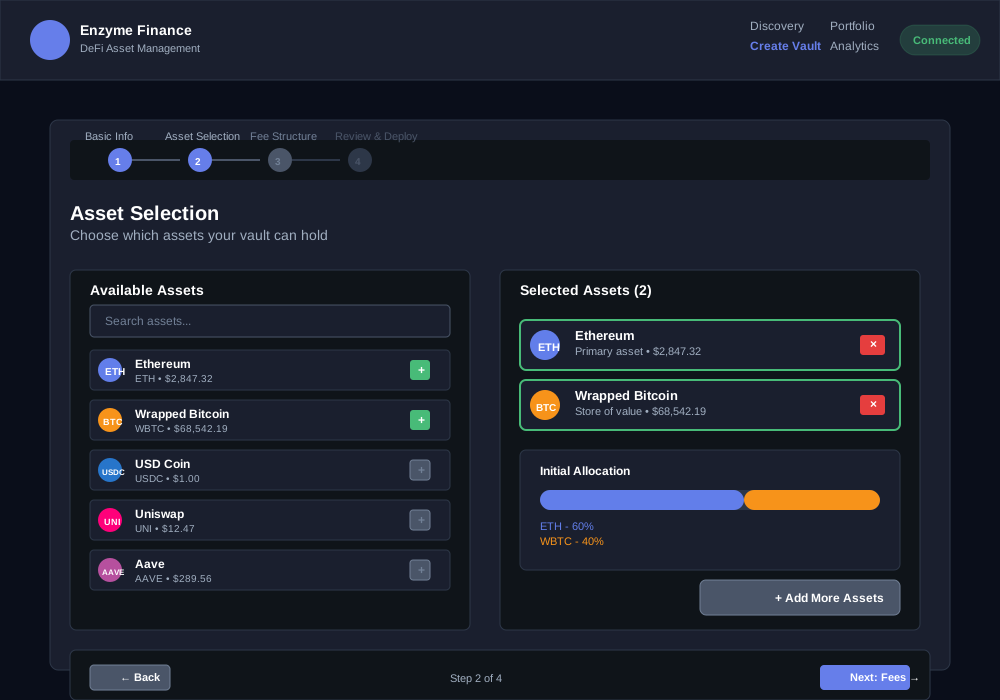
Click "Create Vault" and complete the setup wizard:
Basic Information
- Vault name and description
- Investment strategy overview
- Target audience
Asset Selection Choose which tokens your vault can hold. Start with major assets like ETH, WBTC, and stablecoins.
Fee Configuration Set management fees (typically 0.5-2% annually) and performance fees (usually 10-20% of profits).
// Example fee structure
uint256 managementFee = 200; // 2% annual
uint256 performanceFee = 2000; // 20% of profits
Step 3: Deploy Your Vault
Review all settings and deploy your vault to the Ethereum network. This process requires a gas fee and cannot be easily reversed.
Deployment Checklist:
- ✓ Correct asset list
- ✓ Appropriate fee structure
- ✓ Clear strategy description
- ✓ Adequate ETH for gas
Managing Portfolio Assets and Positions
Adding Assets to Your Vault
Once your vault is live, you can begin building your portfolio:
Direct Token Purchases Buy tokens directly through integrated DEX aggregators. Enzyme automatically finds the best prices across multiple exchanges.
DeFi Protocol Interactions Lend assets on Aave, provide liquidity on Uniswap, or stake tokens without leaving the platform.
Synthetic Asset Exposure Access commodities, forex, and other traditional assets through Synthetix integration.
Position Management Best Practices
Diversification Strategy Spread investments across different asset classes and protocols to reduce risk.
Rebalancing Schedule Set regular intervals to review and adjust portfolio allocations based on performance and market conditions.
Risk Monitoring Use built-in analytics to track portfolio volatility, correlation, and drawdown metrics.
// Example rebalancing logic
function rebalancePortfolio(targetAllocations) {
  const currentAllocations = getCurrentAllocations();
  const trades = calculateRequiredTrades(currentAllocations, targetAllocations);

  trades.forEach(trade => {
    if (trade.amount > minimumTradeSize) {
      executeTrade(trade);
    }
  });
}
Advanced Features and Strategies
Implementing Automated Trading Rules
Enzyme supports programmable trading rules through policies and extensions:
Price-Based Rules Automatically buy or sell assets when they reach specific price levels.
Time-Based Rules Execute trades on predetermined schedules, such as dollar-cost averaging.
Risk Management Rules Set stop-losses, position limits, and correlation constraints.
Leverage and Margin Trading
Access leveraged positions through integrated lending protocols:
Collateralized Borrowing Use vault assets as collateral to borrow additional tokens for larger positions.
Leveraged Yield Farming Amplify returns from liquidity mining and staking rewards.
Risk Considerations Leverage increases both potential returns and losses. Monitor liquidation ratios carefully.
Cross-Chain Asset Management
While primarily Ethereum-based, Enzyme is expanding to support multi-chain portfolios:
Polygon Integration Manage assets on Polygon for lower fees and faster transactions.
Arbitrum Support Access Layer 2 scaling benefits while maintaining Ethereum security.
Fee Structures and Economic Models
Understanding Enzyme's Fee Framework
Management Fees Annual percentage charged on total assets under management, typically 0.5-2%.
Performance Fees Percentage of profits above a high-water mark, usually 10-20%.
Protocol Fees Small fees paid to Enzyme protocol for infrastructure and development.
Fee Optimization Strategies
Competitive Positioning Research similar vaults to set competitive fee rates that attract depositors.
Performance-Based Pricing Consider lower management fees with higher performance fees to align incentives.
Fee Transparency Clearly communicate all fees to potential depositors to build trust.
Security Best Practices and Risk Management
Smart Contract Security
Audit Verification Enzyme undergoes regular security audits by leading firms. Review audit reports before deploying significant capital.
Permission Management Understand which actions require multi-signature approval and which can be executed unilaterally.
Emergency Procedures Familiarize yourself with emergency shutdown procedures and asset recovery options.
Operational Security
Wallet Security Use hardware wallets for vault management and never share private keys.
Access Control Implement multi-signature wallets for vault operations involving large amounts.
Regular Monitoring Check vault performance and security status daily during active management periods.
// Example security check
function performSecurityCheck(vault) {
  const checks = [
    verifyAssetBalances(vault),
    checkPermissions(vault),
    validatePolicies(vault),
    monitorGasUsage(vault)
  ];

  return checks.every(check => check.passed);
}
Performance Tracking and Analytics
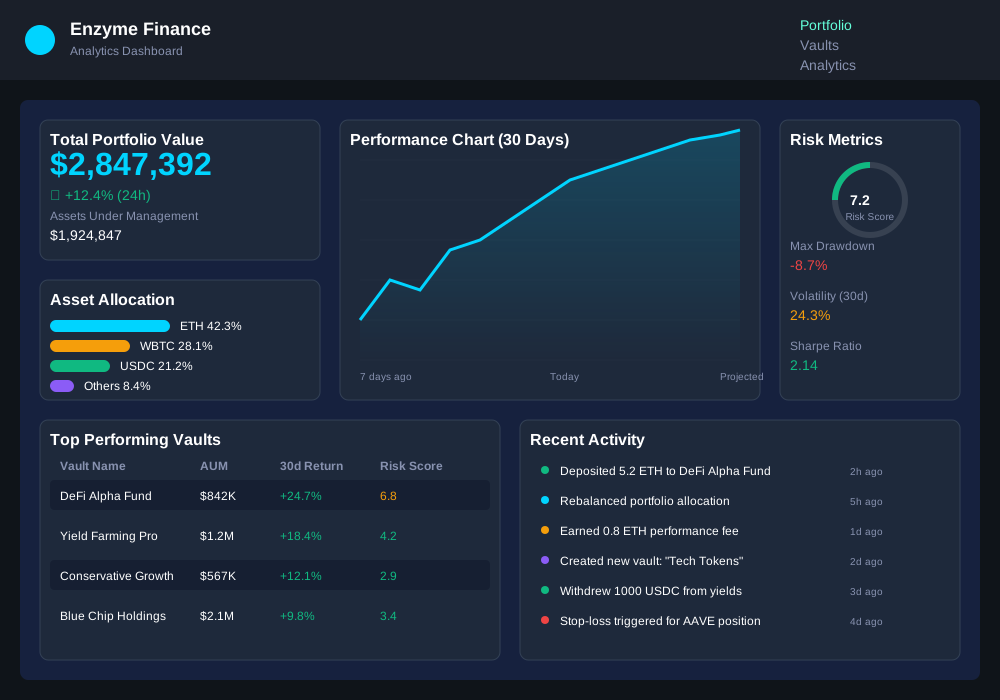
Built-in Analytics Dashboard
Enzyme provides comprehensive performance tracking:
Return Metrics Track absolute returns, benchmark-relative performance, and risk-adjusted returns.
Risk Analytics Monitor volatility, maximum drawdown, and correlation metrics.
Attribution Analysis Understand which positions contribute most to portfolio performance.
External Analytics Integration
DeFi Pulse Integration Compare vault performance against broader DeFi market indices.
Custom Reporting Export data for external analysis or reporting requirements.
Common Troubleshooting Issues
Transaction Failures
Gas Price Issues Set appropriate gas prices during network congestion. Use gas trackers to optimize timing.
Slippage Problems Increase slippage tolerance for large trades or volatile assets.
Smart Contract Errors Verify asset allowances and contract permissions before executing transactions.
Performance Discrepancies
Fee Calculation Errors Double-check fee structures and ensure proper implementation.
Asset Pricing Issues Verify oracle feeds and price sources for accurate valuation.
Rebalancing Delays Account for network congestion and transaction confirmation times.
Future Developments and Roadmap
Upcoming Features
Layer 2 Expansion Full multi-chain support across Ethereum Layer 2 solutions.
Institutional Tools Advanced reporting, compliance, and custody solutions for institutional users.
AI-Powered Analytics Machine learning integration for portfolio optimization and risk assessment.
Community Governance
Protocol Upgrades Participate in governance votes to shape platform development.
Fee Proposals Influence fee structures and revenue sharing mechanisms.
Integration Requests Propose new protocol integrations and feature additions.
Conclusion
Enzyme Finance represents a significant evolution in DeFi asset management. The platform combines institutional-grade features with decentralized accessibility, creating opportunities for both professional managers and individual investors.
Key benefits include unified portfolio management, extensive DeFi protocol integration, and flexible fee structures. The platform's transparent, auditable nature builds trust while maintaining the permissionless ethos of DeFi.
Start with a simple vault strategy focusing on major assets, then gradually expand into more complex DeFi integrations as you gain experience. The enzyme finance ecosystem continues growing, with new features and integrations regularly added.
Success in DeFi asset management requires careful planning, continuous learning, and disciplined risk management. Enzyme Finance provides the tools; your strategy and execution determine the results.
Ready to create your first vault? Connect your wallet and begin building your DeFi investment strategy today.