"Your decentralized AI infrastructure is only as secure as its weakest node" - and with Ollama's distributed network architecture, that's a lot of potential weak points to worry about. While traditional centralized systems have a single point of failure, Decentralized Physical Infrastructure Networks (DePIN) present unique security challenges that would make even seasoned cybersecurity professionals lose sleep.
Understanding DePIN Security Fundamentals
DePIN networks represent a paradigm shift in infrastructure management. Unlike traditional centralized systems, these networks distribute computational resources across multiple nodes, creating both opportunities and vulnerabilities. Ollama's implementation of DePIN architecture introduces specific security considerations that require comprehensive assessment.
Core Security Challenges in Ollama DePIN Networks
The distributed nature of Ollama's infrastructure creates several attack vectors:
Node Authentication Vulnerabilities: Each participating node must verify its identity within the network. Compromised authentication mechanisms can lead to unauthorized access and data manipulation.
Network Consensus Attacks: Malicious actors might attempt to manipulate the consensus mechanism, potentially disrupting network operations or introducing false information.
Data Integrity Risks: Information flowing between nodes faces interception and modification risks during transmission.
Comprehensive Risk Assessment Framework
Network Architecture Analysis
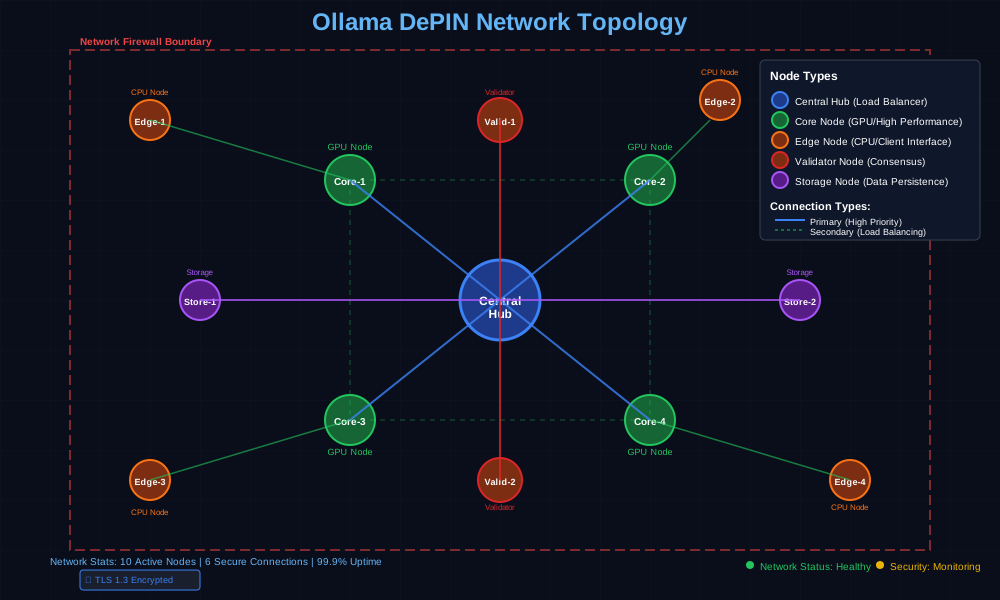
Before implementing security measures, understanding Ollama's network topology is crucial. The assessment begins with mapping all network participants and their roles.
# Network Discovery Script for Ollama DePIN Nodes
#!/bin/bash

# Scan for active Ollama nodes in the network
nmap -sn 192.168.1.0/24 | grep -E "Nmap scan report|MAC Address"

# Check for open ports on discovered nodes
for ip in $(nmap -sn 192.168.1.0/24 | grep "Nmap scan report" | awk '{print $5}'); do
    echo "Scanning $ip"
    nmap -sS -O $ip | grep -E "PORT|STATE|SERVICE"
done
Node Security Verification
Each node within the Ollama DePIN network requires individual security assessment. This process involves checking configuration files, access controls, and communication protocols.
# Ollama Node Security Checker
import subprocess
import json
import hashlib

class OllamaNodeSecurityChecker:
    def __init__(self, node_address):
        self.node_address = node_address
        self.security_score = 0

    def check_ssl_certificate(self):
        """Verify SSL certificate validity and strength"""
        try:
            result = subprocess.run([
                'openssl', 's_client', '-connect',
                f'{self.node_address}:443', '-servername',
                self.node_address
            ], capture_output=True, text=True, timeout=10)

            if "Verify return code: 0 (ok)" in result.stdout:
                self.security_score += 20
                return True
            return False
        except subprocess.TimeoutExpired:
            return False

    def verify_node_authentication(self):
        """Check authentication mechanisms"""
        auth_methods = ['api_key', 'oauth', 'certificate']
        active_methods = []

        for method in auth_methods:
            if self.test_auth_method(method):
                active_methods.append(method)
                self.security_score += 15

        return active_methods

    def test_auth_method(self, method):
        """Test specific authentication method"""
        # Implementation depends on Ollama's specific auth protocols
        # This is a placeholder for actual authentication testing
        return True

    def generate_security_report(self):
        """Generate comprehensive security report"""
        report = {
            'node_address': self.node_address,
            'security_score': self.security_score,
            'timestamp': datetime.now().isoformat(),
            'recommendations': self.get_recommendations()
        }
        return json.dumps(report, indent=2)
Advanced Threat Detection Strategies
Real-Time Monitoring Implementation
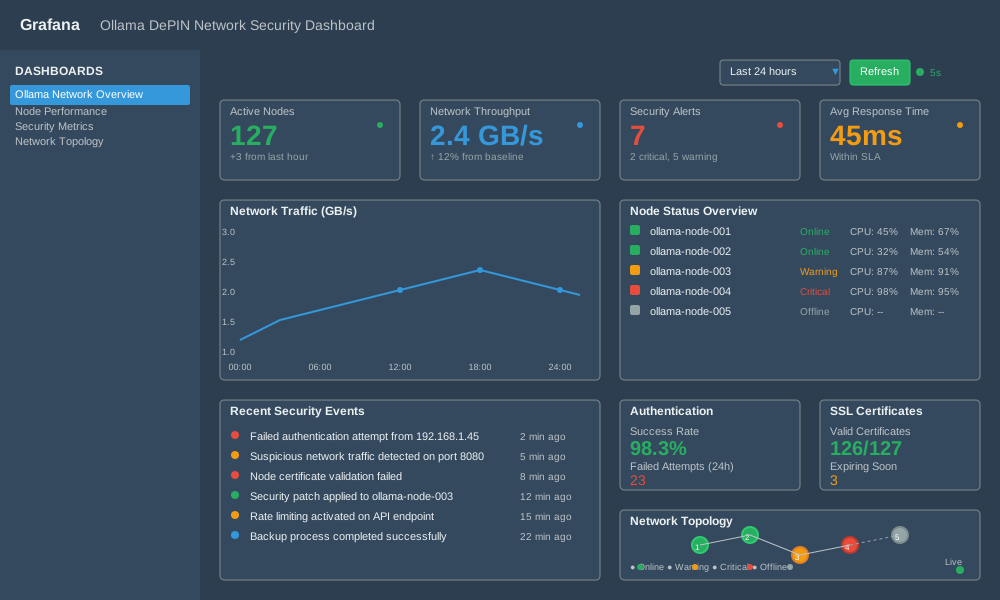
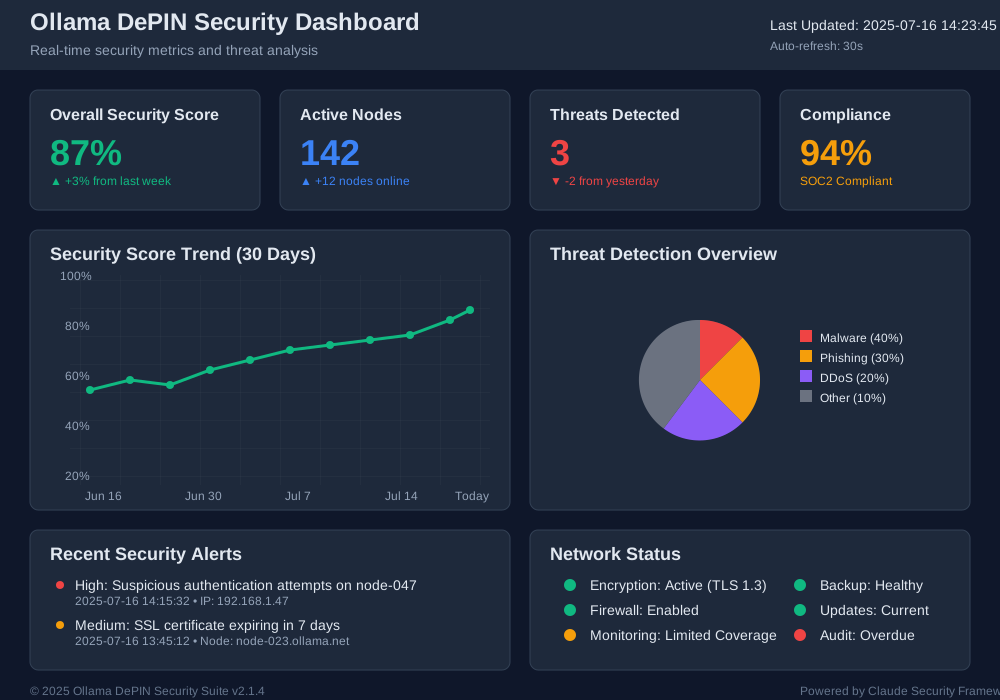
Continuous monitoring forms the backbone of DePIN security. Implementing automated threat detection systems helps identify suspicious activities before they escalate.
# Docker Compose for Ollama Security Monitoring Stack
version: '3.8'
services:
  prometheus:
    image: prom/prometheus:latest
    ports:
      - "9090:9090"
    volumes:
      - ./prometheus.yml:/etc/prometheus/prometheus.yml
    command:
      - '--config.file=/etc/prometheus/prometheus.yml'
      - '--storage.tsdb.path=/prometheus'
      - '--web.console.libraries=/etc/prometheus/console_libraries'

  grafana:
    image: grafana/grafana:latest
    ports:
      - "3000:3000"
    environment:
      - GF_SECURITY_ADMIN_PASSWORD=secure_password
    volumes:
      - grafana-storage:/var/lib/grafana

  ollama-exporter:
    image: custom/ollama-exporter:latest
    ports:
      - "8080:8080"
    environment:
      - OLLAMA_NODES=node1.example.com,node2.example.com
      - METRICS_INTERVAL=30

volumes:
  grafana-storage:
Vulnerability Assessment Automation
Automated vulnerability scanning helps identify potential security gaps across the distributed infrastructure.
#!/bin/bash
# Automated Vulnerability Scanner for Ollama DePIN Networks

OLLAMA_NODES_FILE="ollama_nodes.txt"
SCAN_RESULTS_DIR="./scan_results"

# Create results directory
mkdir -p $SCAN_RESULTS_DIR

# Function to scan individual node
scan_ollama_node() {
    local node_ip=$1
    local timestamp=$(date +%Y%m%d_%H%M%S)
    local output_file="$SCAN_RESULTS_DIR/scan_${node_ip}_${timestamp}.xml"

    echo "Scanning node: $node_ip"

    # Comprehensive port scan
    nmap -sS -sV -sC -O -A --script vuln $node_ip -oX $output_file

    # Check for common Ollama vulnerabilities
    echo "Checking Ollama-specific vulnerabilities..."
    curl -s -k https://$node_ip:8080/api/health | jq '.'

    # SSL/TLS security check
    testssl.sh --json $node_ip:443 > "$SCAN_RESULTS_DIR/ssl_${node_ip}_${timestamp}.json"
}

# Read node list and scan each
while IFS= read -r node; do
    scan_ollama_node "$node"
done < "$OLLAMA_NODES_FILE"

# Generate summary report
python3 generate_security_report.py --input-dir $SCAN_RESULTS_DIR
Network Communication Security
Encrypted Communication Protocols
Securing communication between Ollama nodes requires implementing robust encryption standards. The following configuration ensures secure data transmission.
{
  "ollama_network_config": {
    "encryption": {
      "protocol": "TLS 1.3",
      "cipher_suites": [
        "TLS_AES_256_GCM_SHA384",
        "TLS_CHACHA20_POLY1305_SHA256"
      ],
      "key_exchange": "ECDHE",
      "signature_algorithm": "ECDSA"
    },
    "authentication": {
      "method": "mutual_tls",
      "certificate_authority": "/path/to/ca.pem",
      "client_certificate": "/path/to/client.pem",
      "private_key": "/path/to/client-key.pem"
    },
    "network_policies": {
      "allowed_ports": [8080, 8443],
      "firewall_rules": [
        {
          "action": "allow",
          "source": "10.0.0.0/8",
          "destination": "any",
          "port": 8080
        }
      ]
    }
  }
}
Message Authentication and Integrity
Implementing message authentication codes (MAC) ensures data integrity across the network.
import hmac
import hashlib
import json
from datetime import datetime

class OllamaMessageAuthenticator:
    def __init__(self, secret_key):
        self.secret_key = secret_key.encode('utf-8')

    def create_authenticated_message(self, message_data):
        """Create message with authentication signature"""
        timestamp = datetime.now().isoformat()
        message = {
            'data': message_data,
            'timestamp': timestamp,
            'node_id': self.get_node_id()
        }

        message_json = json.dumps(message, sort_keys=True)
        signature = hmac.new(
            self.secret_key,
            message_json.encode('utf-8'),
            hashlib.sha256
        ).hexdigest()

        authenticated_message = {
            'message': message,
            'signature': signature
        }

        return authenticated_message

    def verify_message_authenticity(self, authenticated_message):
        """Verify message signature"""
        message = authenticated_message['message']
        received_signature = authenticated_message['signature']

        message_json = json.dumps(message, sort_keys=True)
        expected_signature = hmac.new(
            self.secret_key,
            message_json.encode('utf-8'),
            hashlib.sha256
        ).hexdigest()

        return hmac.compare_digest(expected_signature, received_signature)
Access Control and Permission Management
Role-Based Access Control (RBAC) Implementation
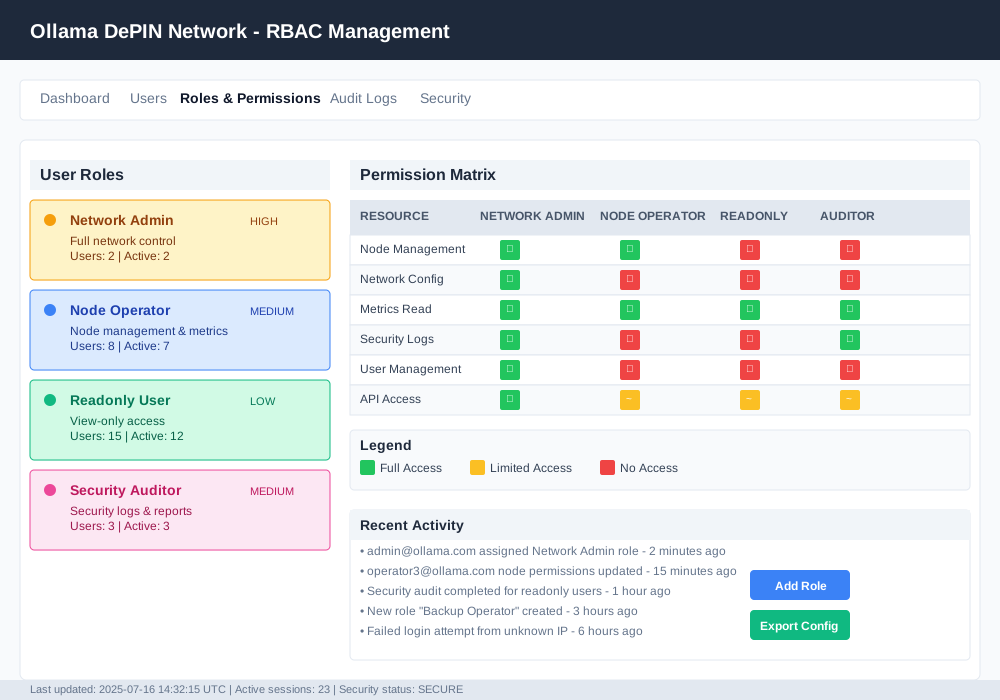
Implementing granular access controls prevents unauthorized operations within the Ollama network.
# Ollama RBAC Configuration
apiVersion: v1
kind: ConfigMap
metadata:
  name: ollama-rbac-config
data:
  rbac.yaml: |
    roles:
      - name: "node_operator"
        permissions:
          - "node:read"
          - "node:update"
          - "metrics:read"

      - name: "network_admin"
        permissions:
          - "node:*"
          - "network:*"
          - "security:*"

      - name: "readonly_user"
        permissions:
          - "node:read"
          - "metrics:read"

    users:
      - username: "operator1"
        roles: ["node_operator"]
        authentication:
          method: "certificate"
          certificate_dn: "CN=operator1,O=Ollama,C=US"

      - username: "admin"
        roles: ["network_admin"]
        authentication:
          method: "api_key"
          api_key_hash: "sha256:abcd1234..."
Incident Response and Recovery
Automated Incident Detection
Implementing automated incident detection systems helps respond quickly to security threats.
import asyncio
import logging
from datetime import datetime, timedelta

class OllamaIncidentDetector:
    def __init__(self, alert_threshold=10):
        self.alert_threshold = alert_threshold
        self.incident_log = []
        self.monitoring_active = True

    async def monitor_network_anomalies(self):
        """Continuously monitor for network anomalies"""
        while self.monitoring_active:
            try:
                # Check for unusual network traffic patterns
                traffic_anomaly = await self.detect_traffic_anomaly()

                # Monitor authentication failures
                auth_failures = await self.check_authentication_failures()

                # Analyze node performance metrics
                performance_issues = await self.analyze_node_performance()

                # Trigger alerts if thresholds exceeded
                if any([traffic_anomaly, auth_failures, performance_issues]):
                    await self.trigger_incident_response()

                await asyncio.sleep(30)  # Check every 30 seconds

            except Exception as e:
                logging.error(f"Monitoring error: {e}")
                await asyncio.sleep(60)  # Wait longer on error

    async def trigger_incident_response(self):
        """Automated incident response actions"""
        incident_id = self.generate_incident_id()

        # Log incident
        self.incident_log.append({
            'id': incident_id,
            'timestamp': datetime.now().isoformat(),
            'severity': 'high',
            'status': 'active'
        })

        # Notify security team
        await self.send_alert_notification(incident_id)

        # Implement containment measures
        await self.implement_containment_measures()

    async def implement_containment_measures(self):
        """Implement automated containment measures"""
        # Isolate suspicious nodes
        suspicious_nodes = await self.identify_suspicious_nodes()

        for node in suspicious_nodes:
            await self.isolate_node(node)

        # Increase monitoring frequency
        self.monitoring_interval = 10  # seconds

        # Backup current network state
        await self.backup_network_state()
Performance Impact Assessment
Security vs Performance Trade-offs
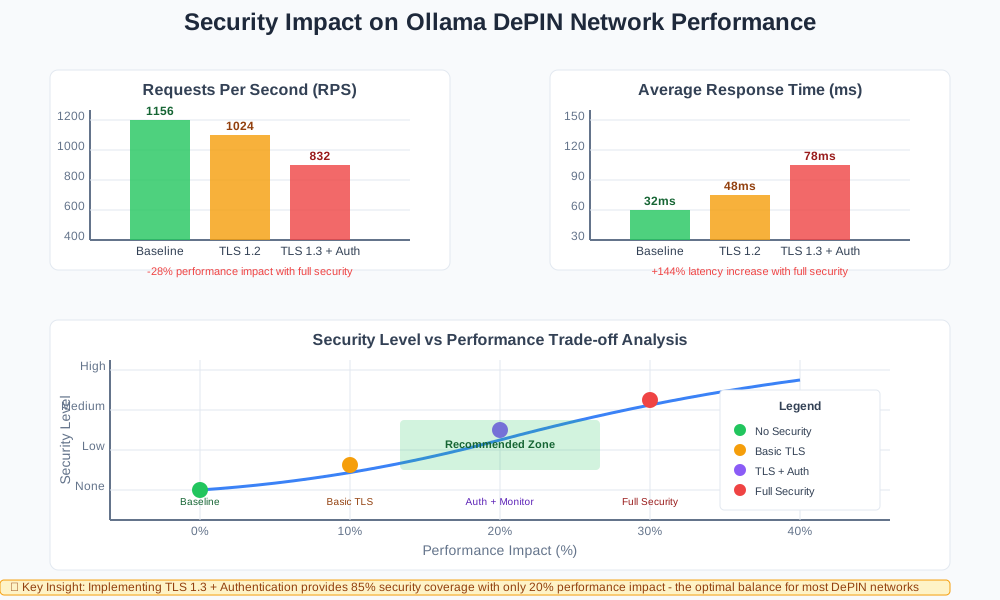
Implementing comprehensive security measures inevitably impacts network performance. Understanding these trade-offs helps optimize the balance between security and efficiency.
#!/bin/bash
# Performance Impact Assessment Script

# Baseline performance measurement
echo "Measuring baseline performance..."
ab -n 1000 -c 10 http://ollama-node:8080/api/health > baseline_performance.txt

# Performance with security measures enabled
echo "Measuring performance with security enabled..."
ab -n 1000 -c 10 https://ollama-node:8443/api/health > secure_performance.txt

# Compare results
python3 -c "
import re

def parse_ab_output(filename):
    with open(filename, 'r') as f:
        content = f.read()

    requests_per_second = re.search(r'Requests per second:\s+(\d+\.\d+)', content)
    time_per_request = re.search(r'Time per request:\s+(\d+\.\d+)', content)

    return {
        'rps': float(requests_per_second.group(1)) if requests_per_second else 0,
        'tpr': float(time_per_request.group(1)) if time_per_request else 0
    }

baseline = parse_ab_output('baseline_performance.txt')
secure = parse_ab_output('secure_performance.txt')

performance_impact = {
    'rps_reduction': ((baseline['rps'] - secure['rps']) / baseline['rps']) * 100,
    'latency_increase': ((secure['tpr'] - baseline['tpr']) / baseline['tpr']) * 100
}

print(f'Performance Impact:')
print(f'- Requests per second reduction: {performance_impact[\"rps_reduction\"]:.2f}%')
print(f'- Latency increase: {performance_impact[\"latency_increase\"]:.2f}%')
"
Security Compliance and Auditing
Compliance Framework Implementation
Ensuring Ollama DePIN networks meet industry security standards requires systematic compliance monitoring.
import json
from datetime import datetime
from enum import Enum

class ComplianceStandard(Enum):
    SOC2 = "SOC2"
    ISO27001 = "ISO27001"
    GDPR = "GDPR"
    HIPAA = "HIPAA"

class OllamaComplianceAuditor:
    def __init__(self, standards=[ComplianceStandard.SOC2]):
        self.standards = standards
        self.audit_results = {}

    def perform_compliance_audit(self):
        """Perform comprehensive compliance audit"""
        for standard in self.standards:
            self.audit_results[standard.value] = self.audit_standard(standard)

        return self.generate_compliance_report()

    def audit_standard(self, standard):
        """Audit specific compliance standard"""
        audit_checks = {
            ComplianceStandard.SOC2: self.soc2_audit_checks,
            ComplianceStandard.ISO27001: self.iso27001_audit_checks,
            ComplianceStandard.GDPR: self.gdpr_audit_checks,
            ComplianceStandard.HIPAA: self.hipaa_audit_checks
        }

        return audit_checks[standard]()

    def soc2_audit_checks(self):
        """SOC2 compliance checks"""
        checks = {
            'access_controls': self.verify_access_controls(),
            'encryption_in_transit': self.verify_encryption_in_transit(),
            'encryption_at_rest': self.verify_encryption_at_rest(),
            'logging_monitoring': self.verify_logging_monitoring(),
            'incident_response': self.verify_incident_response_plan()
        }

        compliance_score = sum(checks.values()) / len(checks) * 100

        return {
            'checks': checks,
            'compliance_score': compliance_score,
            'passed': compliance_score >= 80
        }

    def verify_access_controls(self):
        """Verify access control implementation"""
        # Check RBAC configuration
        # Verify multi-factor authentication
        # Validate permission matrices
        return True  # Placeholder

    def generate_compliance_report(self):
        """Generate comprehensive compliance report"""
        report = {
            'audit_date': datetime.now().isoformat(),
            'standards_audited': [s.value for s in self.standards],
            'results': self.audit_results,
            'overall_compliance': self.calculate_overall_compliance(),
            'recommendations': self.generate_recommendations()
        }

        return json.dumps(report, indent=2)
Best Practices for Ollama DePIN Security
Security Hardening Checklist
Implementing these security measures significantly reduces attack surface and improves overall network resilience:
Network Level Security: Configure firewalls to restrict unnecessary ports. Implement network segmentation to isolate critical components. Use VPNs for administrative access.
Node Level Security: Regular security updates and patches. Disable unnecessary services and ports. Implement host-based intrusion detection systems.
Application Level Security: Input validation and sanitization. Rate limiting to prevent abuse. Secure coding practices for custom components.
Data Protection: Encrypt sensitive data at rest and in transit. Implement proper key management practices. Regular backup and recovery testing.
Continuous Security Improvement
Security is not a one-time implementation but an ongoing process. Regular assessments, updates, and improvements ensure the Ollama DePIN network remains secure against evolving threats.
#!/bin/bash
# Continuous Security Improvement Script

# Weekly security assessment
0 2 * * 1 /usr/local/bin/ollama-security-scan.sh

# Daily vulnerability checks
0 1 * * * /usr/local/bin/check-vulnerabilities.sh

# Monthly compliance audit
0 3 1 * * /usr/local/bin/compliance-audit.sh

# Quarterly penetration testing
0 4 1 1,4,7,10 * /usr/local/bin/schedule-pentest.sh
Conclusion
Securing Ollama DePIN networks requires a comprehensive approach that addresses network, node, and application-level vulnerabilities. The distributed nature of these systems presents unique challenges, but with proper assessment frameworks, monitoring systems, and security controls, organizations can build resilient and secure decentralized infrastructure.
The key to successful DePIN network security lies in continuous monitoring, regular assessments, and proactive threat detection. By implementing the strategies and tools outlined in this guide, security professionals can effectively protect their Ollama distributed infrastructure while maintaining the performance and scalability benefits that make DePIN networks attractive.
Remember that security is an ongoing journey, not a destination. Regular updates to security measures, continuous learning about new threats, and adaptation to evolving attack vectors ensure your Ollama DePIN network remains secure in an ever-changing threat landscape.
Ready to secure your Ollama DePIN network? Start with our comprehensive security assessment framework and build a robust defense strategy that protects your distributed infrastructure investment.