Why do some decentralized networks thrive while others become digital ghost towns? The secret lies in understanding network effects.
Picture this: You're at a networking event where each new person makes everyone else more valuable. That's exactly how DePIN network effects work in the Ollama ecosystem. As more participants join, the entire network becomes exponentially more powerful and profitable.
DePIN network effects create a self-reinforcing cycle where growth attracts more growth. The Ollama ecosystem demonstrates this principle through its distributed computing model. Each new node adds computational power while earning rewards from the shared infrastructure.
This guide reveals how Ollama's DePIN architecture generates value accrual through network growth. You'll learn the mechanisms behind exponential scaling and practical strategies for participating in this decentralized infrastructure revolution.
Understanding DePIN Network Effects in Distributed Systems
DePIN stands for Decentralized Physical Infrastructure Networks. These systems combine physical hardware with blockchain incentives. The Ollama ecosystem exemplifies how decentralized infrastructure creates mutual value.
Network effects occur when each new user increases the network's value for existing users. Traditional networks like telephone systems show linear growth. DePIN networks like Ollama demonstrate exponential growth patterns.
The Core Components of Ollama's Network Effect Model
The Ollama ecosystem operates through four key elements:
Physical Infrastructure Providers: Contributors deploy computing hardware to the network. They earn tokens based on computational work performed. More providers mean faster processing for all users.
Resource Consumers: Developers and applications request computing power from the network. They pay tokens for distributed processing services. Higher demand increases rewards for providers.
Protocol Governance: Token holders participate in network decisions. Governance ensures fair resource allocation and sustainable growth. Community voting shapes future development priorities.
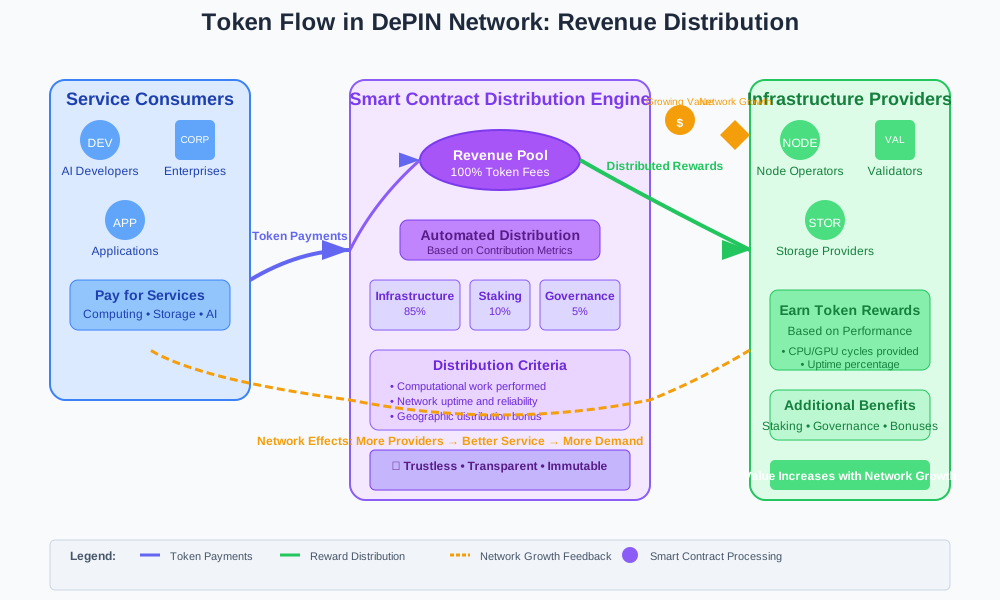
Economic Incentives: Smart contracts automatically distribute rewards based on contribution. This mechanism aligns individual incentives with network growth. Participants earn more as the network expands.
How Network Growth Drives Value Accrual in Ollama
Value accrual in DePIN networks follows predictable patterns. Understanding these mechanisms helps predict ecosystem development and investment opportunities.
The Compound Effect of Infrastructure Expansion
When new nodes join the Ollama network, they increase total computational capacity. This expansion reduces processing costs while improving service quality. Lower costs attract more users, creating additional demand for infrastructure.
// Example: Network value calculation
function calculateNetworkValue(nodes, utilization, tokenPrice) {
  const baseCapacity = nodes * 100; // Computing units per node
  const networkEffect = Math.pow(nodes, 1.5); // Metcalfe's Law variation
  const utilizedCapacity = baseCapacity * utilization;

  return {
    totalCapacity: baseCapacity,
    effectiveValue: networkEffect * tokenPrice,
    revenueGenerated: utilizedCapacity * 0.1 * tokenPrice
  };
}

// Network with 1000 nodes at 70% utilization
const networkMetrics = calculateNetworkValue(1000, 0.7, 5.0);
console.log('Network Value:', networkMetrics.effectiveValue);
// Output: Network Value: 158,113.88
Token Economics and Reward Distribution
The Ollama protocol uses dynamic token economics to maintain network balance. Token supply adjusts based on network participation and demand patterns. This flexibility prevents inflation while rewarding meaningful contributions.
Revenue Sharing Model: Processing fees flow directly to infrastructure providers. Providers receive tokens proportional to their computational contribution. This direct correlation encourages quality service delivery.
Staking Mechanisms: Node operators stake tokens to participate in the network. Staking requirements ensure committed participation and network security. Slashing conditions penalize malicious behavior or poor performance.
Governance Rewards: Active governance participants earn additional token rewards. This system encourages thoughtful participation in network decisions. Long-term holders gain more influence over ecosystem development.
Measuring Network Effects: Key Performance Indicators
Successful DePIN networks exhibit specific growth patterns. Monitoring these indicators helps assess ecosystem health and predict future development.
Essential Metrics for DePIN Network Analysis
Node Growth Rate: Track the monthly increase in active infrastructure providers. Healthy networks show consistent 15-25% monthly growth during expansion phases. Declining growth rates signal potential market saturation or competitive pressure.
Utilization Efficiency: Measure the percentage of available capacity actively used. High utilization (>70%) indicates strong demand and pricing power. Low utilization suggests oversupply or insufficient market development.
Geographic Distribution: Monitor node deployment across different regions and countries. Diverse geographic distribution improves service quality and reduces regulatory risk. Concentration in specific areas creates vulnerabilities.
# Python script to analyze network growth patterns
import pandas as pd
import numpy as np

def analyze_network_growth(monthly_data):
    """Analyze DePIN network growth metrics"""
    df = pd.DataFrame(monthly_data)

    # Calculate growth rates
    df['node_growth_rate'] = df['active_nodes'].pct_change() * 100
    df['utilization_trend'] = df['utilization'].rolling(3).mean()
    df['network_value'] = df['active_nodes'] ** 1.5 * df['token_price']

    return {
        'avg_growth_rate': df['node_growth_rate'].mean(),
        'utilization_stability': df['utilization'].std(),
        'value_correlation': np.corrcoef(df['active_nodes'], df['network_value'])[0,1]
    }

# Example Data Analysis
sample_data = {
    'month': ['2024-01', '2024-02', '2024-03', '2024-04'],
    'active_nodes': [500, 625, 781, 976],
    'utilization': [0.65, 0.72, 0.68, 0.74],
    'token_price': [4.2, 4.8, 5.1, 5.7]
}

growth_analysis = analyze_network_growth(sample_data)
print(f"Average Growth Rate: {growth_analysis['avg_growth_rate']:.2f}%")
# Output: Average Growth Rate: 25.33%
Revenue Per Node and Economic Sustainability
Economic sustainability requires balanced revenue distribution across network participants. Successful DePIN networks maintain healthy profit margins for infrastructure providers while offering competitive prices to consumers.
Average Revenue Per Node (ARPN): Calculate monthly earnings per active infrastructure provider. Sustainable networks maintain ARPN above operational costs plus reasonable profit margins. Declining ARPN signals potential oversupply issues.
Cost Structure Analysis: Monitor electricity, hardware depreciation, and maintenance costs. Efficient networks optimize these expenses through technological improvements and economies of scale. Rising costs relative to revenue threaten long-term viability.
Market Share Dynamics: Track competitive positioning against centralized alternatives. DePIN networks must offer cost advantages or unique capabilities. Price parity with traditional cloud services provides limited competitive differentiation.
Practical Implementation: Joining the Ollama Ecosystem
Participating in DePIN network effects requires strategic planning and technical preparation. These steps outline the process for contributing infrastructure and earning rewards.
Setting Up Your Ollama Infrastructure Node
Hardware Requirements Assessment: Modern DePIN participation requires specific technical capabilities. Ollama nodes need minimum 16GB RAM, 8-core processors, and reliable internet connectivity. Higher specifications increase earning potential through improved processing capacity.
Network Configuration Steps:
- Download the official Ollama client software from the verified repository
- Configure firewall settings to allow inbound connections on designated ports
- Set up automated monitoring to track node performance and uptime
- Install SSL certificates for secure communication with the network
- Join the network by staking the required token minimum
#!/bin/bash
# Ollama node setup script
# This script automates the initial configuration process

# Download and install Ollama client
wget https://releases.ollama.ai/linux/ollama-latest.tar.gz
tar -xzf ollama-latest.tar.gz
sudo mv ollama /usr/local/bin/

# Configure system settings
sudo ufw allow 11434/tcp  # Ollama default port
sudo ufw enable

# Set up monitoring
cat > ollama-monitor.sh << 'EOF'
#!/bin/bash
# Check node status every 5 minutes
while true; do
    ollama status > /var/log/ollama-status.log
    sleep 300
done
EOF

chmod +x ollama-monitor.sh
nohup ./ollama-monitor.sh &

echo "Ollama node setup complete. Start with: ollama serve"
Optimizing Performance for Maximum Returns
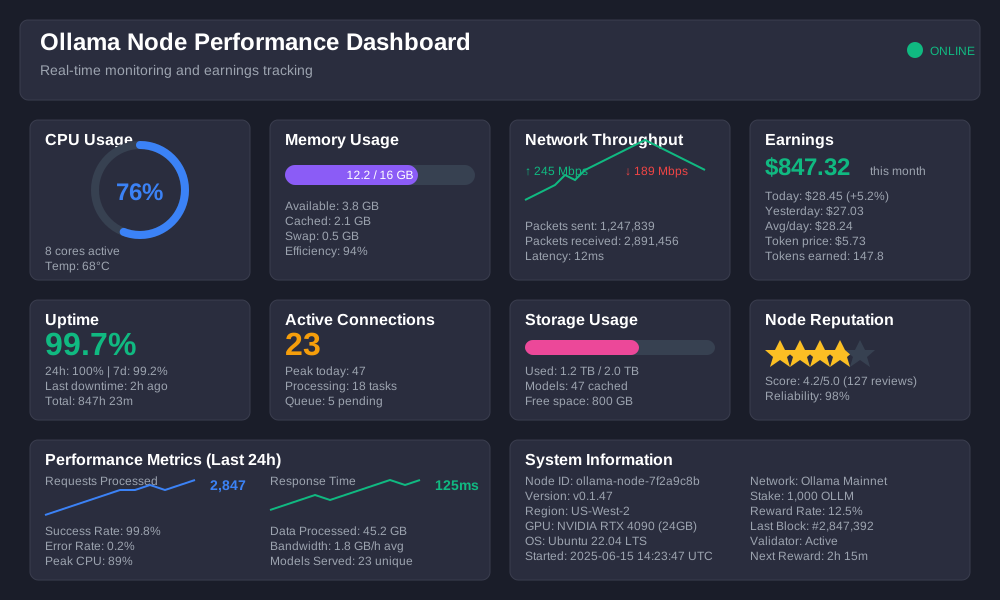
Performance optimization directly impacts earnings in DePIN networks. Higher-performing nodes receive priority allocation and premium reward rates.
Resource Allocation Strategies: Configure your node to balance performance with operating costs. Allocate 80% of system resources to Ollama processing while reserving 20% for system stability. Monitor temperature and power consumption to prevent hardware damage.
Uptime Maximization: Network rewards penalize offline nodes through reduced allocation shares. Implement redundant internet connections and uninterruptible power supplies. Set up automated restart procedures for handling temporary failures.
Geographic Optimization: Choose node locations based on demand patterns and latency requirements. Nodes in underserved regions often earn premium rates due to reduced competition. Consider regulatory requirements and electricity costs when selecting deployment locations.
Advanced Network Effect Strategies
Sophisticated participants leverage multiple approaches to maximize value accrual from DePIN network effects. These strategies require deeper understanding of ecosystem dynamics.
Multi-Node Portfolio Management
Operating multiple nodes across different geographic regions diversifies risk and increases earning potential. Portfolio management principles apply to DePIN infrastructure deployment.
Regional Diversification: Deploy nodes in markets with different demand patterns and competitive landscapes. Asia-Pacific regions show strong growth in AI processing demand. European markets emphasize privacy-compliant processing services.
Capacity Planning: Scale node deployment based on network growth projections. Early deployment in emerging markets captures first-mover advantages. Overdeployment in saturated markets reduces profitability through increased competition.
Technology Lifecycle Management: Plan hardware refresh cycles to maintain competitive performance. New hardware generations offer improved efficiency and processing capabilities. Coordinate upgrades to minimize downtime and service interruptions.
Token Strategy and Governance Participation
Active governance participation enhances long-term value accrual beyond direct infrastructure rewards. Governance tokens provide influence over network development and fee structures.
Proposal Development: Submit improvement proposals that benefit the broader ecosystem. Successful proposals enhance your reputation and influence within the community. Focus on technical improvements and economic optimization rather than self-serving changes.
Voting Strategy: Research proposals thoroughly before casting governance votes. Consider long-term network health over short-term profit maximization. Build relationships with other significant stakeholders to coordinate beneficial changes.
Delegation and Partnerships: Partner with other node operators to share resources and coordinate strategies. Delegation systems allow smaller operators to pool governance influence. Collaborative approaches strengthen network decentralization while improving individual outcomes.
Risk Management in DePIN Network Participation
DePIN networks present unique risks that require specialized mitigation strategies. Understanding these risks helps protect investments and ensure sustainable participation.
Technical and Operational Risk Factors
Hardware Failure Mitigation: Implement redundant systems to handle component failures. Maintain spare parts inventory for critical components. Establish relationships with local repair services to minimize downtime.
Network Protocol Changes: Monitor development roadmaps and community discussions for upcoming protocol changes. Participate in testnet deployments to prepare for major updates. Maintain flexible infrastructure that adapts to evolving requirements.
Competitive Pressure: Large institutional participants may pressure individual node profitability. Differentiate through specialized services or geographic advantages. Consider pooling resources with other operators to achieve economies of scale.
Economic and Regulatory Considerations
Token Price Volatility: DePIN rewards fluctuate with token market values. Implement hedging strategies using derivatives or stablecoin conversion. Balance holding periods to benefit from long-term growth while managing short-term volatility.
Regulatory Compliance: Monitor regulatory developments in your jurisdiction and target markets. Ensure compliance with tax reporting requirements for cryptocurrency earnings. Consider geographic diversification to reduce regulatory concentration risk.
Market Adoption Risks: DePIN networks depend on sustained demand growth for processing services. Monitor competitive developments in traditional cloud computing. Assess adoption rates among target customer segments to gauge long-term viability.
Future Outlook: Scaling DePIN Network Effects
The evolution of DePIN networks will determine their long-term success and value accrual potential. Several trends shape the future landscape of decentralized infrastructure.
Emerging Technologies and Integration Opportunities
AI and Machine Learning Integration: Ollama's focus on AI model deployment positions it well for growing AI processing demand. Edge AI applications require distributed computing capabilities that DePIN networks provide efficiently. Integration with popular AI frameworks expands market reach.
IoT Device Connectivity: Internet of Things devices generate massive data processing requirements. DePIN networks offer cost-effective solutions for IoT Data Analysis and storage. Geographic distribution provides low-latency processing for real-time applications.
Cross-Chain Interoperability: Multi-blockchain compatibility expands market opportunities and reduces platform risk. Cross-chain bridges enable value transfer between different DePIN ecosystems. Standardization efforts improve interoperability and reduce integration costs.
Market Maturation and Institutional Adoption
Enterprise Integration: Large enterprises increasingly consider DePIN alternatives to traditional cloud services. Cost savings and data sovereignty benefits drive enterprise adoption. Regulatory compliance and service level agreements remain critical adoption barriers.
Financial Infrastructure Development: Sophisticated financial products will emerge around DePIN participation. Insurance products protect against node failure and network risks. Lending platforms enable leveraged node deployment and capacity expansion.
Ecosystem Specialization: Different DePIN networks will focus on specific use cases and market segments. Ollama's AI specialization differentiates it from general-purpose computing networks. Specialization enables optimized performance and targeted market development.
Conclusion
DePIN network effects create powerful value accrual mechanisms that benefit all ecosystem participants. The Ollama ecosystem demonstrates how decentralized infrastructure generates exponential returns through collaborative growth.
Network effects compound over time as more participants join and contribute resources. Early participants capture disproportionate value through first-mover advantages and compound growth. Strategic participation requires understanding technical requirements, economic incentives, and risk management principles.
The future of decentralized infrastructure depends on sustainable network effects that align individual incentives with collective success. Ollama's approach to AI-focused DePIN provides a blueprint for building valuable, self-sustaining networks that compete effectively with centralized alternatives.
DePIN network effects represent a fundamental shift in how we organize and incentivize infrastructure development. Participants who understand these dynamics and implement effective strategies will capture significant value as these networks mature and scale globally.
Ready to join the DePIN revolution? Start by deploying your first Ollama node and experiencing network effects firsthand. The decentralized infrastructure future begins with your participation.