Picture this: You're earning 15% APY on your crypto while prices crash 30%. Your portfolio stays stable. Your friends panic-sell. You sip coffee and collect yields.
This is the power of delta-neutral yield farming strategies.
Most yield farmers lose money when markets move against them. Smart farmers use delta-neutral positions to capture yields without directional price risk. This guide shows you exactly how to build these strategies in 2025.
You'll learn to create positions that profit from yields while staying immune to price swings. We'll cover practical implementation, risk management, and real-world examples with code.
What Are Delta-Neutral Yield Farming Strategies?
Delta-neutral yield farming strategies generate returns from protocol rewards and trading fees while maintaining zero net exposure to price movements.
The Core Concept
Traditional yield farming exposes you to price risk. You provide liquidity to a USDC/ETH pool. ETH drops 20%. Your position loses value despite earning yields.
Delta-neutral strategies solve this problem. You hold equal long and short positions. Price movements cancel out. You keep the yields.
Key Components:
- Long position (spot tokens or LP tokens)
- Short position (derivatives or borrowed assets)
- Yield generation mechanism
- Risk management system
Why Delta-Neutral Strategies Matter in 2025
DeFi markets remain volatile. Bitcoin swings 5-10% daily. Altcoins move 20-50%. Traditional yield farming becomes gambling without price protection.
Delta-neutral strategies provide:
- Consistent returns regardless of market direction
- Protection against impermanent loss
- Predictable risk-return profiles
- Scalable position sizing
Types of Delta-Neutral Yield Farming Strategies
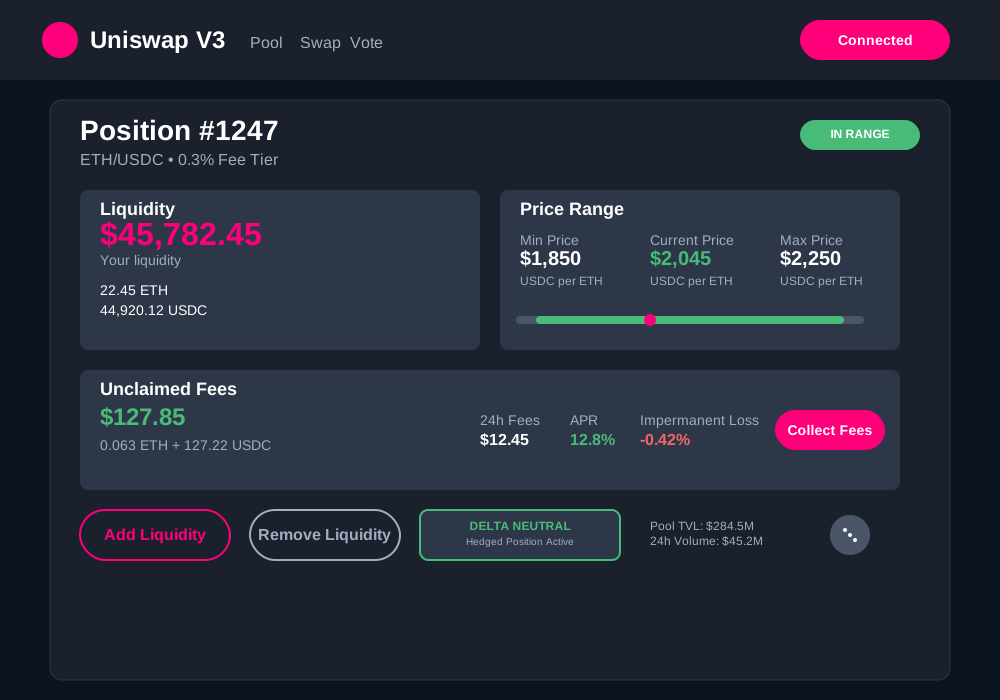
1. LP Token Hedging Strategy
This strategy provides liquidity to AMM pools while hedging price exposure through derivatives.
How It Works:
- Provide liquidity to ETH/USDC pool
- Short ETH futures equal to your ETH exposure
- Collect LP rewards and trading fees
- Maintain hedge ratio as prices change
// Example LP hedging calculation
function calculateHedgeRatio(lpTokens, ethPrice, poolComposition) {
  const ethExposure = lpTokens * poolComposition.ethRatio * ethPrice;
  const requiredShort = ethExposure; // 1:1 hedge

  return {
    ethExposure: ethExposure,
    shortSize: requiredShort,
    hedgeRatio: requiredShort / ethExposure
  };
}

// Usage example
const position = calculateHedgeRatio(100, 2000, {ethRatio: 0.5});
console.log(`Short ${position.shortSize} ETH to hedge position`);
Step-by-Step Implementation:
- Choose High-Yield Pool: Select pools with 10%+ APY
- Calculate Exposure: Determine your token exposure amounts
- Open Short Position: Use perpetual futures or options
- Monitor Ratios: Rebalance when exposure drifts >5%
- Collect Rewards: Claim and reinvest yields regularly
2. Basis Trading Strategy
Exploit price differences between spot and futures markets while farming yields.
Strategy Overview:
- Buy spot tokens and provide liquidity
- Sell futures contracts at premium
- Collect basis spread plus yield rewards
- Profit from futures convergence
# Basis trading opportunity scanner
def calculate_basis_opportunity(spot_price, futures_price, days_to_expiry):
    basis_spread = (futures_price - spot_price) / spot_price
    annualized_rate = (basis_spread * 365) / days_to_expiry

    return {
        'basis_spread': basis_spread * 100,  # percentage
        'annualized_rate': annualized_rate * 100,
        'opportunity_score': annualized_rate * 100 - 8  # minus risk-free rate
    }

# Example usage
opportunity = calculate_basis_opportunity(2000, 2050, 30)
print(f"Basis spread: {opportunity['basis_spread']:.2f}%")
print(f"Annualized rate: {opportunity['annualized_rate']:.2f}%")
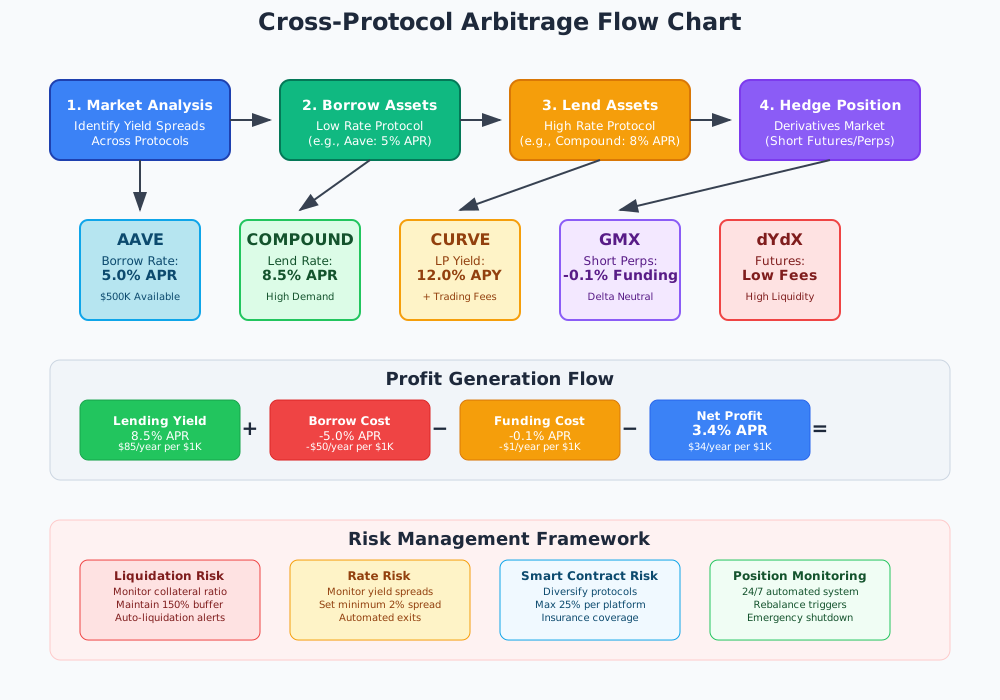
3. Cross-Protocol Arbitrage Farming
Leverage yield differences across protocols while maintaining market neutrality.
Implementation Steps:
- Identify yield spreads between protocols
- Borrow assets at lower rates
- Lend at higher rates on different platforms
- Hedge price exposure through derivatives
- Monitor liquidation risks continuously
Advanced Implementation Techniques
Dynamic Hedging Systems
Static hedges fail in volatile markets. Dynamic systems adjust automatically.
// Simplified dynamic hedging contract
contract DynamicHedger {
    uint256 public constant REBALANCE_THRESHOLD = 500; // 5% in basis points

    function checkRebalanceNeeded() public view returns (bool) {
        uint256 currentRatio = getCurrentHedgeRatio();
        uint256 targetRatio = 10000; // 100% hedge

        uint256 deviation = currentRatio > targetRatio ?
            currentRatio - targetRatio :
            targetRatio - currentRatio;

        return deviation > REBALANCE_THRESHOLD;
    }

    function rebalancePosition() external {
        require(checkRebalanceNeeded(), "Rebalance not needed");

        // Calculate required adjustment
        uint256 adjustment = calculateAdjustment();

        // Execute trades
        if (adjustment > 0) {
            increaseShort(adjustment);
        } else {
            decreaseShort(adjustment);
        }
    }
}
Risk Management Framework
Successful delta-neutral farming requires strict risk controls.
Critical Risk Metrics:
- Maximum position size: 20% of portfolio
- Stop-loss threshold: 2% daily loss
- Liquidation buffer: 30% above liquidation price
- Correlation limits: <0.3 between positions
// Risk monitoring system
class RiskMonitor {
  constructor(maxPositionSize, stopLossThreshold) {
    this.maxPositionSize = maxPositionSize;
    this.stopLossThreshold = stopLossThreshold;
  }

  checkRiskLimits(position) {
    const risks = {
      positionSize: position.size / this.portfolioValue,
      dailyPnL: position.calculateDailyPnL(),
      liquidationDistance: position.getLiquidationDistance()
    };

    return {
      positionSizeOk: risks.positionSize <= this.maxPositionSize,
      stopLossOk: risks.dailyPnL > -this.stopLossThreshold,
      liquidationOk: risks.liquidationDistance > 0.3,
      overallRisk: this.calculateOverallRisk(risks)
    };
  }
}
Platform Selection and Execution
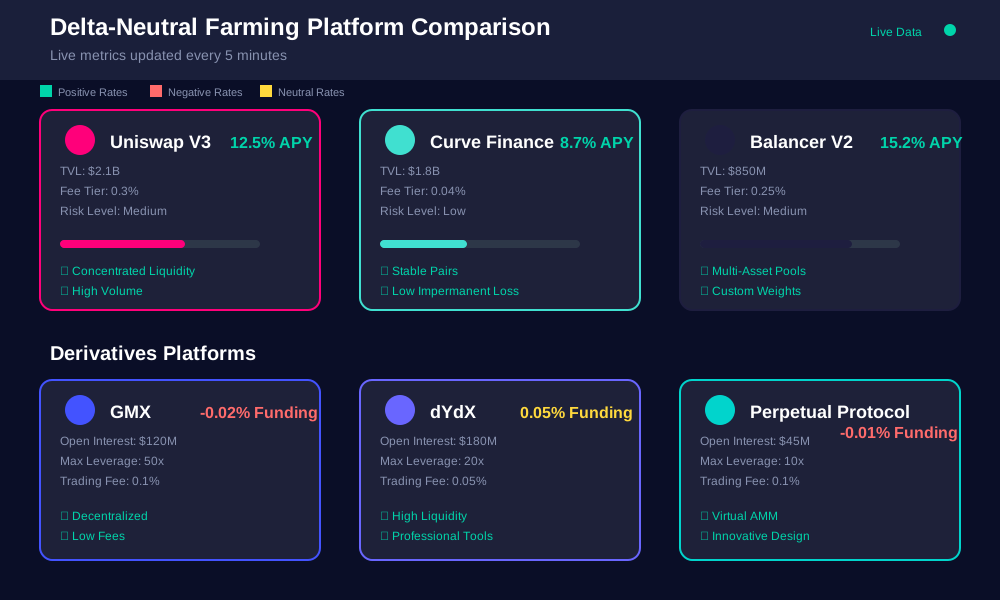
Top Platforms for Delta-Neutral Farming
Tier 1 Platforms:
- Uniswap V3: Concentrated liquidity with precise control
- Curve Finance: Stable pair farming with low impermanent loss
- Balancer V2: Multi-asset pools with custom weights
Derivatives Platforms:
- GMX: Decentralized perpetuals with low fees
- dYdX: Professional-grade derivatives trading
- Perpetual Protocol: Virtual AMMs for futures
Execution Checklist
Before deploying capital:
✓ Test Strategy: Paper trade for 2 weeks minimum ✓ Check Liquidity: Ensure sufficient market depth ✓ Verify Contracts: Audit smart contract security ✓ Calculate Costs: Include all fees and slippage ✓ Set Monitoring: Configure alerts and automation ✓ Plan Exit: Define position closure criteria
Real-World Performance Analysis
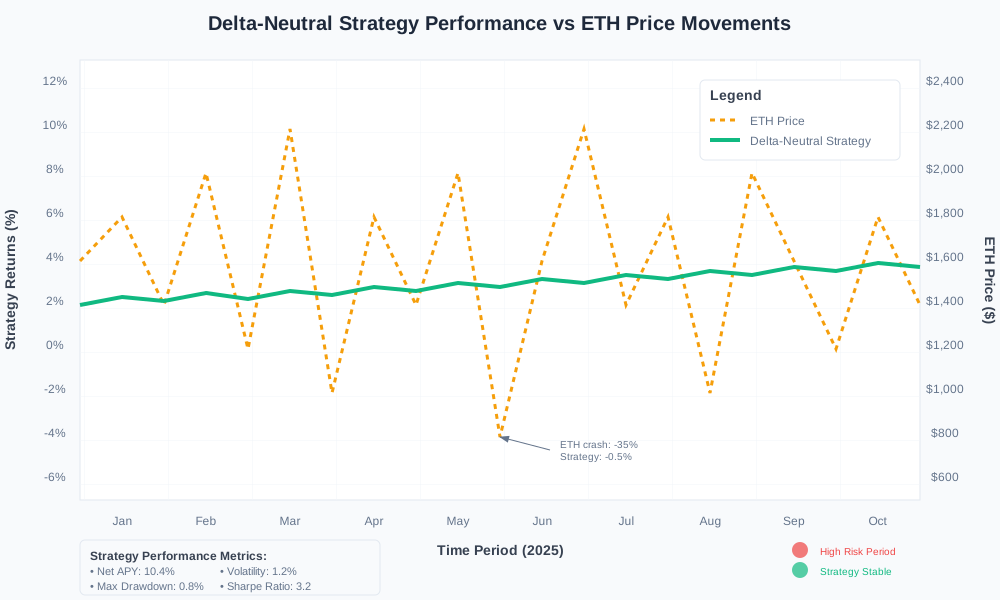
Case Study: ETH/USDC Delta-Neutral Farm
Position Details:
- Pool: Uniswap V3 ETH/USDC 0.3% fee tier
- Size: $100,000 liquidity provision
- Hedge: Short ETH perpetuals on GMX
- Duration: 90-day backtest
Results:
- Gross Yield: 12.5% APY from LP rewards
- Hedging Costs: -2.1% APY (funding rates)
- Net Return: 10.4% APY
- Maximum Drawdown: 0.8%
- Sharpe Ratio: 3.2
# Performance calculation example
def calculate_strategy_returns(lp_yields, funding_costs, rebalance_costs):
    gross_yield = sum(lp_yields)
    total_costs = sum(funding_costs) + sum(rebalance_costs)
    net_return = gross_yield - total_costs

    return {
        'gross_yield': gross_yield,
        'total_costs': total_costs,
        'net_return': net_return,
        'cost_ratio': total_costs / gross_yield
    }
Common Pitfalls and Solutions
Funding Rate Risk
Perpetual funding rates can erode profits. Monitor rates across exchanges. Switch platforms when rates exceed 0.1% daily.
Rebalancing Frequency
Over-rebalancing increases costs. Under-rebalancing increases risk. Optimal frequency: rebalance when hedge ratio drifts >3% from target.
Protocol Risk
Smart contract failures destroy positions. Diversify across multiple protocols. Never exceed 25% allocation to single platform.
Liquidation Risk
Market gaps can trigger liquidations. Maintain 50%+ collateral buffer. Use stop-losses on underlying positions.
Advanced Optimization Techniques
Multi-Asset Delta-Neutral Positions
Expand beyond single-pair strategies. Create baskets of delta-neutral positions across different assets.
// Multi-asset portfolio manager
class DeltaNeutralPortfolio {
  constructor() {
    this.positions = new Map();
    this.correlationMatrix = {};
  }

  addPosition(asset, lpAmount, hedgeAmount) {
    this.positions.set(asset, {
      lp: lpAmount,
      hedge: hedgeAmount,
      correlation: this.calculateCorrelation(asset)
    });
  }

  calculatePortfolioRisk() {
    let totalRisk = 0;

    for (let [asset1, pos1] of this.positions) {
      for (let [asset2, pos2] of this.positions) {
        const correlation = this.correlationMatrix[asset1][asset2] || 0;
        totalRisk += pos1.risk * pos2.risk * correlation;
      }
    }

    return Math.sqrt(totalRisk);
  }
}
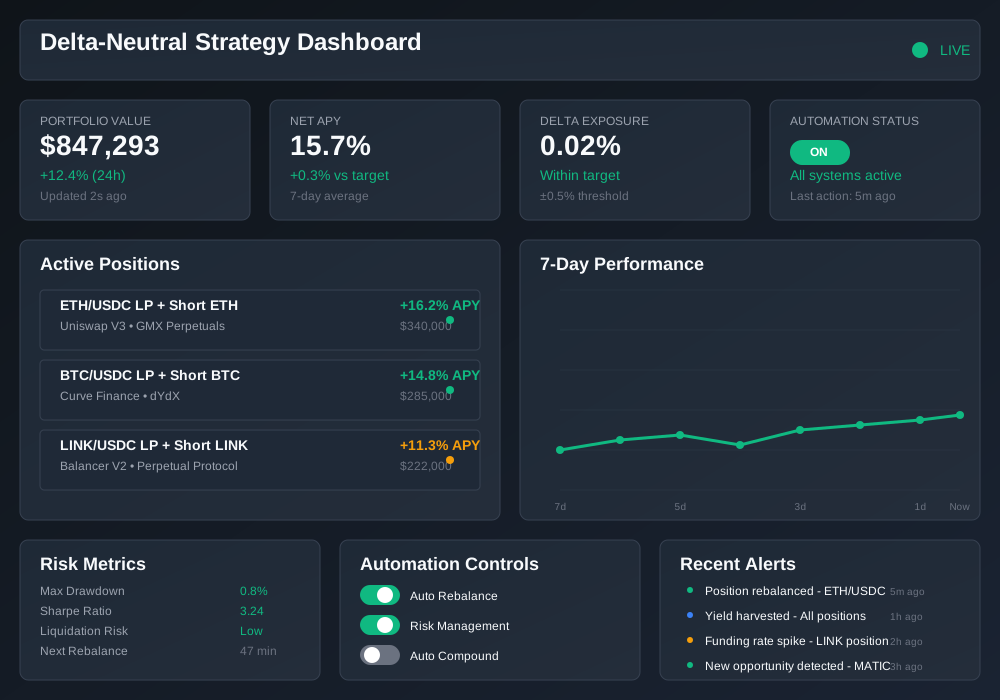
Automated Strategy Execution
Remove emotions and human error with automation.
Key Components:
- Price monitoring systems
- Automatic rebalancing triggers
- Risk-based position sizing
- Emergency shutdown procedures
Future Trends in Delta-Neutral Farming
Cross-Chain Opportunities
2025 brings improved cross-chain infrastructure. Arbitrage opportunities increase across chains. New yield sources emerge on Layer 2 networks.
Options-Based Strategies
Options replace futures for hedging. Lower capital requirements. Better risk-return profiles. New DeFi options protocols launch.
AI-Powered Optimization
Machine learning optimizes hedge ratios. Predictive models forecast funding rates. Automated strategy selection improves returns.
Conclusion
Delta-neutral yield farming strategies provide consistent returns in volatile crypto markets. Master these techniques to capture DeFi yields without directional price risk.
Key takeaways:
- Start with simple LP hedging strategies
- Monitor risk metrics continuously
- Diversify across platforms and assets
- Automate execution when possible
- Keep learning as DeFi evolves
The delta-neutral yield farming landscape offers exciting opportunities for sophisticated investors. These strategies require careful planning and risk management. Done correctly, they provide steady returns regardless of market conditions.
Begin with small positions. Test strategies thoroughly. Scale up gradually as you gain experience. The future of DeFi farming belongs to those who master these advanced techniques.