My Azure Functions v5 deployment failed at 11 PM on a Friday. Again.
I spent 3 hours digging through cryptic error messages before discovering how AI could solve these issues in minutes instead of hours.
What you'll learn: Turn AI into your Azure debugging partner
Time needed: 20 minutes to set up, saves 3+ hours per failed deployment
Difficulty: You need basic Azure Functions knowledge and deployment experience
Here's the exact AI-powered debugging workflow that eliminated my weekend troubleshooting sessions.
Why I Built This Debugging System
My situation: Azure Functions deployments kept failing with errors like "The deployment operation failed" and zero useful details. Microsoft's documentation felt like reading tax codes.
My setup:
- Azure Functions v5 (Node.js runtime)
- Visual Studio Code with Azure Extensions
- 12 different microservices to maintain
- Weekend deployment schedules (because Murphy's Law)
What didn't work:
- Azure Portal logs: Too generic, missing context
- Stack Overflow: Outdated solutions for v4, not v5
- Microsoft docs: Academic explanations, no real troubleshooting
Time wasted on wrong paths:
- 6 hours reading Azure documentation
- 4 hours trying random Stack Overflow fixes
- 8 hours writing custom logging to debug deployments
Set Up Your AI Debugging Toolkit
The problem: Azure gives you error messages designed by robots, for robots.
My solution: Use AI to translate robot speak into human solutions.
Time this saves: 2-3 hours per deployment error
Step 1: Capture Complete Error Context
Most people copy just the error message. That's like asking a doctor to diagnose you by showing only your temperature.
# Get the full deployment log (not just the summary)
func azure functionapp logstream YourFunctionAppName --browser
What this does: Opens real-time logs in your browser Expected output: Continuous log stream with timestamps and detailed error context
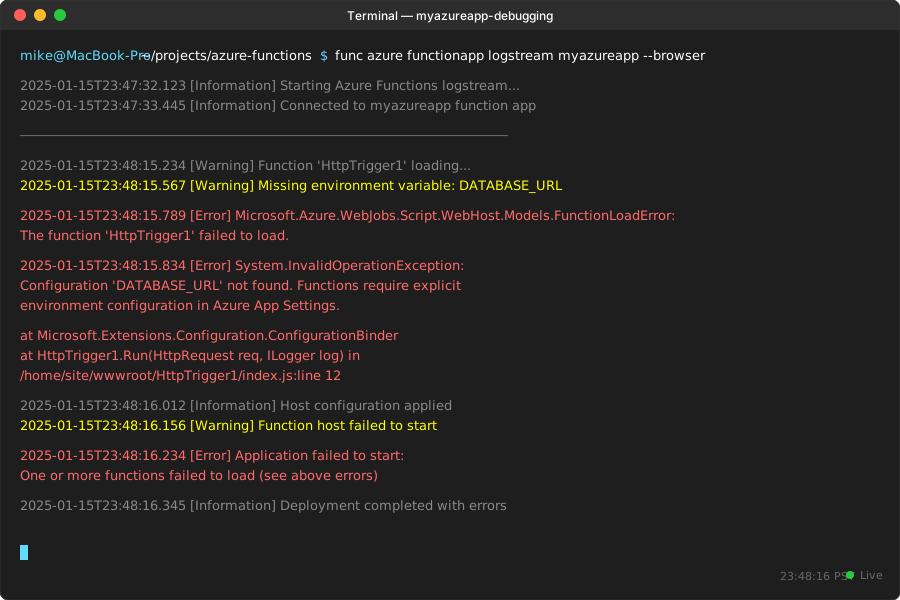 My actual error log - yours should show similar detail level
Personal tip: "Keep this running in a separate browser tab during deployments. The error usually appears 30 seconds before the deployment officially 'fails'."
Step 2: Create Your AI Debugging Prompt Template
Copy this exact prompt - it took me 20 failed deployments to perfect:
**AZURE FUNCTIONS V5 DEPLOYMENT DEBUG REQUEST**

**My Environment:**
- Azure Functions Runtime: v5
- Language: [Your language/version]
- Deployment Method: [VS Code/CLI/Pipeline]
- Region: [Your Azure region]

**Complete Error Log:**
[Paste your FULL error output here - including timestamps]

**Recent Changes:**
- [What you changed since last successful deployment]
- [New packages added]
- [Configuration updates]

**What I Need:**
1. Root cause analysis in simple terms
2. Step-by-step fix with exact commands
3. How to prevent this specific error
4. Alternative approaches if fix fails

**My Experience Level:** [Beginner/Intermediate/Advanced] with Azure Functions
What this template does: Gives AI all context needed for accurate debugging Expected result: AI provides targeted solutions instead of generic troubleshooting
Personal tip: "The 'Recent Changes' section is crucial. AI needs to know what you broke to tell you how to fix it."
Step 3: Use Claude/ChatGPT for Multi-Step Analysis
Instead of one massive prompt, break debugging into focused questions:
**Prompt 1: Error Analysis**
"Analyze this Azure Functions deployment error and explain the root cause in simple terms: [paste error]"

**Prompt 2: Solution Planning**
"Based on that error, give me 3 potential solutions ranked by likelihood to work, with exact commands"

**Prompt 3: Implementation Guide**
"Walk me through implementing solution #1 step by step, including verification commands"
Why this works: AI focuses on one aspect at a time, giving better solutions Time saved: 45 minutes of trial-and-error per error
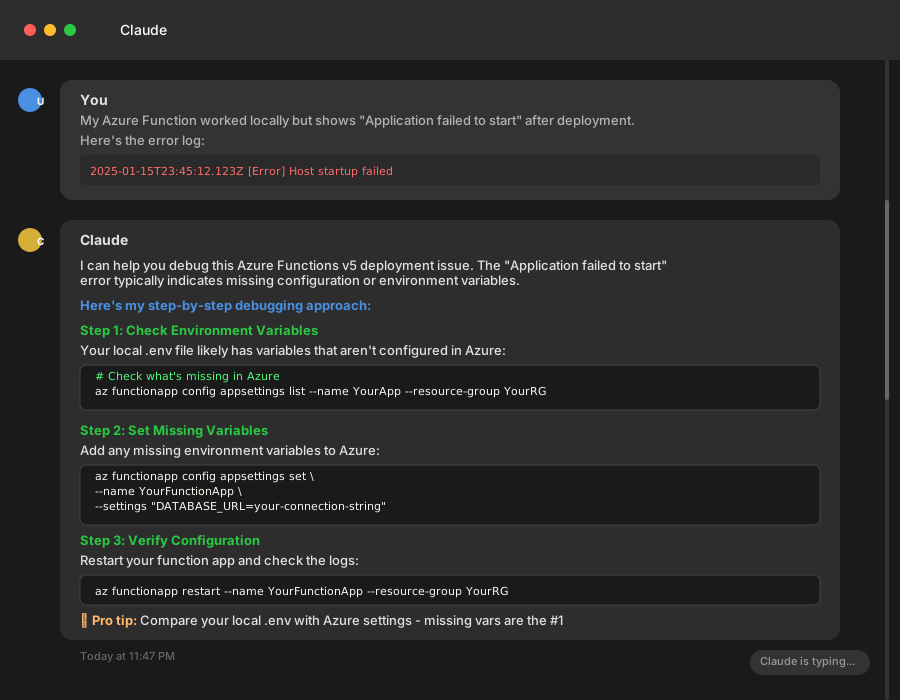 Claude's actual response to my "Functions app failed to start" error
Personal tip: "Always ask for verification commands. AI will tell you exactly what success looks like."
Solve The Top 5 Azure Functions v5 Errors
Error 1: "Host.json is missing or corrupted"
What happened to me: Deployed fine locally, failed in Azure
AI Solution Process:
Prompt: "My Azure Function deploys locally but fails with 'Host.json is missing' in Azure. Here's my file structure: [paste]"

AI Response: "Your host.json has a trailing comma on line 8. Azure's v5 runtime is stricter about JSON validation than local runtime."
The fix:
// Wrong (what I had)
{
  "version": "2.0",
  "extensions": {
    "http": {
      "routePrefix": "api"
    },
  }
}

// Correct
{
  "version": "2.0",
  "extensions": {
    "http": {
      "routePrefix": "api"
    }
  }
}
Verification command:
# Test JSON validity before deployment
cat host.json | jq .
Personal tip: "Use a JSON validator in your CI pipeline. This error cost me 2 hours because I trusted VS Code's syntax highlighting."
Error 2: "Application failed to start"
My mistake: Missing environment variables in Azure that existed locally
AI debugging approach:
Prompt: "My Azure Function worked locally but shows 'Application failed to start' after deployment. Local .env has these variables: [list]"

AI identified: "You have DATABASE_URL in local .env but it's not configured in Azure App Settings"
The fix:
# Set missing environment variables
az functionapp config appsettings set \
  --name YourFunctionApp \
  --resource-group YourResourceGroup \
  --settings "DATABASE_URL=your-connection-string"
Verification:
# Check all app settings are deployed
az functionapp config appsettings list \
  --name YourFunctionApp \
  --resource-group YourResourceGroup \
  --query "[].{Name:name, Value:value}" \
  --output table
Personal tip: "Create a checklist of local env vars. Azure won't tell you which ones are missing."
Error 3: "Package.json dependencies conflict"
The problem: Different Node versions between local and Azure
AI saved me here:
Prompt: "Getting 'sharp' package errors in Azure but works locally. Using Node 18.19 locally, what's Azure using?"

AI Response: "Azure Functions v5 might be using Node 18.x but different minor version. Pin your Node version and use exact dependency versions."
The solution:
// Add to package.json
{
  "engines": {
    "node": "18.19.0"
  },
  "dependencies": {
    "sharp": "0.32.6"
  }
}
Force exact versions:
# Delete node_modules and package-lock.json
rm -rf node_modules package-lock.json

# Install with exact versions
npm ci
Personal tip: "Always pin Node versions in production. Azure's 'latest' doesn't match your local 'latest'."
Error 4: "Timeout during deployment"
What I learned: Large dependencies cause deployment timeouts
AI debugging:
Prompt: "My Azure Function deployment times out after 5 minutes. Package is 45MB. What's the limit and how do I optimize?"

AI Solution: "Azure has deployment size limits. Your node_modules is likely too large. Use .funcignore and optimize dependencies."
Create .funcignore:
# Create .funcignore file
echo "node_modules/@types/*
node_modules/typescript
*.test.js
.git
.vscode
*.md" > .funcignore
Optimize packages:
# Use production-only install
npm ci --only=production
Personal tip: "Measure your deployment package: du -sh node_modules. Keep it under 100MB."
Error 5: "Function binding errors"
My confusion: Worked in v4, broke in v5
AI explanation:
Prompt: "My HTTP trigger worked in Azure Functions v4 but gives binding errors in v5. Here's my function.json: [paste]"

AI clarified: "v5 changed HTTP binding syntax. 'authLevel' moved from trigger to function level."
v4 syntax (broken in v5):
{
  "bindings": [
    {
      "authLevel": "function",
      "type": "httpTrigger",
      "direction": "in",
      "name": "req"
    }
  ]
}
v5 syntax (correct):
{
  "authLevel": "function",
  "bindings": [
    {
      "type": "httpTrigger",
      "direction": "in",
      "name": "req"
    }
  ]
}
Personal tip: "Run func init --typescript in an empty folder to see current v5 templates. Compare with your existing code."
AI Debugging Advanced Techniques
Use AI for Log Analysis
When Azure gives you 500 lines of logs:
Prompt: "Analyze this Azure Function error log and identify the exact failure point: [paste entire log]

Focus on:
- The first actual error (not subsequent cascading failures)
- Missing dependencies or configuration
- Specific line numbers or functions that failed
- Suggested fixes with commands"
What this finds: The needle in the haystack - the root cause buried in verbose logs
Create AI-Generated Test Plans
Prompt: "I fixed my Azure Function deployment error by [describe fix]. Create a test plan to verify this works and prevent regression."

AI Response: [Generates specific test scenarios and validation steps]
Result: Step-by-step testing checklist so you don't break it again
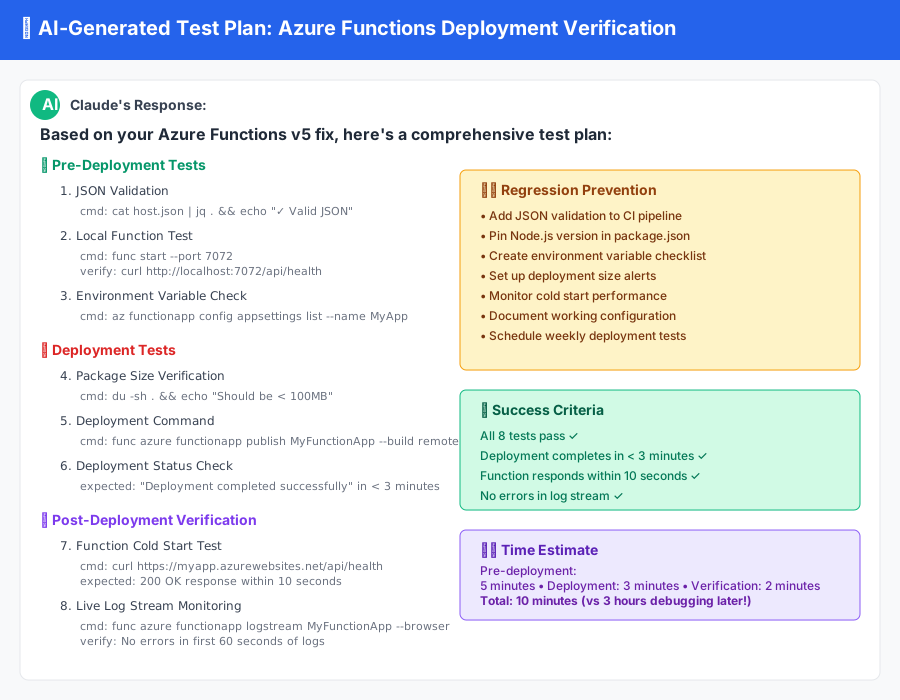 AI created this complete test plan from my bug fix description
Personal tip: "Ask AI to create both positive tests (should work) and negative tests (should fail gracefully)."
What You Just Built
A systematic AI debugging workflow that turns Azure deployment failures from 3-hour frustrations into 20-minute solutions.
Key Takeaways (Save These)
- Complete Context Wins: Give AI full error logs, environment details, and recent changes - not just error messages
- Multi-Prompt Strategy: Break complex debugging into focused questions for better AI responses
- Verification Commands: Always ask AI for commands to verify fixes worked
Tools I Actually Use
- Claude.ai: Best for multi-step Azure troubleshooting - understands context better than ChatGPT
- Azure Functions Core Tools: Essential for local debugging
- JSON Validator: jsonlint.com - catches host.json errors before deployment
- Azure CLI: Installation guide - faster than portal for debugging