Why did the crypto farmer choose Osmosis? Because other DEXs kept telling him to "just HODL" while Osmosis said "come farm with us!" 🌾
Cosmos yield farming confuses many DeFi users. You want passive income from your ATOM and OSMO tokens. Traditional staking offers 8-12% APY, but Osmosis DEX liquidity mining delivers 15-50% APY through strategic pool participation.
This guide shows you exactly how to start Cosmos yield farming on Osmosis DEX. You'll learn pool selection strategies, risk management techniques, and step-by-step setup instructions. By the end, you'll confidently provide liquidity and earn substantial OSMO rewards.
What Is Cosmos Yield Farming on Osmosis DEX?
Cosmos yield farming involves providing liquidity to Osmosis automated market maker (AMM) pools. You deposit token pairs into liquidity pools and earn trading fees plus OSMO incentive rewards.
Osmosis DEX operates as the primary interchain DeFi hub for the Cosmos ecosystem. Users can swap tokens across 50+ connected blockchains through IBC (Inter-Blockchain Communication) protocol.
Key Benefits of Osmosis Liquidity Mining
Higher Returns: Liquidity providers earn 15-50% APY compared to 8-12% from basic staking.
Multiple Revenue Streams: You collect trading fees, OSMO rewards, and external incentives simultaneously.
Interchain Access: Farm yields across Cosmos, Osmosis, Juno, Secret Network, and other IBC-enabled chains.
Flexible Bonding: Choose 1-day to 14-day unbonding periods based on your risk tolerance.
Getting Started: Osmosis DEX Setup Requirements
Essential Tools and Wallets
You need these components before starting Cosmos yield farming:
Keplr Wallet: Download the official Keplr browser extension for secure Cosmos ecosystem access.
OSMO Tokens: Acquire OSMO for transaction fees and pool participation.
Base Assets: Hold ATOM, USDC, or other supported tokens for liquidity provision.
Connecting Your Keplr Wallet to Osmosis
- Install Keplr Extension: Visit keplr.app and add the browser extension
- Create New Wallet: Generate a new wallet or import existing seed phrase
- Add Osmosis Network: Keplr automatically detects Osmosis when you visit osmosis.zone
- Fund Your Wallet: Transfer OSMO and other tokens to your Keplr address
// Example: Check Osmosis connection in Keplr
if (window.keplr) {
    await window.keplr.enable("osmosis-1");
    const offlineSigner = window.getOfflineSigner("osmosis-1");
    // Connected successfully - ready for farming
} else {
    console.log("Please install Keplr extension");
}

Understanding Osmosis Liquidity Pool Mechanics
How AMM Pools Generate Yields
Osmosis uses concentrated liquidity AMM technology. Liquidity providers deposit token pairs at specific price ranges and earn rewards when traders swap within those ranges.
Trading Fees: Users pay 0.2-0.3% fees per swap, distributed to liquidity providers proportionally.
OSMO Incentives: The protocol distributes daily OSMO rewards to incentivize specific pool participation.
External Rewards: Some pools offer additional tokens like ATOM, JUNO, or STARS as extra incentives.
Pool Risk Assessment Framework
Evaluate pools using these criteria before providing liquidity:
Impermanent Loss Risk: Calculate potential losses from price divergence between paired tokens.
Pool Depth: Choose pools with $500K+ total value locked (TVL) for stable trading.
Volume-to-TVL Ratio: Target pools with 0.1+ daily volume-to-TVL ratios for consistent fee generation.
Incentive Sustainability: Review OSMO reward distribution schedules and external incentive durations.
Step-by-Step Osmosis Yield Farming Tutorial
Phase 1: Pool Selection and Analysis
Navigate to osmosis.zone/pools and analyze available opportunities.
Filter by APY: Sort pools by highest APY, but verify sustainability of rewards.
Check Pool Composition: Understand which tokens comprise each pool and their correlation.
Review Bonding Options: Compare 1-day (lower rewards) vs 14-day (higher rewards) bonding periods.
// Example pool analysis data structure
const poolAnalysis = {
    poolId: 1,
    tokens: ["OSMO", "ATOM"],
    currentAPY: 45.2,
    tradingFeeAPY: 8.1,
    osmoIncentiveAPY: 37.1,
    impermanentLossRisk: "medium",
    recommendedBondingPeriod: "14-day"
};
Phase 2: Adding Liquidity to Selected Pool
- Access Pool Interface: Click on your chosen pool from the pools list
- Connect Wallet: Authorize Osmosis to interact with your Keplr wallet
- Set Token Amounts: Enter equal USD values for both tokens in the pair
- Review Pool Share: Confirm your percentage ownership of the total pool
- Execute Transaction: Sign the transaction through Keplr wallet
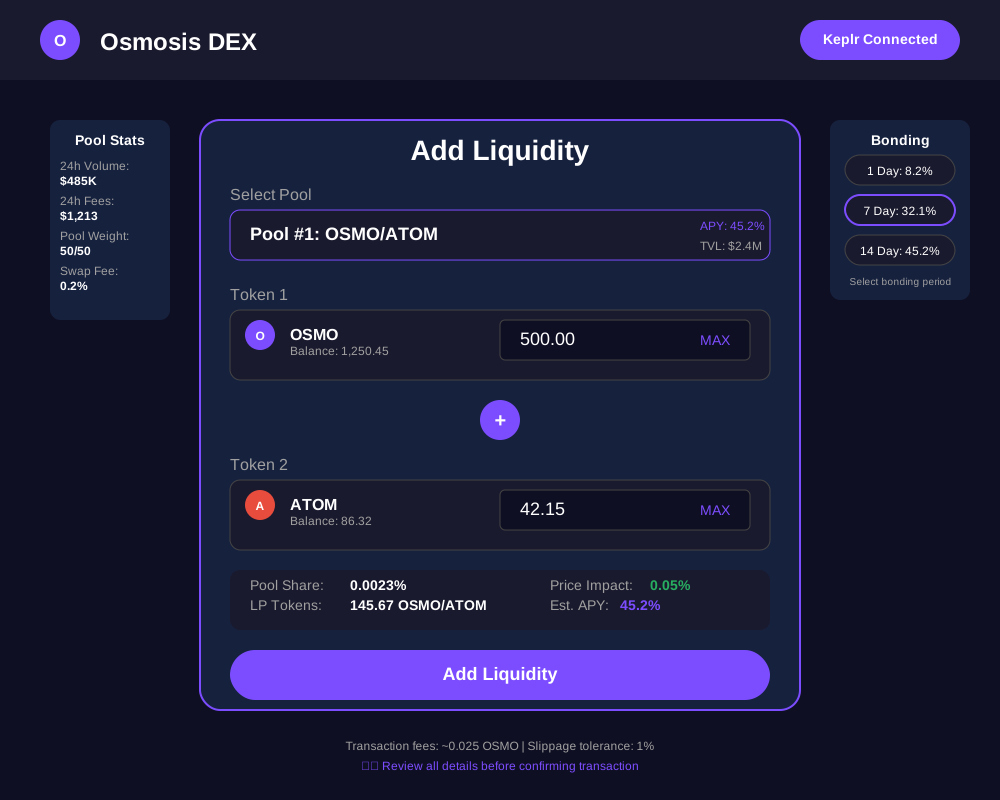
Phase 3: Bonding LP Tokens for Rewards
After providing liquidity, you receive LP (liquidity provider) tokens representing your pool share.
Bond LP Tokens: Lock your LP tokens to start earning OSMO rewards.
Choose Bonding Period: Select 1, 7, or 14-day bonding for different reward rates.
Monitor Performance: Track your earnings through the Osmosis dashboard.
// Bonding transaction example
const bondingParams = {
    lpTokens: "1000", // Amount of LP tokens to bond
    bondingPeriod: 14, // Days to lock tokens
    poolId: 1,
    expectedDailyRewards: "12.5 OSMO"
};
Advanced Yield Optimization Strategies
Multi-Pool Diversification Approach
Spread your capital across 3-5 different pools to reduce concentration risk:
Stable Pairs: Allocate 40% to USDC/OSMO or similar stable-volatile pairs.
Major Cosmos Assets: Invest 35% in ATOM/OSMO or other established Cosmos tokens.
Emerging Opportunities: Risk 25% in newer pools with higher potential returns.
Compounding and Reinvestment Tactics
Maximize long-term gains through systematic reward reinvestment:
Daily Claiming: Claim OSMO rewards daily to minimize smart contract risk.
Strategic Reinvestment: Reinvest 70% of rewards into existing pools, use 30% for new opportunities.
Rebalancing Schedule: Rebalance portfolio allocations weekly based on performance metrics.
Risk Management Best Practices
Protect your capital with proven risk management techniques:
Position Sizing: Never allocate more than 10% of portfolio to single pool.
Stop-Loss Triggers: Exit pools when APY drops below 15% sustainably.
Market Cycle Awareness: Reduce liquidity provision during high volatility periods.
Common Osmosis Yield Farming Mistakes
Chasing Unsustainable High APY
New farmers often chase 100%+ APY pools without analyzing reward sustainability.
Problem: Many high-APY pools rely on temporary external incentives that expire quickly.
Solution: Focus on pools with consistent 20-40% APY from sustainable trading fees and OSMO rewards.
Ignoring Impermanent Loss Calculations
Impermanent loss occurs when token prices diverge significantly within your liquidity range.
Problem: Farmers lose money even with positive yields when impermanent loss exceeds earnings.
Solution: Use impermanent loss calculators and avoid highly volatile token pairs.
Poor Bonding Period Selection
Choosing inappropriate bonding periods based on market conditions reduces flexibility.
Problem: Long bonding periods trap capital during market downturns.
Solution: Use shorter bonding periods during uncertain market conditions, longer periods during stable trends.
Tracking and Optimizing Your Yield Farm Performance
Essential Metrics to Monitor
Track these key performance indicators for successful yield farming:
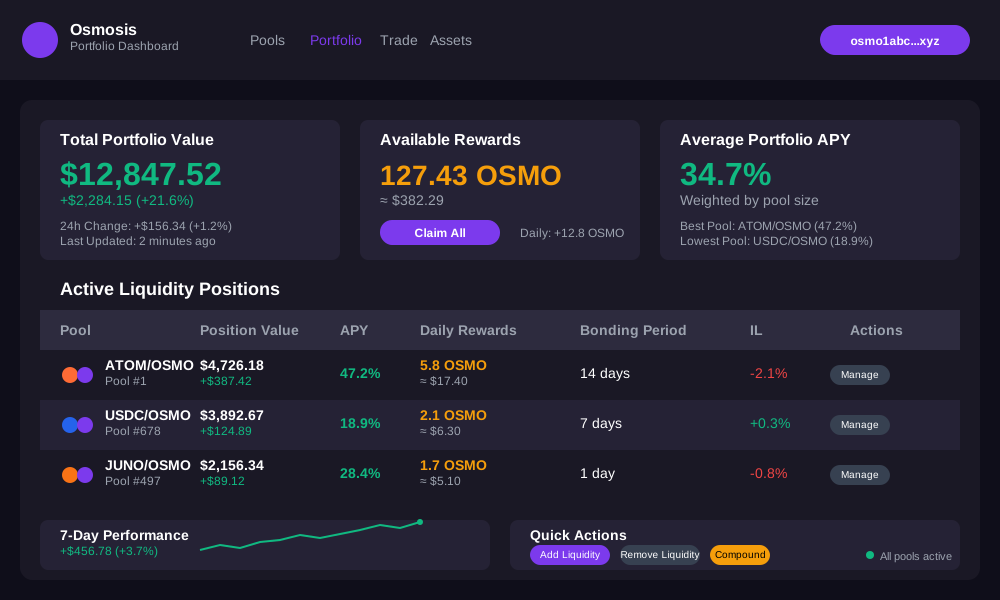
Actual APY: Calculate real returns including claimed rewards and impermanent loss.
Pool Health: Monitor TVL changes, volume trends, and incentive schedules.
Token Price Movements: Track price divergence between paired tokens in your pools.
Tools for Portfolio Management
Osmosis Dashboard: Built-in portfolio tracking shows earnings, bonding status, and pool performance.
DefiLlama: Third-party analytics platform for cross-protocol yield comparison.
Spreadsheet Tracking: Manual tracking provides detailed personal performance analysis.
// Example performance tracking object
const farmingMetrics = {
    totalDeposited: 5000, // USD value
    currentValue: 5284,   // Including rewards and IL
    realizedGains: 284,   // Net profit after fees
    actualAPY: 22.7,      // Annualized return rate
    impermanentLoss: -156, // Current IL in USD
    claimedRewards: 440   // Total OSMO claimed
};
Tax Implications and Record Keeping
Understanding DeFi Tax Requirements
Cosmos yield farming creates taxable events in most jurisdictions:
Liquidity Provision: May trigger taxable events based on token values at deposit time.
Reward Claims: OSMO rewards constitute taxable income at fair market value when claimed.
Impermanent Loss: Potential tax deductions when pools are closed with realized losses.
Recommended Record-Keeping Practices
Maintain detailed records for accurate tax reporting:
Transaction Logs: Export all transactions from Keplr wallet and Osmosis interface.
Price Data: Record token prices at deposit, claim, and withdrawal times.
Pool Performance: Track impermanent loss calculations and pool exit values.
Future of Cosmos Yield Farming
Upcoming Protocol Developments
Osmosis continues expanding yield farming opportunities through protocol upgrades:
Concentrated Liquidity: Enhanced capital efficiency through customizable price ranges.
Cross-Chain Integrations: Direct yield farming access to Ethereum, Polygon, and other ecosystems.
Automated Strategies: Smart contract vaults for passive yield optimization.
Emerging Opportunities
New yield farming opportunities appear regularly in the Cosmos ecosystem:
Liquid Staking Derivatives: Farm yields using stATOM, stOSMO, and other liquid staking tokens.
Lending Protocol Integration: Combine liquidity provision with lending for enhanced yields.
NFT-Backed Farming: Use Cosmos NFTs as collateral for leveraged yield farming positions.
Conclusion
Cosmos yield farming on Osmosis DEX offers substantial passive income opportunities for DeFi users. Strategic pool selection, proper risk management, and consistent optimization generate 15-50% APY returns through liquidity mining.
Start with small positions in established pools like ATOM/OSMO. Gradually expand your farming operations as you gain experience with pool mechanics and market dynamics. Focus on sustainable yields rather than chasing temporary high-APY opportunities.
Ready to start earning from your Cosmos tokens? Visit osmosis.zone today and begin your yield farming journey with confidence.
This guide provides educational information about Cosmos yield farming. Cryptocurrency investments carry significant risks. Always conduct your own research and consider consulting financial advisors before making investment decisions.