Picture this: You're at a buffet, but instead of loading your plate with equal portions of everything, you strategically pile on the prime rib while taking just a tiny scoop of the mystery casserole. That's exactly what weighted pools let you do with your crypto portfolio – except the prime rib pays you dividends.
What Is Balancer V2 Yield Farming?
Balancer V2 yield farming transforms your crypto assets into income-generating liquidity pools. Unlike traditional pools that require 50/50 token splits, Balancer V2 weighted pools let you customize your asset allocation.
You provide liquidity to these pools and earn fees from traders who swap tokens. Additionally, you receive BAL tokens as rewards for participating in the ecosystem.
Key benefits include:
- Custom asset allocation (80/20, 60/40, or any ratio)
- Multiple token exposure in single pools
- Trading fee income plus BAL rewards
- Reduced impermanent loss compared to 50/50 pools
Understanding Weighted Pool Mechanics
Pool Weight Distribution
Weighted pools use specific ratios instead of equal distributions. Popular configurations include:
- 80/20 pools: 80% stable asset, 20% volatile asset
- 60/40 pools: Balanced exposure with bias toward one asset
- 50/30/20 pools: Three-token diversification
Fee Structure
Balancer V2 charges trading fees between 0.01% and 10%. Most pools use 0.3% fees. Pool creators set these rates based on:
- Asset volatility
- Trading volume expectations
- Competition from other pools

Step-by-Step Weighted Pool Strategy
Step 1: Choose Your Assets
Select assets based on correlation and volatility:
// Example asset selection criteria
const assetSelection = {
  primaryAsset: "WETH", // 60% allocation
  secondaryAsset: "USDC", // 40% allocation
  volatilityRatio: "moderate",
  expectedAPY: "8-15%"
};
Asset pairing strategies:
- Conservative: 80% stablecoin, 20% blue-chip crypto
- Moderate: 60% ETH, 40% stablecoin
- Aggressive: 50% governance token, 30% ETH, 20% stablecoin
Step 2: Calculate Pool Composition
Determine your token amounts using Balancer's pool calculator:
// Pool composition calculation
function calculatePoolRatio(uint256 totalValue, uint8[] memory weights)
    public pure returns (uint256[] memory amounts) {

    for (uint i = 0; i < weights.length; i++) {
        amounts[i] = (totalValue * weights[i]) / 100;
    }
    return amounts;
}
Example calculation for $10,000 investment:
- 60% WETH: $6,000 ÷ $2,500 = 2.4 WETH
- 40% USDC: $4,000 = 4,000 USDC
Step 3: Deploy Your Pool
Navigate to Balancer V2 and follow these steps:
- Connect your wallet (MetaMask, WalletConnect, or Coinbase Wallet)
- Select "Create Pool" from the main dashboard
- Choose "Weighted Pool" as your pool type
- Set token weights according to your strategy
- Configure swap fees (recommend 0.3% for most pairs)
- Add initial liquidity with calculated token amounts

Step 4: Monitor Pool Performance
Track these key metrics:
// Pool monitoring metrics
const poolMetrics = {
  totalValueLocked: "TVL in USD",
  tradingVolume24h: "Daily volume",
  feeRevenue: "Earned fees",
  balRewards: "BAL token rewards",
  impermanentLoss: "IL percentage"
};
Risk Management Strategies
Impermanent Loss Mitigation
Weighted pools reduce impermanent loss compared to 50/50 pools. Calculate your exposure:
// Impermanent Loss Calculator
function calculateIL(initialPrice, currentPrice, poolWeight) {
  const priceRatio = currentPrice / initialPrice;
  const weightFactor = Math.pow(priceRatio, poolWeight);
  return ((2 * Math.sqrt(weightFactor)) / (1 + priceRatio)) - 1;
}
IL reduction techniques:
- Use 80/20 pools for high-conviction assets
- Pair correlated assets (ETH/stETH)
- Monitor price divergence alerts
Liquidity Management
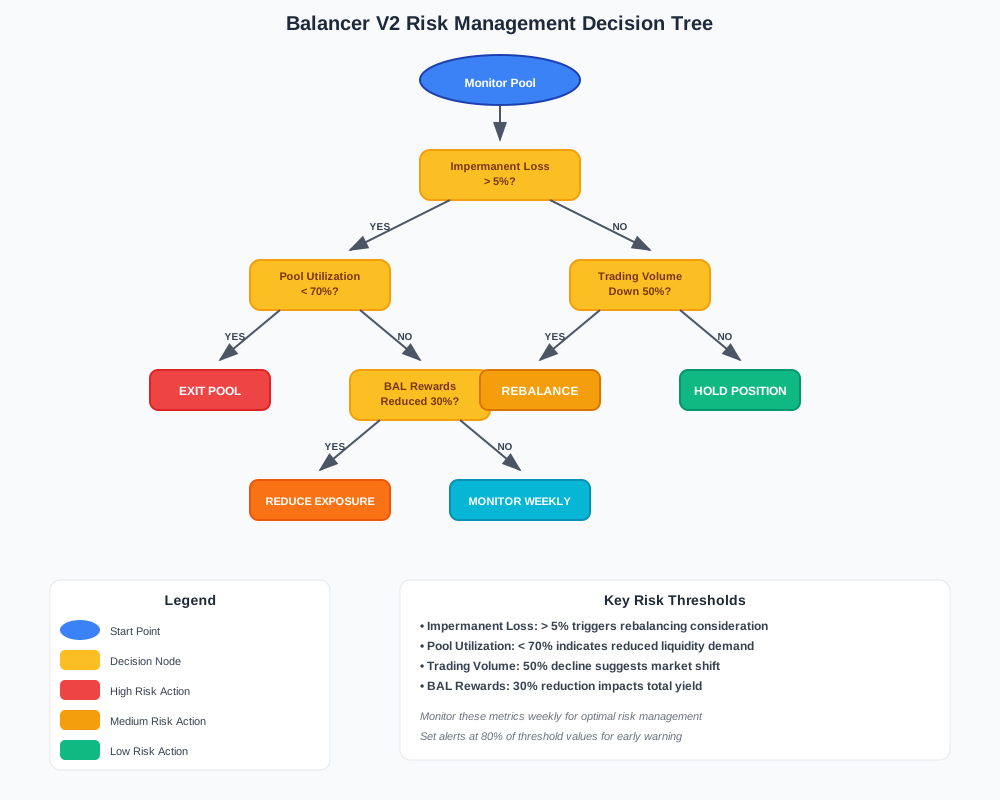
Set withdrawal triggers based on:
- Pool utilization dropping below 70%
- Trading volume declining 50% week-over-week
- BAL rewards reducing significantly
Optimization Techniques
Fee Tier Selection
Choose optimal fees based on pool characteristics:
// Fee optimization logic
function optimizeFees(assetVolatility, competitorFees, expectedVolume) {
  if (assetVolatility === "low" && expectedVolume > 1000000) {
    return 0.01; // Ultra-low fees for stablecoin pools
  } else if (assetVolatility === "medium") {
    return 0.3;  // Standard fee for most pairs
  } else {
    return 1.0;  // Higher fees for exotic pairs
  }
}
Yield Compounding
Reinvest earned fees and BAL rewards:
- Weekly reinvestment for pools earning >$100/week
- Monthly reinvestment for smaller positions
- Gas optimization by batching multiple transactions
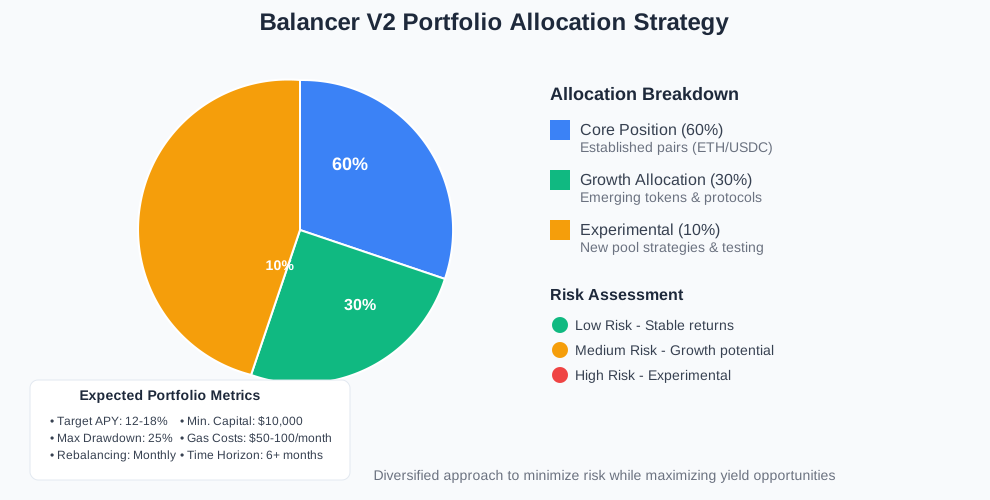
Portfolio Diversification
Spread risk across multiple pools:
- Core position: 60% in established pairs (ETH/USDC)
- Growth allocation: 30% in emerging tokens
- Experimental: 10% in new pool strategies
Advanced Strategies
Multi-Asset Pools
Create three or four-token pools for maximum diversification:
// Multi-asset pool configuration
struct MultiAssetPool {
    address[] tokens;
    uint256[] weights;
    uint256 swapFee;
    string poolType;
}

MultiAssetPool memory diversifiedPool = MultiAssetPool({
    tokens: [WETH, WBTC, USDC, DAI],
    weights: [40, 30, 20, 10],
    swapFee: 30, // 0.3%
    poolType: "WeightedPool"
});
Governance Token Strategies
Leverage governance tokens for enhanced yields:
- Vote escrow tokens: Participate in protocol governance
- Boosted rewards: Increase BAL emissions through veBAL
- Meta-governance: Earn from multiple protocol decisions
Pool Creation Checklist
Before deploying your weighted pool:
✓ Research asset fundamentals and correlation patterns
✓ Calculate optimal weights using historical price data
✓ Set competitive fees based on similar pools
✓ Prepare sufficient initial liquidity (minimum $10,000 recommended)
✓ Configure monitoring alerts for key metrics
✓ Plan exit strategy with specific triggers

Troubleshooting Common Issues
Low Trading Volume
Symptoms: Minimal fee generation despite adequate liquidity Solutions:
- Reduce swap fees by 0.1%
- Add more initial liquidity
- Promote pool on social channels
High Impermanent Loss
Symptoms: Pool value underperforming hold strategy Solutions:
- Rebalance weights toward stable assets
- Consider exiting during high volatility periods
- Hedge positions with derivatives
Gas Optimization
Minimize transaction costs:
// Gas-efficient pool operations
const batchOperations = {
  joinPool: "Bundle liquidity additions",
  claimRewards: "Combine BAL and fee collection",
  exitPool: "Single transaction withdrawal"
};
Conclusion
Balancer V2 weighted pools offer sophisticated yield farming opportunities beyond traditional 50/50 strategies. You control asset allocation while earning trading fees and BAL rewards.
Start with conservative 80/20 pools to understand mechanics. Graduate to multi-asset strategies as you gain experience. Monitor performance weekly and adjust based on market conditions.
Key takeaways for successful Balancer V2 yield farming:
- Custom weight allocation reduces impermanent loss
- Trading fees provide steady income streams
- BAL rewards boost overall returns
- Risk management prevents catastrophic losses
Ready to optimize your DeFi yields? Deploy your first weighted pool strategy today and transform idle crypto into productive assets.
Disclaimer: Yield farming involves smart contract risks and potential impermanent loss. Only invest funds you can afford to lose. This content is for educational purposes and not financial advice.