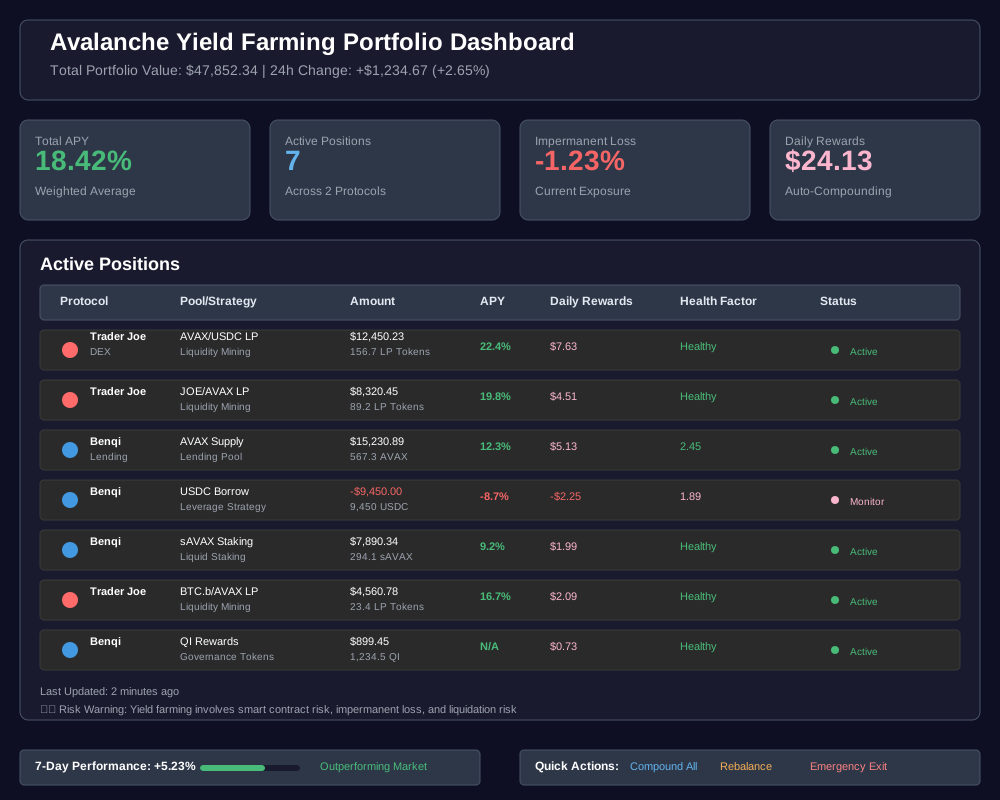
Remember when yield farming meant staking your grandmother's retirement fund in sketchy protocols that promised 10,000% APY? Those days are behind us. Today's Avalanche ecosystem offers legitimate yield opportunities through battle-tested protocols like Trader Joe and Benqi.
Primary Keywords: avalanche yield farming, trader joe avalanche, benqi protocol, AVAX staking, DeFi yield strategies Semantic Terms: liquidity mining, farming rewards, lending protocol, liquidity pools, staking rewards Long-tail Keywords: "how to yield farm on avalanche," "trader joe liquidity mining guide," "benqi protocol farming strategies"
Why Avalanche Yield Farming Matters for DeFi Investors
Traditional savings accounts offer 0.5% annual returns while inflation eats your purchasing power. Avalanche yield farming provides 5-25% annual yields through decentralized protocols. The network's sub-second finality and low fees make it ideal for yield optimization strategies.
This guide covers:
- Setting up Avalanche wallet connections
- Trader Joe liquidity mining strategies
- Benqi Protocol lending and borrowing
- Risk management and yield optimization
- Advanced farming techniques
Setting Up Your Avalanche Yield Farming Environment
Wallet Configuration and Network Setup
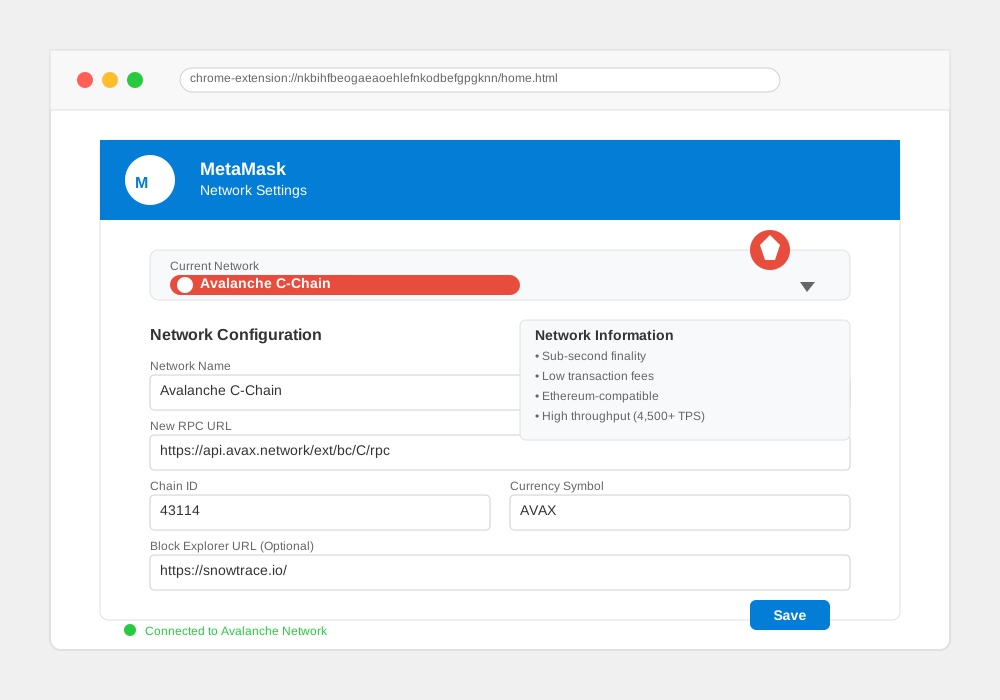
Before starting Avalanche yield farming, configure your MetaMask wallet for the Avalanche C-Chain:
// Avalanche C-Chain Network Configuration
const avalancheNetwork = {
  chainId: '0xA86A', // 43114 in decimal
  chainName: 'Avalanche C-Chain',
  nativeCurrency: {
    name: 'Avalanche',
    symbol: 'AVAX',
    decimals: 18
  },
  rpcUrls: ['https://api.avax.network/ext/bc/C/rpc'],
  blockExplorerUrls: ['https://snowtrace.io/']
};

// Add network to MetaMask
await window.ethereum.request({
  method: 'wallet_addEthereumChain',
  params: [avalancheNetwork]
});
Essential Tools for Avalanche Yield Farming
- MetaMask Wallet: Primary wallet for DeFi interactions
- Avalanche Bridge: Transfer assets from Ethereum
- Snowtrace Explorer: Track transactions and contracts
- DeFi Pulse: Monitor protocol TVL and yields
Trader Joe Protocol: Liquidity Mining and Yield Strategies
Understanding Trader Joe's Yield Mechanisms
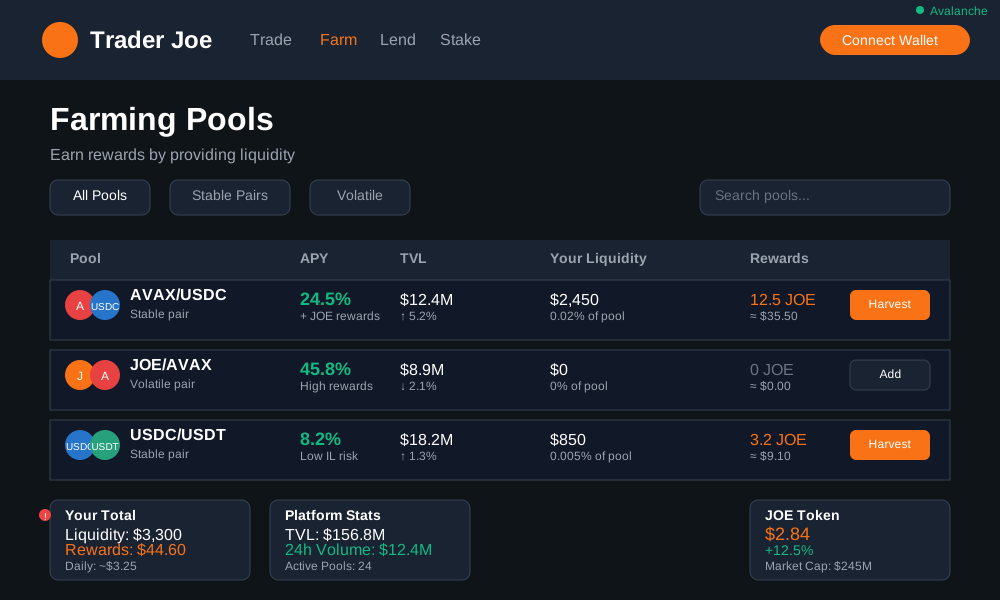
Trader Joe operates as Avalanche's premier decentralized exchange with multiple yield opportunities:
- Liquidity Pool Farming: Provide liquidity for trading pairs
- Lending and Borrowing: Earn interest on deposited assets
- Staking Rewards: Stake JOE tokens for protocol fees
- Liquidity Book: Concentrated liquidity positions
Step-by-Step Trader Joe Yield Farming Guide
1. Connect Wallet and Deposit Initial Funds
// Example: Adding liquidity to AVAX/USDC pool
interface ITraderJoeRouter {
    function addLiquidity(
        address tokenA,
        address tokenB,
        uint amountADesired,
        uint amountBDesired,
        uint amountAMin,
        uint amountBMin,
        address to,
        uint deadline
    ) external returns (uint amountA, uint amountB, uint liquidity);
}

// Add 10 AVAX and 300 USDC to liquidity pool
contract YieldFarmingStrategy {
    ITraderJoeRouter router = ITraderJoeRouter(0x60aE616a2155Ee3d9A68541Ba4544862310933d4);

    function addLiquidityAVAXUSDC(uint256 usdcAmount) external payable {
        // Approve USDC spending
        IERC20(USDC_ADDRESS).approve(address(router), usdcAmount);

        // Add liquidity with 1% slippage tolerance
        router.addLiquidity(
            WAVAX_ADDRESS,
            USDC_ADDRESS,
            msg.value,
            usdcAmount,
            msg.value * 99 / 100, // 1% slippage on AVAX
            usdcAmount * 99 / 100, // 1% slippage on USDC
            msg.sender,
            block.timestamp + 600 // 10 minute deadline
        );
    }
}
2. Stake LP Tokens for Farming Rewards
After receiving LP tokens, stake them in Trader Joe's farming pools:
// Stake LP tokens in farming contract
const stakingContract = new ethers.Contract(
  FARMING_CONTRACT_ADDRESS,
  FARMING_ABI,
  signer
);

// Stake LP tokens to earn JOE rewards
async function stakeLPTokens(lpTokenAmount) {
  const tx = await stakingContract.deposit(
    POOL_ID, // Pool identifier
    lpTokenAmount,
    { gasLimit: 200000 }
  );

  await tx.wait();
  console.log(`Staked ${lpTokenAmount} LP tokens`);
}
3. Claim and Compound Rewards
// Claim farming rewards and compound
async function claimAndCompound() {
  // Claim JOE rewards
  const claimTx = await stakingContract.harvest(POOL_ID);
  await claimTx.wait();

  // Get JOE balance
  const joeBalance = await joeToken.balanceOf(userAddress);

  // Swap half JOE for AVAX
  const swapTx = await router.swapExactTokensForETH(
    joeBalance.div(2),
    0, // Accept any amount of AVAX
    [JOE_ADDRESS, WAVAX_ADDRESS],
    userAddress,
    deadline
  );

  // Add liquidity with claimed rewards
  await addLiquidityAVAXUSDC(newUsdcAmount);
}
Trader Joe Yield Optimization Strategies
High-Yield Pool Selection
Monitor these metrics when choosing farming pools:
- APY Calculation: Base trading fees + farming rewards
- Total Value Locked (TVL): Higher TVL indicates stability
- Impermanent Loss Risk: Correlated assets reduce IL
- Reward Token Emissions: Check JOE token distribution schedule
// Calculate effective APY including impermanent loss
function calculateEffectiveAPY(poolData) {
  const baseTradingFees = poolData.volume24h * 0.003; // 0.3% trading fees
  const farmingRewards = poolData.joeRewardsPerDay * 365;
  const impermanentLoss = calculateImpermanentLoss(poolData.priceChange);

  return (baseTradingFees + farmingRewards - impermanentLoss) / poolData.tvl;
}
Liquidity Book Strategy
Trader Joe's Liquidity Book allows concentrated liquidity provision:
// Provide concentrated liquidity in specific price ranges
contract LiquidityBookStrategy {
    function addLiquidityToBook(
        uint256 tokenXAmount,
        uint256 tokenYAmount,
        int24 activeBin,
        uint256 distributionX,
        uint256 distributionY
    ) external {
        // Concentrate liquidity around current price
        // Higher fees but increased impermanent loss risk
        liquidityBook.addLiquidity(
            tokenXAmount,
            tokenYAmount,
            activeBin,
            distributionX,
            distributionY,
            msg.sender,
            block.timestamp + 600
        );
    }
}
Benqi Protocol: Lending and Borrowing Strategies
Benqi Protocol Overview
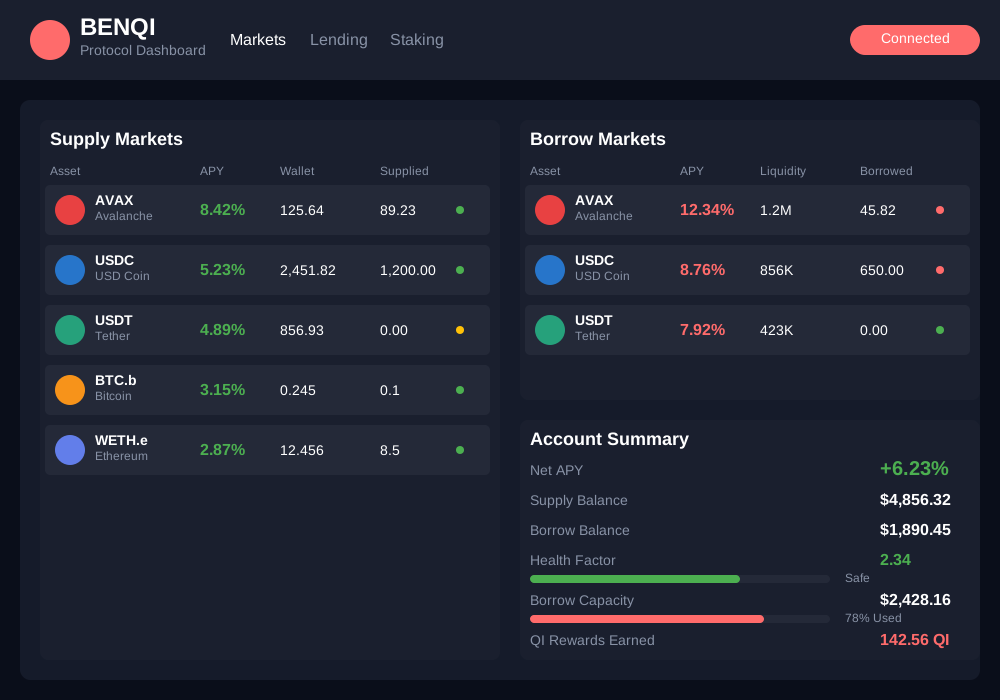
Benqi operates as Avalanche's leading lending protocol with these features:
- Supply Assets: Earn interest on deposited tokens
- Borrow Against Collateral: Leverage positions for higher yields
- Liquid Staking: Stake AVAX while maintaining liquidity
- QI Token Rewards: Earn protocol governance tokens
Benqi Yield Farming Implementation
1. Supply Assets for Lending Rewards
// Supply AVAX to Benqi for lending rewards
interface IBenqiToken {
    function mint() external payable;
    function redeem(uint256 redeemTokens) external returns (uint256);
    function borrow(uint256 borrowAmount) external returns (uint256);
}

contract BenqiLendingStrategy {
    IBenqiToken qiAVAX = IBenqiToken(0x5C0401e81Bc07Ca70fAD469b451682c0d747Ef1c);

    function supplyAVAX() external payable {
        // Supply AVAX to earn lending interest + QI rewards
        qiAVAX.mint{value: msg.value}();
    }

    function withdrawAVAX(uint256 qiTokenAmount) external {
        // Redeem qiAVAX for underlying AVAX
        qiAVAX.redeem(qiTokenAmount);
    }
}
2. Leverage Farming with Borrowing
// Implement leveraged yield farming strategy
contract LeveragedYieldFarming {
    function leverageFarm(uint256 initialAVAX) external payable {
        // 1. Supply AVAX as collateral
        qiAVAX.mint{value: msg.value}();

        // 2. Borrow USDC against AVAX collateral (70% LTV)
        uint256 borrowAmount = (msg.value * 70 / 100) * avaxPrice / 1e18;
        qiUSDC.borrow(borrowAmount);

        // 3. Swap USDC for more AVAX
        uint256 additionalAVAX = swapUSDCForAVAX(borrowAmount);

        // 4. Supply additional AVAX
        qiAVAX.mint{value: additionalAVAX}();

        // Risk: Liquidation if AVAX price drops significantly
    }
}
3. Liquid Staking with sAVAX
// Stake AVAX while maintaining liquidity
async function stakeAVAXLiquid(avaxAmount) {
  const stakeContract = new ethers.Contract(
    SAVAX_CONTRACT_ADDRESS,
    SAVAX_ABI,
    signer
  );

  // Stake AVAX and receive sAVAX
  const stakeTx = await stakeContract.submit({
    value: ethers.utils.parseEther(avaxAmount.toString()),
    gasLimit: 150000
  });

  await stakeTx.wait();

  // sAVAX can be used in other DeFi protocols
  // while earning staking rewards
}
Advanced Benqi Strategies
Yield Loop Strategy
Maximize yields through recursive lending:
contract YieldLoopStrategy {
    function executeYieldLoop(uint256 initialAmount, uint256 iterations) external {
        uint256 currentAmount = initialAmount;

        for (uint256 i = 0; i < iterations; i++) {
            // Supply AVAX
            qiAVAX.mint{value: currentAmount}();

            // Borrow USDC (60% LTV for safety)
            uint256 borrowAmount = (currentAmount * 60 / 100) * avaxPrice / 1e18;
            qiUSDC.borrow(borrowAmount);

            // Swap USDC back to AVAX
            currentAmount = swapUSDCForAVAX(borrowAmount);
        }

        // Final position: 4x leveraged AVAX exposure
        // Earn: 4x lending rewards + QI token rewards
        // Risk: Liquidation if AVAX drops >16.7%
    }
}
Cross-Protocol Yield Optimization
// Combine Trader Joe and Benqi for maximum yields
async function crossProtocolStrategy() {
  // 1. Supply AVAX to Benqi
  await benqiSupply(avaxAmount);

  // 2. Borrow USDC against AVAX
  const borrowedUSDC = await benqiBorrow(usdcAmount);

  // 3. Add AVAX/USDC liquidity to Trader Joe
  await traderJoeAddLiquidity(avaxAmount, borrowedUSDC);

  // 4. Stake LP tokens for farming rewards
  await traderJoeStake(lpTokens);

  // Result: Earn lending rewards + trading fees + farming rewards
}
Risk Management and Yield Optimization
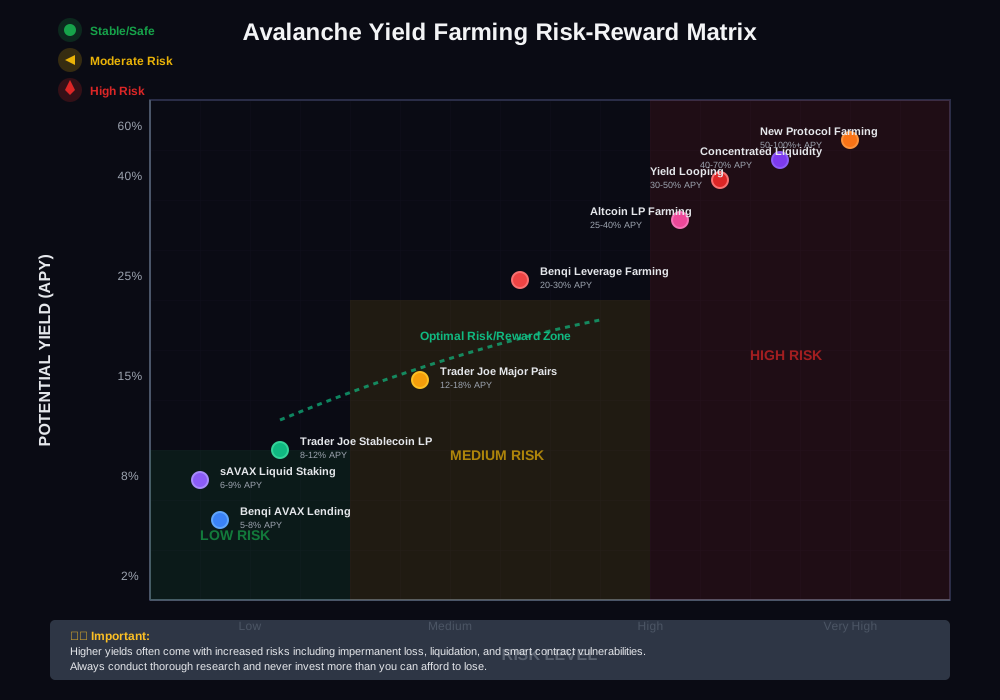
Common Yield Farming Risks
Impermanent Loss Mitigation
// Calculate impermanent loss for different price scenarios
function calculateImpermanentLoss(priceChange) {
  const ratio = priceChange; // New price / Original price
  const impermanentLoss = (2 * Math.sqrt(ratio)) / (1 + ratio) - 1;
  return Math.abs(impermanentLoss) * 100; // Percentage loss
}

// Example: 50% price increase results in 2.02% impermanent loss
const loss = calculateImpermanentLoss(1.5);
console.log(`Impermanent Loss: ${loss.toFixed(2)}%`);
Liquidation Risk Management
// Monitor liquidation thresholds
contract RiskManager {
    function checkLiquidationRisk(address user) external view returns (bool) {
        uint256 collateralValue = getCollateralValue(user);
        uint256 borrowValue = getBorrowValue(user);
        uint256 healthFactor = (collateralValue * 75) / (borrowValue * 100);

        return healthFactor > 110; // Safe if > 110%
    }

    function rebalancePosition(address user) external {
        if (!checkLiquidationRisk(user)) {
            // Repay portion of debt or add more collateral
            emergencyRepay(user);
        }
    }
}
Yield Optimization Techniques
Auto-Compounding Strategies
// Automated yield compounding
class YieldCompounder {
  constructor(protocols) {
    this.protocols = protocols;
    this.compoundInterval = 24 * 60 * 60; // 24 hours
  }

  async autoCompound() {
    for (const protocol of this.protocols) {
      // Claim rewards
      const rewards = await protocol.claimRewards();

      // Calculate optimal reinvestment
      const optimalAction = this.calculateOptimalReinvestment(rewards);

      // Execute compounding
      await this.executeCompounding(optimalAction);
    }
  }

  calculateOptimalReinvestment(rewards) {
    // Consider gas costs, slippage, and yield rates
    const gasThreshold = 0.01; // Minimum profit after gas

    if (rewards.value > gasThreshold) {
      return 'compound';
    }
    return 'hold';
  }
}
Gas Optimization
// Batch operations to reduce gas costs
contract GasOptimizedFarming {
    function batchOperations(
        uint256[] calldata amounts,
        address[] calldata tokens,
        bytes[] calldata data
    ) external {
        for (uint256 i = 0; i < amounts.length; i++) {
            // Execute multiple operations in single transaction
            (bool success,) = tokens[i].call(data[i]);
            require(success, "Batch operation failed");
        }
    }
}
Monitoring and Analytics
Key Performance Metrics
Track these metrics for successful yield farming:
- Annual Percentage Yield (APY): Total return including compounding
- Impermanent Loss: Value lost due to price divergence
- Gas Efficiency: Transaction costs vs. rewards earned
- Liquidation Distance: Safety margin for leveraged positions
// Portfolio tracking dashboard
class YieldFarmingAnalytics {
  calculatePortfolioYield(positions) {
    let totalValue = 0;
    let totalYield = 0;

    positions.forEach(position => {
      const currentValue = position.amount * position.currentPrice;
      const initialValue = position.amount * position.entryPrice;
      const yield = (currentValue - initialValue) / initialValue;

      totalValue += currentValue;
      totalYield += yield * (currentValue / totalValue);
    });

    return {
      totalValue,
      averageYield: totalYield,
      annualizedReturn: totalYield * (365 / position.daysHeld)
    };
  }
}
Automated Monitoring Tools
// Set up alerts for important events
class FarmingAlerts {
  constructor(webhookUrl) {
    this.webhookUrl = webhookUrl;
  }

  async monitorLiquidationRisk() {
    const positions = await this.getLeveragedPositions();

    for (const position of positions) {
      const healthFactor = await this.calculateHealthFactor(position);

      if (healthFactor < 1.2) {
        await this.sendAlert({
          type: 'liquidation_risk',
          position: position.id,
          healthFactor,
          recommendedAction: 'Add collateral or reduce debt'
        });
      }
    }
  }
}
Advanced Avalanche Yield Strategies
Cross-Chain Yield Arbitrage
// Arbitrage opportunities between chains
contract CrossChainArbitrage {
    function arbitrageYield(
        uint256 amount,
        address sourceChain,
        address targetChain
    ) external {
        // 1. Identify yield differential
        uint256 sourceYield = getYieldRate(sourceChain);
        uint256 targetYield = getYieldRate(targetChain);

        if (targetYield > sourceYield + bridgeCosts) {
            // 2. Bridge assets to higher yield chain
            bridgeAssets(amount, sourceChain, targetChain);

            // 3. Deploy in higher yield protocol
            deployYieldStrategy(amount, targetChain);
        }
    }
}
MEV Protection Strategies
// Protect against MEV attacks
class MEVProtection {
  async executeProtectedTransaction(transaction) {
    // Use flashbots or similar service
    const bundle = await this.createBundle([transaction]);

    // Submit to private mempool
    const result = await this.submitToFlashbots(bundle);

    return result;
  }

  calculateSlippageProtection(amountIn, expectedOut) {
    // Dynamic slippage based on market conditions
    const marketVolatility = this.getMarketVolatility();
    const baseSlippage = 0.005; // 0.5%

    return Math.min(baseSlippage * (1 + marketVolatility), 0.05); // Max 5%
  }
}
Future Developments and Conclusion
Emerging Opportunities
The Avalanche ecosystem continues evolving with new yield opportunities:
- Subnet Yield Farming: Custom blockchain rewards
- Layer 2 Integration: Reduced costs and higher throughput
- Institutional Products: Professional yield management tools
- Cross-Chain Protocols: Multi-chain yield optimization
Key Takeaways for Avalanche Yield Farming
Successful Avalanche yield farming requires:
- Diversification: Spread risk across multiple protocols
- Active Management: Regular monitoring and rebalancing
- Risk Assessment: Understand liquidation and impermanent loss risks
- Gas Optimization: Batch operations and compound efficiently
- Continuous Learning: Stay updated with protocol changes
Start with conservative strategies using Trader Joe and Benqi Protocol. As you gain experience, gradually explore more advanced techniques like leverage farming and cross-protocol yield optimization.
The Avalanche ecosystem offers sustainable yield opportunities for both conservative and aggressive strategies. With proper risk management and continuous optimization, yield farming can provide attractive returns while supporting the decentralized finance ecosystem.
Remember: yield farming involves significant risks including impermanent loss, liquidation, and smart contract vulnerabilities. Never invest more than you can afford to lose, and always conduct thorough research before deploying capital.