Picture this: You just launched a yield farming protocol, watched your TVL skyrocket to $50 million in two weeks, then crash to $5 million the next month. Sound familiar? Welcome to the wild world of DeFi, where vanity metrics disguise themselves as success indicators.
Yield farming network effects determine whether your protocol becomes the next Uniswap or joins the graveyard of forgotten DeFi experiments. This guide shows you how to analyze protocol growth metrics that predict long-term success instead of chasing meaningless numbers.
You'll learn to identify genuine network effects, measure sticky liquidity, and spot the difference between mercenary capital and committed users. Let's dive into the metrics that separate sustainable protocols from flash-in-the-pan farming opportunities.
What Are Yield Farming Network Effects?
Network effects in yield farming occur when each new user makes the protocol more valuable for existing participants. Unlike traditional networks where more users simply mean more connections, DeFi protocols create value through liquidity depth, trading efficiency, and ecosystem integration.
True network effects in yield farming include:
- Liquidity begets liquidity: Deeper pools attract more traders and arbitrageurs
- Composability advantages: Protocols integrated into multiple DeFi ecosystems become harder to replace
- Token utility expansion: Governance tokens gain value as protocol usage increases
- Community network effects: Active users become protocol evangelists and contributors
The challenge lies in distinguishing real network effects from temporary incentive-driven growth. Many protocols mistake high APY periods for network effects when users will abandon the platform once rewards decrease.
Key Protocol Growth Metrics for Network Effect Analysis
Total Value Locked (TVL) Quality Assessment
TVL represents the foundation of yield farming analysis, but raw numbers mislead. Focus on TVL composition and stickiness metrics instead of absolute values.
TVL Quality Indicators:
- Native token percentage: Lower percentages indicate healthier diversity
- Stablecoin ratio: Higher ratios suggest genuine utility beyond speculation
- Average deposit duration: Longer periods signal committed liquidity providers
- Withdrawal patterns: Consistent small withdrawals beat sudden large exits
// Calculate TVL quality score
function calculateTVLQuality(protocolData) {
  const {
    totalTVL,
    nativeTokenTVL,
    stablecoinTVL,
    averageDepositDuration,
    withdrawalVolatility
  } = protocolData;

  // Native token dependency (lower is better)
  const nativeTokenRatio = nativeTokenTVL / totalTVL;
  const nativeTokenScore = Math.max(0, 1 - nativeTokenRatio);

  // Stablecoin stability (higher is better)
  const stablecoinRatio = stablecoinTVL / totalTVL;
  const stablecoinScore = Math.min(1, stablecoinRatio * 2);

  // Duration commitment (normalize to 0-1 scale)
  const durationScore = Math.min(1, averageDepositDuration / 30); // 30 days = max score

  // Withdrawal stability (lower volatility = higher score)
  const stabilityScore = Math.max(0, 1 - withdrawalVolatility);

  return {
    qualityScore: (nativeTokenScore + stablecoinScore + durationScore + stabilityScore) / 4,
    breakdown: {
      nativeTokenDependency: nativeTokenRatio,
      stablecoinStability: stablecoinRatio,
      commitmentLevel: durationScore,
      withdrawalStability: stabilityScore
    }
  };
}
Active User Engagement Metrics
User engagement reveals network effect strength better than user counts. Track meaningful interactions rather than wallet connections.
Essential Engagement Metrics:
- Unique active providers per week: Users actually depositing or withdrawing
- Transaction frequency per user: Higher frequency indicates regular usage
- Cross-pool participation: Users in multiple pools show platform stickiness
- Governance participation rate: Active voters signal long-term commitment
Revenue and Fee Analysis
Protocol fees demonstrate actual value creation beyond token inflation. Sustainable yield farming requires revenue streams independent of token emissions.
Revenue Quality Indicators:
- Fee-to-emission ratio: Higher ratios indicate sustainable economics
- Revenue trend consistency: Steady growth beats volatile spikes
- Fee source diversity: Multiple revenue streams reduce dependency risk
- Real yield percentage: Protocol revenue divided by total rewards paid
# Calculate protocol sustainability metrics
def analyze_protocol_sustainability(fees_data, emissions_data, tvl_data):
    """
    Analyze protocol sustainability using fee and emission data

    Args:
        fees_data: List of daily fee collections
        emissions_data: List of daily token emissions
        tvl_data: List of daily TVL values

    Returns:
        Dict containing sustainability metrics
    """
    import numpy as np

    # Calculate fee-to-emission ratio
    total_fees = sum(fees_data)
    total_emissions = sum(emissions_data)
    fee_emission_ratio = total_fees / total_emissions if total_emissions > 0 else 0

    # Calculate real yield (fees relative to TVL)
    avg_tvl = np.mean(tvl_data)
    real_yield_annual = (total_fees * 365) / (avg_tvl * len(fees_data)) if avg_tvl > 0 else 0

    # Revenue trend analysis
    fees_trend = np.polyfit(range(len(fees_data)), fees_data, 1)[0]
    revenue_growth_rate = fees_trend / np.mean(fees_data) if np.mean(fees_data) > 0 else 0

    return {
        'sustainability_score': min(1.0, fee_emission_ratio),
        'real_yield_annual': real_yield_annual,
        'revenue_growth_rate': revenue_growth_rate,
        'fee_emission_ratio': fee_emission_ratio,
        'assessment': get_sustainability_assessment(fee_emission_ratio, real_yield_annual)
    }

def get_sustainability_assessment(ratio, real_yield):
    """Provide qualitative assessment of protocol sustainability"""
    if ratio >= 0.8 and real_yield >= 0.05:
        return "Highly Sustainable"
    elif ratio >= 0.5 and real_yield >= 0.03:
        return "Moderately Sustainable"
    elif ratio >= 0.2:
        return "Transitioning to Sustainability"
    else:
        return "Unsustainable (Ponzi-like)"
Measuring Token Incentive Effectiveness
Token incentives drive initial adoption but create dependency risks. Effective analysis separates organic growth from incentive-driven activity.
Incentive Efficiency Metrics
Cost per Dollar of TVL: Calculate how much token inflation attracts each dollar of liquidity. Declining ratios indicate improving efficiency.
Retention Rate Post-Incentive: Track how much TVL remains after incentive reductions. High retention signals strong underlying value.
Organic Growth Percentage: Measure TVL growth during periods without increased incentives. Positive organic growth demonstrates network effects.
// Smart contract example: Track incentive effectiveness
contract IncentiveAnalytics {
    struct IncentivePeriod {
        uint256 startTime;
        uint256 endTime;
        uint256 tokensDistributed;
        uint256 tvlStart;
        uint256 tvlEnd;
        uint256 uniqueUsers;
    }

    mapping(uint256 => IncentivePeriod) public incentivePeriods;
    uint256 public currentPeriod;

    function calculateIncentiveEfficiency(uint256 periodId)
        external
        view
        returns (
            uint256 costPerTVLDollar,
            uint256 tvlGrowthRate,
            uint256 userGrowthRate
        )
    {
        IncentivePeriod memory period = incentivePeriods[periodId];

        // Cost per dollar of TVL attracted
        uint256 tvlIncrease = period.tvlEnd > period.tvlStart ?
            period.tvlEnd - period.tvlStart : 0;
        costPerTVLDollar = tvlIncrease > 0 ?
            (period.tokensDistributed * 1e18) / tvlIncrease : 0;

        // TVL growth rate during period
        tvlGrowthRate = period.tvlStart > 0 ?
            (tvlIncrease * 100) / period.tvlStart : 0;

        // User acquisition rate
        userGrowthRate = period.uniqueUsers;

        return (costPerTVLDollar, tvlGrowthRate, userGrowthRate);
    }

    function getRetentionMetrics(uint256 periodId, uint256 daysAfterEnd)
        external
        view
        returns (uint256 retentionRate)
    {
        // Implementation would track TVL retention after incentives end
        // This demonstrates the concept structure
        IncentivePeriod memory period = incentivePeriods[periodId];

        // Calculate retention rate based on current TVL vs period end TVL
        // retentionRate = (currentTVL * 100) / period.tvlEnd;

        return retentionRate;
    }
}
Advanced Network Effect Indicators
Composability Index
Protocols with strong network effects integrate deeply into the DeFi ecosystem. Track integration depth and ecosystem dependencies.
Composability Metrics:
- Number of protocols building on top: Direct integrations
- Total volume from integrated protocols: Usage through integrations
- Dependency score: How many protocols would break if yours disappeared
- Cross-protocol user overlap: Shared user bases with other major protocols
Liquidity Stickiness Analysis
Sticky liquidity remains during market stress and incentive changes. Measure liquidity behavior during different market conditions.
Stickiness Indicators:
- Correlation with incentive changes: Lower correlation indicates stickiness
- Market stress retention: TVL retention during market downturns
- Competitive response: TVL changes when competitors increase rewards
- Withdrawal size distribution: Many small withdrawals beat few large ones
Tools and Data Sources for Protocol Analysis
On-Chain Data Collection
Primary Data Sources:
- DefiLlama API: TVL and protocol metrics across chains
- The Graph Protocol: Custom subgraphs for detailed analytics
- Dune Analytics: SQL queries for complex analysis
- Etherscan/Block explorers: Raw transaction data
# Example: Collect protocol data using DefiLlama API
import requests
import pandas as pd
from datetime import datetime, timedelta

class ProtocolAnalyzer:
    def __init__(self, protocol_name):
        self.protocol_name = protocol_name
        self.base_url = "https://api.llama.fi"

    def get_tvl_history(self, days=90):
        """Fetch TVL history for analysis"""
        url = f"{self.base_url}/protocol/{self.protocol_name}"
        response = requests.get(url)

        if response.status_code == 200:
            data = response.json()
            tvl_data = data.get('tvl', [])

            # Convert to DataFrame for analysis
            df = pd.DataFrame(tvl_data)
            df['date'] = pd.to_datetime(df['date'], unit='s')
            df = df[df['date'] >= datetime.now() - timedelta(days=days)]

            return df

        return None

    def calculate_growth_metrics(self, tvl_df):
        """Calculate key growth metrics from TVL data"""
        if tvl_df is None or len(tvl_df) < 2:
            return None

        # Sort by date
        tvl_df = tvl_df.sort_values('date')

        # Calculate daily changes
        tvl_df['daily_change'] = tvl_df['totalLiquidityUSD'].pct_change()
        tvl_df['7day_ma'] = tvl_df['totalLiquidityUSD'].rolling(7).mean()
        tvl_df['30day_ma'] = tvl_df['totalLiquidityUSD'].rolling(30).mean()

        # Growth metrics
        total_growth = (tvl_df['totalLiquidityUSD'].iloc[-1] /
                       tvl_df['totalLiquidityUSD'].iloc[0] - 1) * 100

        volatility = tvl_df['daily_change'].std() * 100
        trend_direction = "Positive" if tvl_df['totalLiquidityUSD'].iloc[-1] > tvl_df['totalLiquidityUSD'].iloc[0] else "Negative"

        return {
            'total_growth_percent': total_growth,
            'daily_volatility': volatility,
            'trend_direction': trend_direction,
            'current_tvl': tvl_df['totalLiquidityUSD'].iloc[-1],
            'analysis_period_days': len(tvl_df)
        }

# Usage example
analyzer = ProtocolAnalyzer("uniswap")
tvl_data = analyzer.get_tvl_history(90)
metrics = analyzer.calculate_growth_metrics(tvl_data)
print(f"Protocol Growth Analysis: {metrics}")
Dashboard Creation for Monitoring
Build monitoring dashboards to track network effects in real-time. Combine multiple data sources for comprehensive analysis.
Essential Dashboard Components:
- TVL quality trends: Track composition changes over time
- User engagement heatmaps: Visualize activity patterns
- Incentive efficiency charts: Monitor cost-effectiveness
- Network effect indicators: Composability and stickiness metrics
Interpreting Results and Making Strategic Decisions
Red Flags in Network Effect Analysis
Warning Signs of Weak Network Effects:
- TVL highly correlated with token price (>0.8 correlation)
- User activity drops >50% after incentive reductions
- Revenue growth lags behind TVL growth consistently
- Low cross-protocol integration despite high TVL
Positive Network Effect Indicators:
- Organic growth during low-incentive periods
- Increasing fee-to-emission ratios over time
- Growing ecosystem of dependent protocols
- Stable user base through market cycles
Strategic Framework for Protocol Development
Phase 1: Foundation Building (0-6 months)
- Focus on product-market fit over growth metrics
- Establish baseline measurement systems
- Build core integrations with major protocols
Phase 2: Network Effect Cultivation (6-18 months)
- Optimize incentive efficiency metrics
- Develop ecosystem partnerships
- Improve user retention strategies
Phase 3: Sustainable Growth (18+ months)
- Achieve positive fee-to-emission ratios
- Reduce dependency on native token incentives
- Scale through network effect amplification
Case Study: Analyzing Real Protocol Network Effects
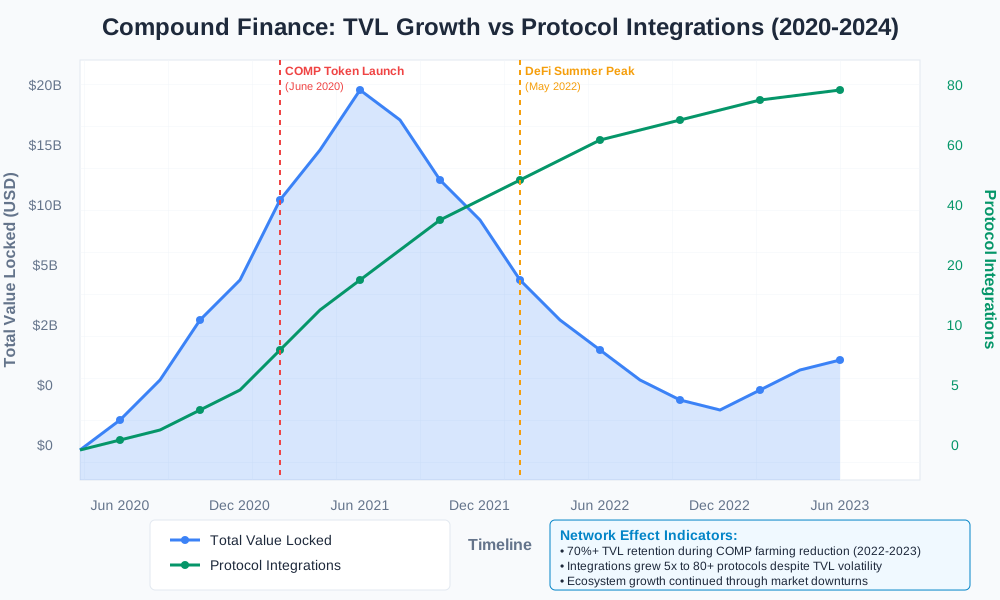
Let's examine how Compound Finance built sustainable network effects beyond initial token incentives.
Compound's Network Effect Strategy:
- Lending Market Creation: Established the foundational lending/borrowing primitive
- cToken Innovation: Created composable interest-bearing tokens
- Ecosystem Integration: Enabled protocols like Yearn to build on top
- Governance Decentralization: Created stakeholder alignment
Metrics That Showed Success:
- Cross-protocol integrations grew from 5 to 50+ protocols
- TVL retention stayed >70% during COMP farming reduction
- Fee generation increased independently of token rewards
- User retention rates improved despite lower incentives
Advanced Monitoring and Alert Systems
Automated Alert Configuration
Set up monitoring systems to catch network effect degradation early.
// Alert system for network effect monitoring
class NetworkEffectMonitor {
    constructor(protocolConfig) {
        this.protocol = protocolConfig.name;
        this.thresholds = protocolConfig.alertThresholds;
        this.dataSource = protocolConfig.dataSource;
    }

    async checkNetworkHealth() {
        const metrics = await this.collectMetrics();
        const alerts = [];

        // TVL Quality Alert
        if (metrics.nativeTokenRatio > this.thresholds.maxNativeTokenRatio) {
            alerts.push({
                type: 'TVL_QUALITY_DEGRADED',
                severity: 'HIGH',
                message: `Native token ratio ${metrics.nativeTokenRatio}% exceeds threshold`,
                recommendation: 'Increase non-native asset incentives'
            });
        }

        // User Retention Alert
        if (metrics.weeklyRetention < this.thresholds.minRetentionRate) {
            alerts.push({
                type: 'USER_RETENTION_LOW',
                severity: 'MEDIUM',
                message: `Weekly retention ${metrics.weeklyRetention}% below target`,
                recommendation: 'Review user experience and incentive structure'
            });
        }

        // Revenue Sustainability Alert
        if (metrics.feeEmissionRatio < this.thresholds.minFeeEmissionRatio) {
            alerts.push({
                type: 'SUSTAINABILITY_RISK',
                severity: 'HIGH',
                message: `Fee/emission ratio ${metrics.feeEmissionRatio} indicates unsustainable economics`,
                recommendation: 'Reduce emissions or increase fee generation'
            });
        }

        return {
            timestamp: new Date(),
            protocolHealth: this.calculateHealthScore(metrics),
            alerts: alerts,
            metrics: metrics
        };
    }

    calculateHealthScore(metrics) {
        // Weighted health score calculation
        const weights = {
            tvlQuality: 0.3,
            userRetention: 0.25,
            sustainability: 0.25,
            growth: 0.2
        };

        return Object.keys(weights).reduce((score, metric) => {
            return score + (metrics[metric] * weights[metric]);
        }, 0);
    }
}
Future Trends in Network Effect Analysis
Emerging Metrics and Methodologies
The DeFi space continues evolving, requiring new analytical approaches:
Cross-Chain Network Effects: Protocols operating across multiple blockchains create complex network dynamics requiring multi-chain analysis frameworks.
Social Layer Integration: Community engagement, governance participation, and social media sentiment increasingly impact protocol success.
MEV and Network Effects: Maximum Extractable Value creates new forms of network effects as protocols optimize for searcher activity.
Institutional Adoption Metrics: Traditional finance integration creates different user behavior patterns requiring specialized analysis.
Conclusion
Analyzing yield farming network effects requires looking beyond surface-level TVL numbers to understand sustainable growth drivers. The most successful protocols build genuine network effects through composability, user retention, and revenue generation independent of token incentives.
Key Takeaways for Protocol Growth Analysis:
- Measure TVL quality, not just quantity
- Track user engagement depth over breadth
- Monitor incentive efficiency and sustainability metrics
- Build comprehensive monitoring systems for early warning signs
By implementing these protocol growth metrics and analysis frameworks, you can distinguish between temporary incentive-driven growth and sustainable network effects. The protocols that master this analysis will build lasting value in the competitive DeFi landscape.
Start with the metrics outlined in this guide, implement monitoring systems, and continuously refine your analysis as your protocol evolves. Remember: sustainable yield farming success comes from creating genuine value, not just high APY numbers.
Ready to implement these network effect analysis strategies? Start by auditing your current metrics and identifying gaps in your monitoring systems. The data you need is already available – you just need the right framework to interpret it.