Picture this: You're staring at 50+ yield farming protocols, each promising astronomical APYs, but their fee structures look like they were designed by caffeinated mathematicians. Welcome to DeFi's wild west of revenue models.
Analyzing yield farming fee structures separates profitable farmers from yield chasers who burn through gas fees faster than a Lamborghini burns fuel. This comprehensive guide reveals how to dissect revenue models, compare fee structures, and identify the most profitable farming opportunities.
Understanding Yield Farming Revenue Models
Yield farming protocols generate revenue through multiple fee layers that directly impact your returns. Each protocol implements unique fee structures that affect your final APY calculations.
Core Revenue Components
Trading Fees: Base fees collected from swaps within liquidity pools
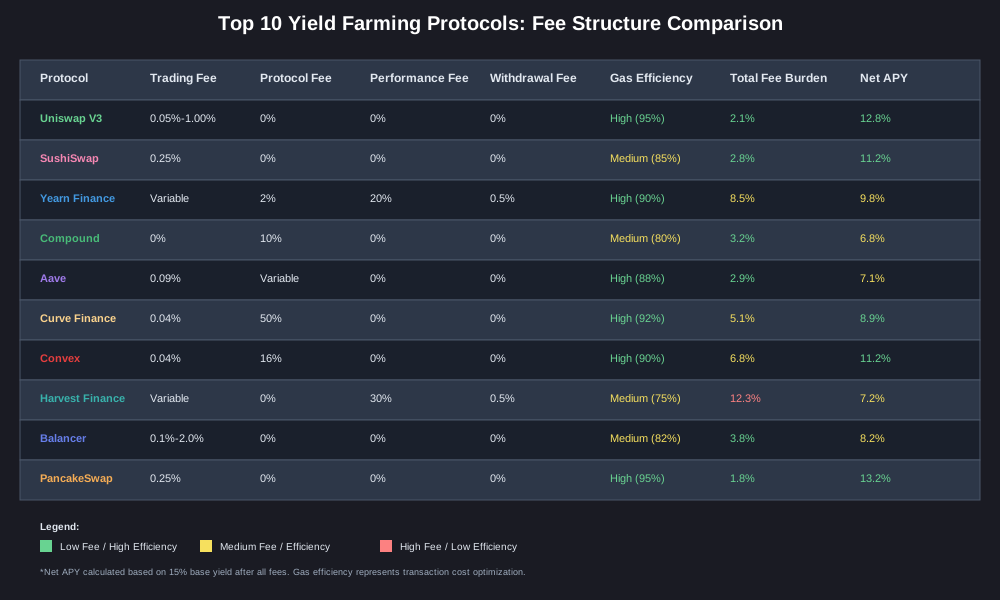
- Uniswap V3: 0.05%, 0.30%, 1.00% tiers
- SushiSwap: 0.25% standard rate
- Curve: 0.04% for stablecoin pools
Protocol Fees: Additional charges for platform maintenance
- Compound: 10% of interest earned
- Aave: Variable based on utilization rates
- MakerDAO: Stability fee ranges 0.5%-8%
Performance Fees: Charges on profits generated
- Yearn Finance: 2% management + 20% performance
- Harvest Finance: 30% performance fee
- Convex: 16% platform fee
Fee Structure Analysis Framework
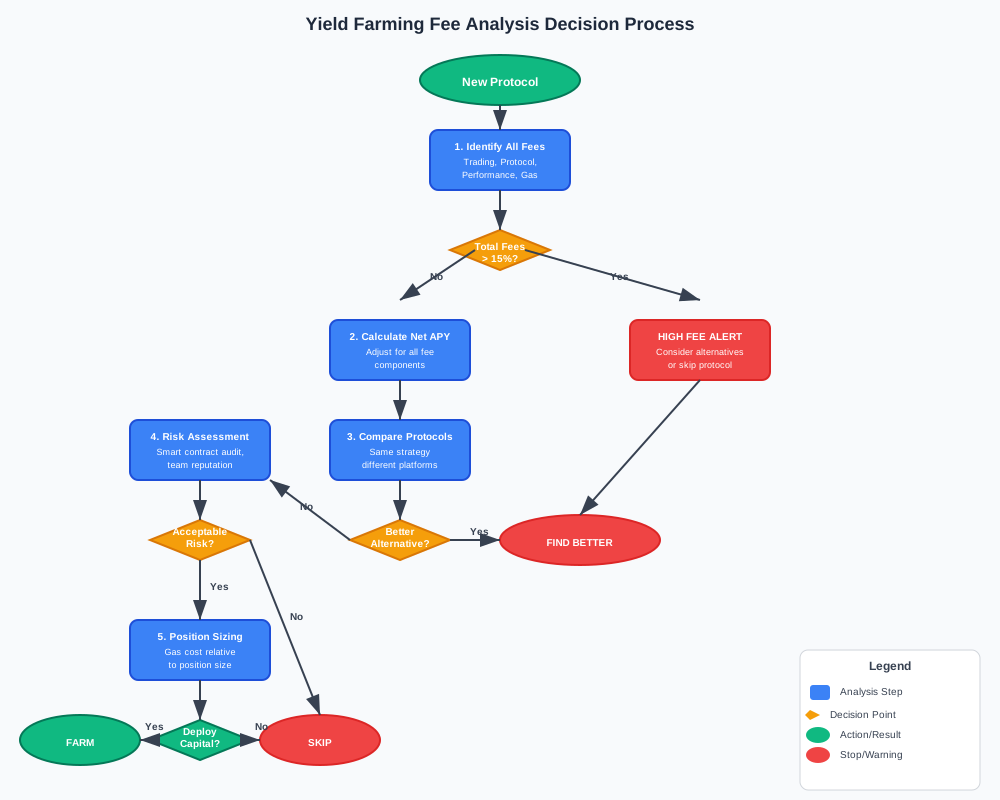
Successful yield farming requires systematic fee analysis across different protocol types. Use this framework to evaluate any farming opportunity.
Step 1: Identify All Fee Components
// Fee analysis template
const protocolAnalysis = {
  tradingFees: 0.003, // 0.3% per trade
  protocolFee: 0.10,  // 10% of rewards
  performanceFee: 0.20, // 20% of profits
  withdrawalFee: 0.005, // 0.5% on exit
  gasEstimate: 0.02    // 2% of position size
};

// Calculate total fee burden
function calculateTotalFees(fees) {
  const compound = (1 + fees.tradingFees) *
                   (1 - fees.protocolFee) *
                   (1 - fees.performanceFee) *
                   (1 - fees.withdrawalFee) *
                   (1 - fees.gasEstimate);

  return 1 - compound; // Total fee percentage
}
Step 2: Calculate Net APY
Raw APY numbers mean nothing without fee adjustments. Calculate your actual returns using this formula:
function calculateNetAPY(grossAPY, fees) {
  // Adjust for performance fees first
  const afterPerformance = grossAPY * (1 - fees.performanceFee);

  // Subtract protocol fees
  const afterProtocol = afterPerformance * (1 - fees.protocolFee);

  // Account for trading friction
  const tradingImpact = fees.tradingFees * 52; // Weekly compounding

  // Final net APY
  return afterProtocol - tradingImpact - fees.gasEstimate;
}
Protocol Comparison Analysis
Compare major yield farming protocols using standardized metrics that reveal true profitability.
Automated Market Makers (AMMs)
Uniswap V3 Analysis
- Fee tiers: 0.05% (stable), 0.30% (standard), 1.00% (exotic)
- No protocol fees currently active
- Concentrated liquidity increases capital efficiency
- Impermanent loss risk varies by price range
SushiSwap Onsen Programs
- Base trading fee: 0.25%
- Additional SUSHI rewards
- xSUSHI staking provides fee sharing
- Higher gas costs due to multiple transactions
Lending Protocols
Compound Finance Structure
- Supply APY: Variable based on utilization
- COMP token rewards: Declining emission schedule
- Protocol fee: 10% of interest earned
- Gas costs: $15-50 per transaction
Aave Protocol Mechanics
- Variable and stable rate options
- Safety module staking rewards
- Flash loan fees: 0.09%
- aToken integration benefits
Yield Aggregators
Yearn Finance Vaults
- Management fee: 2% annually
- Performance fee: 20% of profits
- Automated strategy optimization
- Gas cost socialization across users
// Yearn vault analysis example
const yearnVaultAnalysis = {
  grossYield: 0.15, // 15% APY before fees
  managementFee: 0.02,
  performanceFee: 0.20,

  calculateNet: function() {
    const afterManagement = this.grossYield - this.managementFee;
    const profit = Math.max(0, afterManagement - 0.05); // 5% hurdle
    const afterPerformance = afterManagement - (profit * this.performanceFee);
    return afterPerformance;
  }
};
Fee Structure Optimization Strategies
Maximize your yield farming returns by implementing these fee optimization techniques.
Gas Cost Minimization
Batch Operations: Combine multiple actions into single transactions
- Use multicall contracts when available
- Time transactions during low network congestion
- Consider Layer 2 solutions (Polygon, Arbitrum, Optimism)
Position Sizing: Optimize deposit amounts relative to gas costs
- Minimum position size: 100x estimated gas cost
- Dollar-cost average large positions
- Use stable gas tokens for predictable costs
Fee Arbitrage Opportunities
Cross-Protocol Analysis: Compare identical strategies across platforms
// Protocol comparison calculator
const protocols = [
  {
    name: "Yearn USDC",
    apy: 0.08,
    fees: { management: 0.02, performance: 0.20 },
    gasEfficiency: 0.95
  },
  {
    name: "Compound USDC",
    apy: 0.06,
    fees: { protocol: 0.10 },
    gasEfficiency: 0.85
  }
];

function compareProtocols(protocols, amount) {
  return protocols.map(protocol => {
    const netAPY = calculateNetReturn(protocol.apy, protocol.fees);
    const annualReturn = amount * netAPY * protocol.gasEfficiency;

    return {
      protocol: protocol.name,
      netAPY: netAPY,
      projectedReturn: annualReturn
    };
  });
}
Advanced Fee Analysis Techniques
Professional yield farmers use sophisticated analysis methods to identify the most profitable opportunities.
Risk-Adjusted Returns
Calculate Sharpe ratios for different farming strategies:
function calculateSharpe(returns, riskFreeRate = 0.02) {
  const excessReturns = returns.map(r => r - riskFreeRate);
  const avgExcess = excessReturns.reduce((a, b) => a + b) / returns.length;
  const stdDev = calculateStandardDeviation(excessReturns);

  return avgExcess / stdDev;
}
Time-Weighted Analysis
Account for fee impacts over different holding periods:
const timeAnalysis = {
  shortTerm: {
    period: "1 week",
    gasImpact: 0.05,      // 5% of position
    tradingFees: 0.002,   // 0.2% round trip
    optimalSize: 50000    // $50k minimum
  },

  mediumTerm: {
    period: "1 month",
    gasImpact: 0.01,      // 1% of position
    tradingFees: 0.001,   // 0.1% average
    optimalSize: 10000    // $10k minimum
  },

  longTerm: {
    period: "1 year",
    gasImpact: 0.002,     // 0.2% of position
    tradingFees: 0.0005,  // 0.05% average
    optimalSize: 5000     // $5k minimum
  }
};
Simulation Models
Test different scenarios using Monte Carlo analysis:
function simulateYieldFarming(params, iterations = 1000) {
  const results = [];

  for (let i = 0; i < iterations; i++) {
    const volatility = Math.random() * params.maxVolatility;
    const yieldVariation = (Math.random() - 0.5) * params.yieldRange;
    const gasSpike = Math.random() < 0.1 ? 3 : 1; // 10% chance of 3x gas

    const scenario = {
      finalReturn: calculateNetReturn(
        params.baseAPY + yieldVariation,
        params.fees,
        volatility,
        gasSpike
      )
    };

    results.push(scenario);
  }

  return analyzeResults(results);
}
Common Fee Structure Pitfalls
Avoid these expensive mistakes that destroy yield farming profitability.
Hidden Fee Components
Slippage Costs: Often overlooked in APY calculations
- Large positions create price impact
- Volatile pairs increase slippage
- Use limit orders when possible
Opportunity Costs: Time and gas spent moving positions
- Calculate break-even periods for strategy changes
- Factor in transaction confirmation times
- Consider automated rebalancing costs
Fee Compounding Effects
Multiple fee layers compound to reduce returns significantly:
// Example: Triple fee impact
const position = {
  amount: 100000,
  grossAPY: 0.20, // 20% advertised yield

  fees: {
    protocol: 0.10,    // 10% protocol fee
    performance: 0.15, // 15% performance fee
    trading: 0.005,    // 0.5% trading fees
    gas: 0.02         // 2% gas costs
  }
};

// Compound fee calculation
const netReturn = position.amount * position.grossAPY *
                 (1 - position.fees.protocol) *
                 (1 - position.fees.performance) *
                 (1 - position.fees.trading) *
                 (1 - position.fees.gas);

// Result: $13,005 instead of $20,000 (35% fee burden)
Building Your Fee Analysis Toolkit
Create systematic processes for evaluating yield farming opportunities.
Automated Monitoring
Set up alerts for fee structure changes:
const monitoringSystem = {
  protocols: ["Yearn", "Compound", "Aave", "Curve"],

  checkFeeChanges: async function() {
    for (const protocol of this.protocols) {
      const currentFees = await fetchProtocolFees(protocol);
      const previousFees = this.historicalData[protocol];

      if (feesChanged(currentFees, previousFees)) {
        this.alertSystem.notify(`${protocol} fee structure updated`);
        this.recalculateReturns(protocol);
      }
    }
  }
};
Decision Framework
Use this checklist for every farming opportunity:
- Fee Transparency: Are all fees clearly documented?
- Fee Stability: How often do fees change?
- Competitive Analysis: How do fees compare to alternatives?
- Break-Even Analysis: What returns are needed to justify fees?
- Exit Strategy: What are the costs of unwinding positions?
Maximizing Returns Through Fee Optimization
Smart yield farmers optimize fee structures rather than chasing the highest advertised APYs.
Portfolio Allocation Strategy
Distribute capital across fee tiers based on expected returns:
const allocationModel = {
  conservative: {
    allocation: 0.40,
    targetProtocols: ["Compound", "Aave"],
    maxFees: 0.05,
    expectedAPY: 0.08
  },

  moderate: {
    allocation: 0.40,
    targetProtocols: ["Yearn", "Convex"],
    maxFees: 0.15,
    expectedAPY: 0.15
  },

  aggressive: {
    allocation: 0.20,
    targetProtocols: ["New protocols", "High-risk farms"],
    maxFees: 0.30,
    expectedAPY: 0.40
  }
};
Dynamic Rebalancing
Adjust positions based on fee efficiency changes:
function shouldRebalance(currentPosition, newOpportunity) {
  const switchingCosts = currentPosition.exitFees + newOpportunity.entryFees;
  const netBenefit = newOpportunity.netAPY - currentPosition.netAPY;
  const timeToBreakeven = switchingCosts / netBenefit;

  return timeToBreakeven < currentPosition.remainingTime * 0.5;
}
Analyzing yield farming fee structures requires systematic evaluation of all cost components, not just advertised APYs. Use this framework to calculate true returns, compare protocols objectively, and optimize your farming strategy for maximum profitability. Smart fee analysis separates successful farmers from those who chase yields without considering costs.
Start by implementing the fee calculation formulas provided, then gradually build automated monitoring systems. Remember: the highest APY rarely equals the highest net returns once fees are properly accounted for.