Ever wished your loans could pay themselves off while you sleep? Welcome to the magical world of Alchemix, where your debt vanishes faster than your weekend plans. This isn't financial alchemy—it's smart contract wizardry that turns yield farming into an automated loan repayment system.
Alchemix revolutionizes DeFi lending by combining collateral deposits with automated yield generation. Users deposit crypto assets, borrow synthetic tokens, and watch their loans disappear through yield farming rewards. No monthly payments, no stress, just mathematical beauty at work.
This guide covers everything from wallet setup to advanced yield optimization strategies. You'll learn to deposit collateral, mint synthetic assets, and maximize your yield farming returns through Alchemix's self-repaying loan mechanism.
What Is Alchemix Self-Repaying Loan Yield Farming?
The Problem with Traditional DeFi Loans
Traditional DeFi loans require manual repayment schedules. Borrowers must actively manage their positions, track interest rates, and make regular payments. This creates stress and requires constant monitoring of market conditions.
Most lending protocols also expose users to liquidation risks during market volatility. Borrowers face the constant threat of losing their collateral if asset prices drop below maintenance ratios.
How Alchemix Solves Lending Problems
Alchemix eliminates manual loan management through automated yield farming. The protocol deposits your collateral into yield-generating strategies and uses the earned yield to repay your loan automatically.
Key Benefits:
- Zero liquidation risk on borrowed amounts
- Automated loan repayment through yield
- No monthly payment requirements
- Immediate access to borrowed funds
- Diversified yield farming exposure
Core Alchemix Components
Synthetic Assets (alTokens): Debt tokens representing your loan amount. alUSD and alETH are the primary synthetic assets available for borrowing.
Yield Strategies: Automated protocols that generate returns on your deposited collateral. Alchemix integrates with Yearn Finance, Curve, and other yield sources.
Transmuter: The mechanism that converts earned yield into loan repayment. It automatically burns your debt tokens as yield accumulates.
Setting Up Your Alchemix Account
Wallet Requirements and Setup
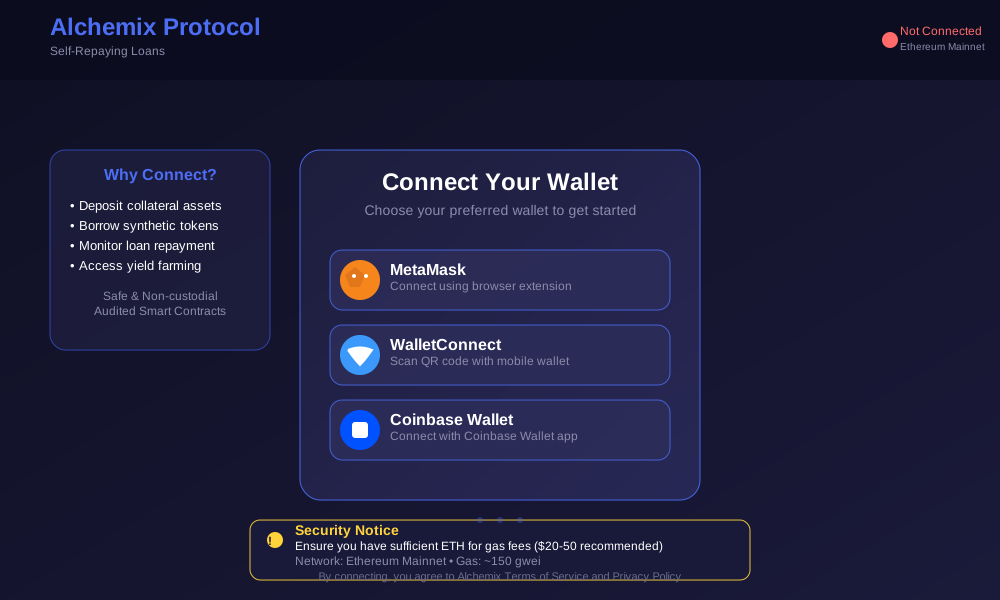
Connect a Web3 wallet that supports Ethereum mainnet. MetaMask, WalletConnect, and Coinbase Wallet work seamlessly with the Alchemix interface.
Ensure your wallet contains sufficient ETH for gas fees. Typical transactions cost 50-200 gwei depending on network congestion. Budget $20-50 for initial setup transactions.
Choosing Your Collateral Assets
Alchemix accepts specific assets as collateral for different synthetic tokens:
For alUSD Borrowing:
- DAI (Dai Stablecoin)
- USDC (USD Coin)
- USDT (Tether)
For alETH Borrowing:
- ETH (Ethereum)
- wstETH (Wrapped Staked ETH)
Select collateral based on your risk tolerance and yield preferences. Stablecoins offer lower volatility, while ETH provides higher potential returns with increased risk.
Understanding Loan-to-Value Ratios
Alchemix maintains conservative LTV ratios to ensure protocol stability:
- alUSD pools: 50% maximum LTV ratio
- alETH pools: 25% maximum LTV ratio
These ratios prevent liquidations while ensuring sufficient collateral backing for all synthetic tokens. Your collateral value must always exceed double your borrowed amount.
Step-by-Step Alchemix Loan Process
Step 1: Deposit Collateral Assets
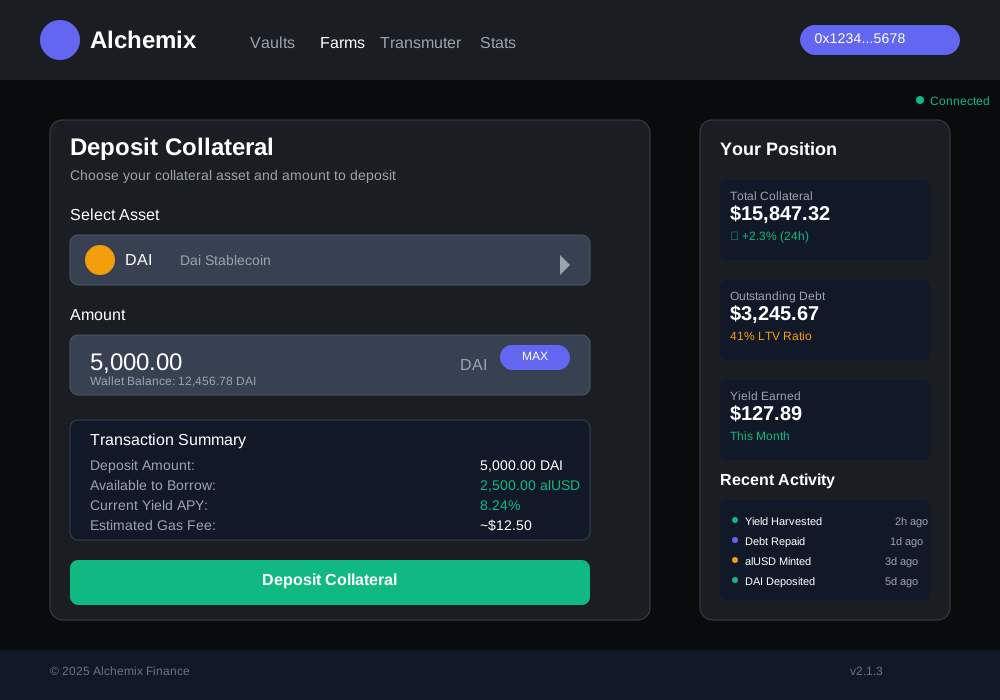
Navigate to the Alchemix app and select your preferred collateral pool. Click "Deposit" and enter your desired collateral amount.
// Example transaction flow
function deposit(uint256 amount) external {
    // Transfer collateral to vault
    collateralToken.transferFrom(msg.sender, address(this), amount);

    // Update user balance
    userBalances[msg.sender] += amount;

    // Deploy funds to yield strategy
    yieldStrategy.deposit(amount);
}
Approve the token spending transaction in your wallet. The protocol transfers your assets to the yield-generating vault and begins earning yield immediately.
Expected Outcome: Your collateral appears in the vault balance, and yield generation starts within the next block.
Step 2: Mint Synthetic Assets (Borrowing)
After depositing collateral, select "Mint" to borrow synthetic assets. Choose your borrowing amount within the available LTV ratio limits.
The protocol calculates your maximum borrowing capacity automatically. You can borrow up to 50% of your collateral value for stablecoins or 25% for ETH-based pools.
// Calculate maximum borrow amount
const maxBorrowAmount = (collateralValue * ltvRatio) / 100;
const availableToBorrow = maxBorrowAmount - currentDebt;
Confirm the minting transaction and receive your synthetic tokens immediately. These tokens trade 1:1 with their underlying assets on major DEXs.
Expected Outcome: Synthetic tokens appear in your wallet balance, ready for trading or additional yield farming.
Step 3: Monitor Yield Generation and Repayment
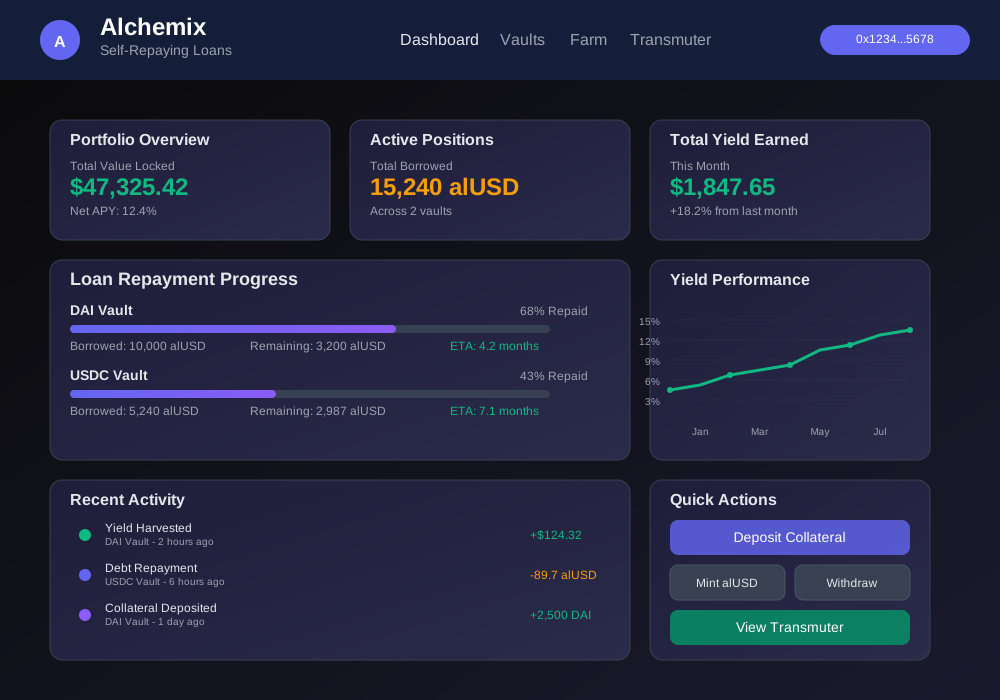
Your deposited collateral automatically generates yield through integrated strategies. The protocol harvests yield periodically and converts it to debt repayment.
Access the dashboard to track your loan repayment progress. The interface displays accumulated yield, remaining debt, and estimated payoff timeline.
Yield Sources Include:
- Yearn Finance vault strategies
- Curve liquidity pool rewards
- Convex boosted yields
- Protocol token emissions
Advanced Alchemix Strategies
Leveraging Self-Repaying Loans
Experienced users can create leveraged positions using borrowed synthetic assets. Swap alUSD for additional collateral assets and deposit them for increased exposure.
This strategy amplifies both potential returns and risks. Market volatility affects your overall position size, but liquidation risk remains eliminated for the borrowed portion.
Example Leverage Strategy:
- Deposit 10,000 USDC as collateral
- Borrow 5,000 alUSD (50% LTV)
- Swap alUSD for additional USDC
- Deposit new USDC for increased position
Yield Optimization Techniques
Maximize your returns by selecting optimal collateral assets and timing your entries. Monitor yield rates across different pools and migrate capital to higher-performing strategies.
Consider the gas costs of position management against potential yield improvements. Small position sizes may not justify frequent optimization due to transaction fees.
Optimization Checklist:
- Compare yield rates across collateral options
- Factor in gas costs for position changes
- Monitor protocol token rewards and emissions
- Track transmuter efficiency rates
Risk Management Best Practices
Maintain conservative position sizes relative to your total portfolio. While Alchemix eliminates liquidation risk, market volatility still affects your collateral value and borrowing capacity.
Set up monitoring alerts for significant market movements. Large collateral price drops can reduce your available borrowing capacity for future loans.
Risk Factors to Monitor:
- Collateral asset price volatility
- Yield strategy performance
- Smart contract security risks
- Protocol governance changes
Comparing Alchemix with Traditional DeFi Lending
Alchemix vs. Aave Lending
| Feature | Alchemix | Aave |
|---|---|---|
| Liquidation Risk | None | High |
| Repayment Method | Automatic | Manual |
| Interest Rates | 0% (yield-based) | Variable |
| Asset Variety | Limited | Extensive |
| Borrowing Capacity | 25-50% LTV | Up to 80% LTV |
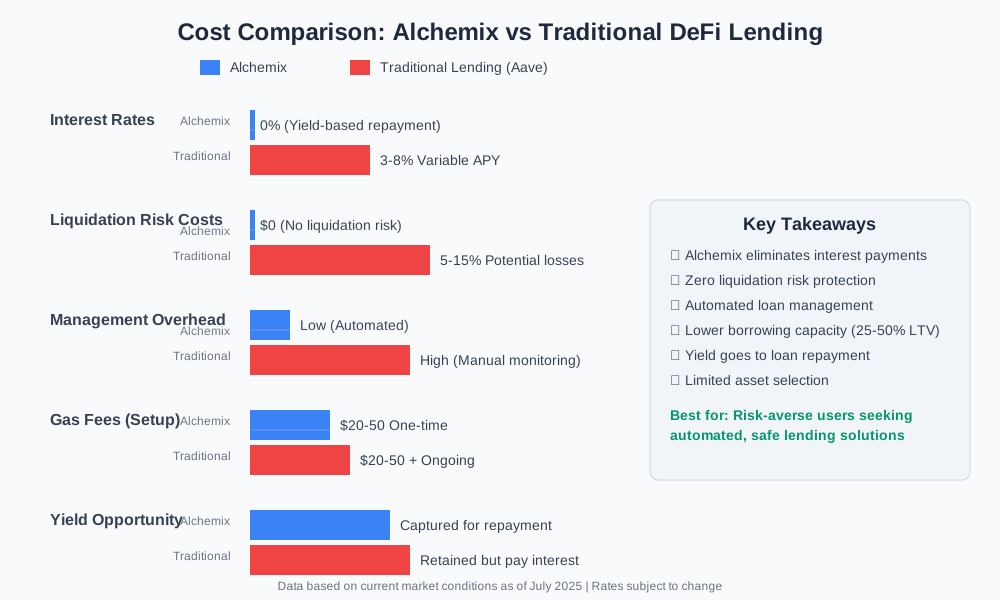
Alchemix trades borrowing capacity for safety and convenience. Users accept lower LTV ratios in exchange for liquidation protection and automated repayment.
Cost Analysis and Efficiency
Alchemix eliminates interest payments but captures all yield generated by your collateral. Traditional lending allows you to retain yield while paying interest on borrowed amounts.
The break-even point depends on the yield differential between Alchemix strategies and external opportunities. Calculate the opportunity cost before committing large amounts.
Troubleshooting Common Issues
Transaction Failures and Gas Problems
High gas prices can cause transaction failures during network congestion. Use gas estimation tools to set appropriate gas limits and prices for successful execution.
MetaMask sometimes underestimates gas requirements for complex DeFi transactions. Manually increase gas limits by 20-30% for reliable execution.
Gas Optimization Tips:
- Monitor network congestion through gas trackers
- Time transactions during low-usage periods
- Use gas optimization tools like flashbots
- Consider Layer 2 alternatives when available
Slippage and Price Impact Issues
Large transactions may experience slippage when swapping synthetic assets. Use appropriate slippage tolerance settings and consider breaking large orders into smaller chunks.
Monitor the synthetic asset pegs before large trades. Significant depegging events can affect your trading outcomes and loan efficiency.
Yield Strategy Underperformance
Some yield strategies may underperform during market downturns. The protocol automatically reallocates funds to better-performing strategies when possible.
Track your loan repayment timeline through the dashboard. Slower-than-expected repayment indicates yield strategy challenges that may require position adjustments.
Security and Risk Considerations
Smart Contract Audit Status
Alchemix undergoes regular security audits from reputable firms including Certik and Quantstamp. Review audit reports before depositing significant amounts.
The protocol maintains a bug bounty program incentivizing security researchers to identify vulnerabilities. This ongoing security focus reduces smart contract risks.
Insurance and Risk Mitigation
Consider purchasing DeFi insurance through protocols like Nexus Mutual or InsurAce. Coverage protects against smart contract failures and protocol exploits.
Diversify your exposure across multiple protocols rather than concentrating all funds in Alchemix. This reduces single-protocol risk while maintaining yield farming exposure.
Security Best Practices:
- Start with small position sizes
- Verify contract addresses before transactions
- Use hardware wallets for large amounts
- Monitor protocol announcements and updates
Maximizing Your Alchemix Returns
Optimal Entry and Exit Timing
Enter Alchemix positions during high yield periods to accelerate loan repayment. Monitor yield rates across different strategies and time your deposits accordingly.
Exit strategies depend on your investment timeline and market outlook. Consider partial withdrawals to maintain exposure while securing profits.
Compound Growth Strategies
Reinvest repaid loan amounts into new collateral deposits for compound growth effects. This strategy maximizes your capital efficiency and accelerates wealth building.
Track your cumulative returns including both loan repayment and collateral appreciation. The combined effect often exceeds traditional yield farming returns.
Portfolio Integration Techniques
Integrate Alchemix positions with broader DeFi strategies including liquidity provision and governance token farming. Use borrowed synthetic assets as trading capital for additional opportunities.
Maintain balance between automated and active strategies. Alchemix provides passive income while active trading can generate additional alpha.
Future Developments and Roadmap
Upcoming Protocol Improvements
Alchemix continues expanding collateral options and yield strategies. Future updates include additional synthetic assets, Layer 2 deployments, and enhanced yield optimization.
Cross-chain functionality will enable multi-chain collateral deposits and borrowing. This expansion increases capital efficiency and provides access to diverse yield opportunities.
Integration with Other Protocols
Strategic partnerships with major DeFi protocols enhance Alchemix's yield generation capabilities. Integrations with new yield sources provide better returns for users.
Collaborative development with governance token protocols creates additional reward opportunities. Users benefit from expanded earning potential through protocol partnerships.
Conclusion
Alchemix self-repaying loan yield farming transforms traditional lending by eliminating manual repayment requirements and liquidation risks. Users deposit collateral, borrow synthetic assets, and watch their loans disappear through automated yield generation.
The protocol's conservative approach prioritizes safety over maximum borrowing capacity. This design choice creates sustainable returns while protecting user capital from market volatility.
Success with Alchemix requires understanding yield optimization, risk management, and strategic position sizing. Start with small amounts, monitor performance metrics, and gradually scale your positions as you gain experience.
Ready to experience self-repaying loans? Visit the Alchemix app, connect your wallet, and begin your journey into automated DeFi lending today. Your future self will thank you for the loans that pay themselves off.
Disclaimer: This article is for educational purposes only and does not constitute financial advice. Cryptocurrency investments carry inherent risks, and you should conduct your own research before participating in DeFi protocols.