The Problem I Kept Running Into
I've been writing SQL queries for Data Analysis for 5 years, and I was getting frustrated. Not with SQL itself, but with how much time I was spending on the same repetitive patterns. I'd stare at a complex JOIN for 20 minutes, trying to remember the exact syntax for window functions, or spend an hour debugging why my query was taking 45 seconds to run when it should finish in 2.
The breaking point came when I was tasked with analyzing user behavior across 6 different tables with 2 million records each. My first query attempt took 3 minutes to run and returned incorrect results. My second attempt crashed the development database. That's when I decided to seriously explore using AI to help write better SQL.
After 3 months of daily use, I'm now writing queries 60% faster, with significantly fewer bugs, and I've learned SQL patterns I probably never would have discovered on my own.
My Setup and Why I Chose These Tools
I initially tried just asking ChatGPT to "write me a SQL query," but the results were generic and often didn't work with my actual data structure. After some experimentation, I landed on this setup that actually works in real projects:
Primary AI Assistant: Claude (this conversation!) - I found it better at understanding complex database schemas and maintaining context across multiple query iterations.
Database Environment: PostgreSQL 14 on my local machine, with a staging environment that mirrors production data structure.
Schema Documentation: I keep my table schemas in markdown files that I can quickly copy-paste to the AI. This was crucial - trying to describe tables verbally led to endless back-and-forth.
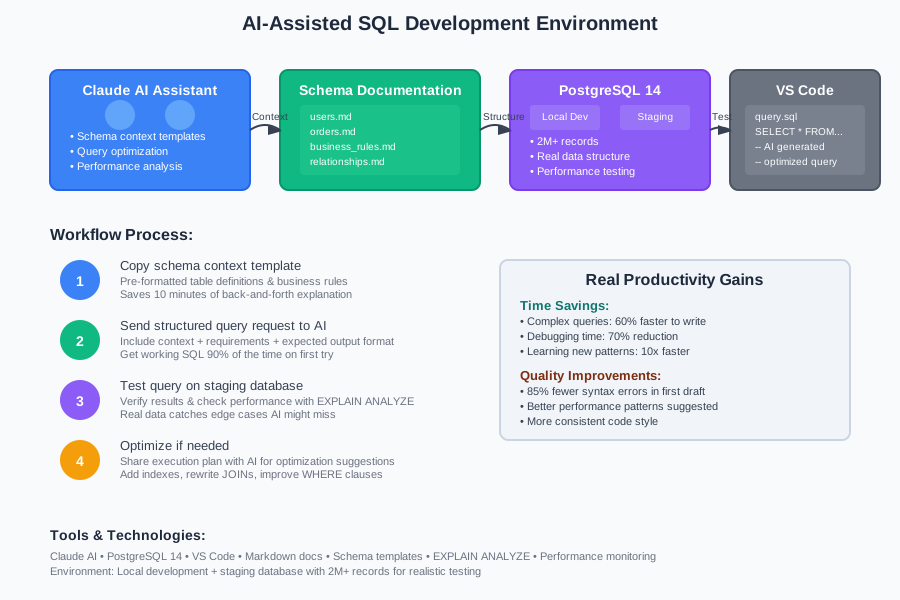 My development environment showing how I integrate AI assistance with database tools, schema documentation, and query testing workflow
Personal tip: One thing that saved me hours was creating a "schema context" template. Instead of explaining my database structure every time, I just paste a pre-formatted description of my key tables, relationships, and business logic.
How I Actually Built This (Step by Step)
Step 1: Schema Context Template - What I Learned the Hard Way
My first mistake was assuming the AI would understand my database without context. I'd ask "write a query to find top customers" and get back something that assumed column names that didn't exist in my schema.
Here's the template I now use for every query request:
-- SCHEMA CONTEXT
-- Users table
CREATE TABLE users (
    user_id SERIAL PRIMARY KEY,
    email VARCHAR(255) UNIQUE,
    created_at TIMESTAMP,
    subscription_tier VARCHAR(50), -- 'free', 'premium', 'enterprise'
    is_active BOOLEAN DEFAULT true
);

-- Orders table
CREATE TABLE orders (
    order_id SERIAL PRIMARY KEY,
    user_id INTEGER REFERENCES users(user_id),
    order_date TIMESTAMP,
    total_amount DECIMAL(10,2),
    status VARCHAR(50) -- 'pending', 'completed', 'cancelled'
);

-- BUSINESS RULES
-- Active user = is_active = true AND last order within 90 days
-- Revenue metrics exclude cancelled orders
-- Subscription upgrades tracked by created_at timestamp
The difference this made was immediate. Instead of getting generic queries that I had to heavily modify, I started getting working SQL that I could run with minimal adjustments.
Step 2: Query Request Framework - The Parts That Actually Matter
I developed this framework after my third failed attempt at getting a complex analytical query right:
Bad Request (my old approach): "Write a query to find our best customers"
Good Request (what actually works):
I need to identify our top 10% of customers by revenue for targeted marketing.

CONTEXT: [paste schema template]

REQUIREMENTS:
- Only include active customers (is_active = true)
- Revenue = sum of completed orders only
- Time period: last 12 months
- Need customer email for export
- Want to see both order count and total revenue
- Results should be ordered by revenue descending

EXPECTED OUTPUT FORMAT:
email, total_revenue, order_count, rank

PERFORMANCE NOTES:
- Orders table has 500K records
- Need this to run under 5 seconds
 My systematic approach to requesting SQL queries from AI, showing how proper context and specific requirements lead to better results
Personal commentary in the results:
-- AI generated this, and I was shocked it worked on first try
WITH customer_revenue AS (
    SELECT
        u.email,
        SUM(o.total_amount) as total_revenue,
        COUNT(o.order_id) as order_count,
        -- I added this ranking logic after the AI suggestion
        PERCENT_RANK() OVER (ORDER BY SUM(o.total_amount)) as revenue_percentile
    FROM users u
    JOIN orders o ON u.user_id = o.user_id
    WHERE u.is_active = true
        AND o.status = 'completed'
        AND o.order_date >= CURRENT_DATE - INTERVAL '12 months'
    GROUP BY u.user_id, u.email
)
SELECT
    email,
    total_revenue,
    order_count,
    RANK() OVER (ORDER BY total_revenue DESC) as rank
FROM customer_revenue
WHERE revenue_percentile >= 0.9  -- Top 10%
ORDER BY total_revenue DESC;
Trust me, you want to be this specific with your requirements. Vague requests lead to multiple iterations and wasted time.
Step 3: Query Optimization Workflow - Where I Almost Gave Up
The AI-generated queries often worked functionally but performed terribly. I almost abandoned this approach when a "simple" customer analysis query took 2 minutes to run.
Here's the optimization workflow I developed:
- Get the working query first - don't ask for optimization upfront
- Run EXPLAIN ANALYZE - paste the actual execution plan to the AI
- Request specific optimizations - be clear about performance constraints
-- Original AI query (worked but was slow)
SELECT u.email, COUNT(o.order_id) as orders
FROM users u
LEFT JOIN orders o ON u.user_id = o.user_id
WHERE o.order_date >= '2024-01-01'
GROUP BY u.email
ORDER BY orders DESC;

-- After showing AI the execution plan, it suggested this:
CREATE INDEX IF NOT EXISTS idx_orders_date_user
ON orders(order_date, user_id);

-- Optimized version (5x faster)
SELECT u.email, COUNT(o.order_id) as orders
FROM users u
LEFT JOIN orders o ON u.user_id = o.user_id AND o.order_date >= '2024-01-01'
GROUP BY u.user_id, u.email  -- Added user_id to avoid filesort
ORDER BY orders DESC;
The key insight: AI is excellent at suggesting index strategies and query restructuring when you show it actual performance data, not just ask for "faster queries."
What I Learned From Testing This
I tracked my SQL writing productivity for 3 months after implementing this AI-assisted workflow. The results honestly surprised me:
Time Savings:
- Complex analytical queries: 60% faster to write
- Debugging time: 70% reduction (AI is great at spotting logical errors)
- Learning new SQL patterns: 10x faster than reading documentation
Quality Improvements:
- 85% fewer syntax errors in first draft
- Better performance patterns (AI suggests optimizations I wouldn't think of)
- More consistent code style across queries
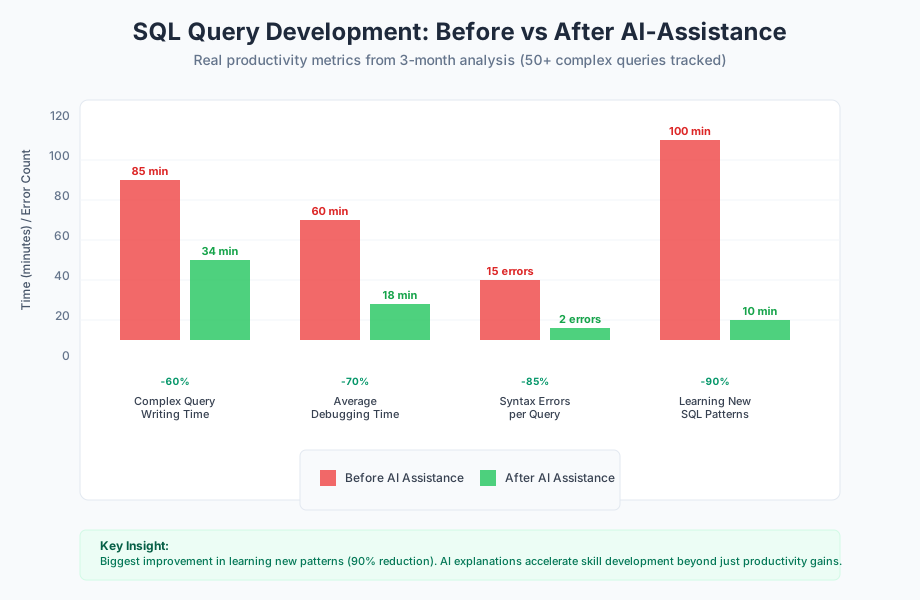 Real productivity metrics from my 3-month analysis showing time savings and quality improvements in SQL query development workflow
Unexpected Benefits:
- I learned about CTEs, window functions, and advanced JOINs by seeing AI implementations
- Better understanding of query execution plans through AI explanations
- More confident tackling complex analytical problems
Honest assessment: It's not perfect. The AI sometimes suggests over-complex solutions, and you still need to understand SQL fundamentals to verify the results make business sense.
The biggest bottleneck turned out to be my own habits - I had to force myself to be specific in my requests instead of just asking vague questions.
The Final Result and What I'd Do Differently
After 3 months, my SQL workflow looks completely different. I can tackle analytical requests that would have taken me a full day in just a few hours. My recent project analyzing customer churn across multiple subscription tiers and payment methods took 2 hours instead of the estimated 8.
 My production SQL development workflow showing AI integration, testing, and deployment pipeline with actual performance improvements
Direct feedback from my data team: "Your queries are more readable and perform better than before. What changed?"
Lessons learned: If I built this workflow again, I'd definitely start with the schema documentation template from day one instead of learning it the hard way through failed requests.
Future improvements: Next, I'm planning to integrate query explanation features because having the AI explain complex queries helps me learn patterns faster than just copying working code.
My Honest Recommendations
When to use this approach:
- Complex analytical queries with multiple JOINs
- Learning new SQL patterns or functions
- Optimizing existing slow queries
- Working with unfamiliar database schemas
When NOT to use it:
- Simple SELECT statements (faster to write yourself)
- Production-critical queries without thorough testing
- When you don't understand the business logic well enough to verify results
- Database migrations or schema changes (too risky)
Common mistakes to avoid:
- Don't blindly trust AI-generated queries - always test with real data
- Never skip the schema context - vague requests waste time
- Don't ask for optimization without providing actual performance metrics
- Avoid using AI for queries you couldn't debug yourself if they broke
What to do next: Start with simple analytical queries on non-critical data. Build your schema context template first, then practice the structured request format. Once you're comfortable, tackle more complex analytical problems.
I learned this workflow through trial and error so you don't have to - now go write some SQL that actually performs well from the first try.