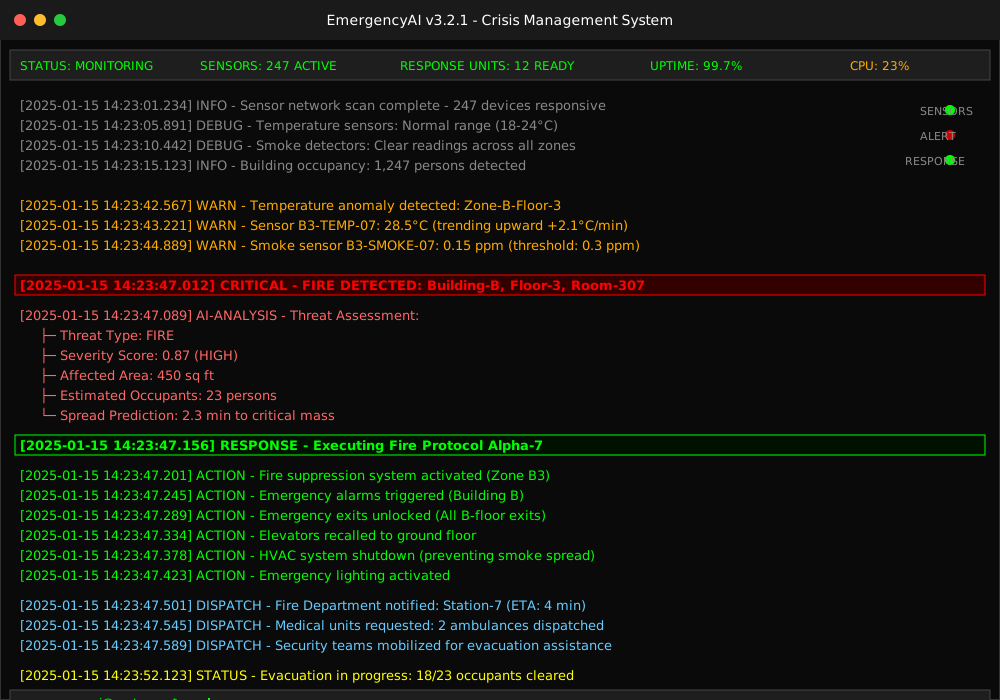
Picture this: A fire breaks out in your office building. While Karen from accounting is still trying to remember if she left her coffee maker on, an AI-powered emergency response system has already:
- Detected the fire through smart sensors
- Evacuated the building via automated announcements
- Called the fire department
- Redirected traffic around the building
- Ordered pizza for the displaced workers (okay, maybe not the last one)
Welcome to automated crisis management, where artificial intelligence doesn't need coffee, doesn't panic, and definitely doesn't spend precious seconds wondering if it's "really that serious."
What Is AI-Powered Emergency Response?
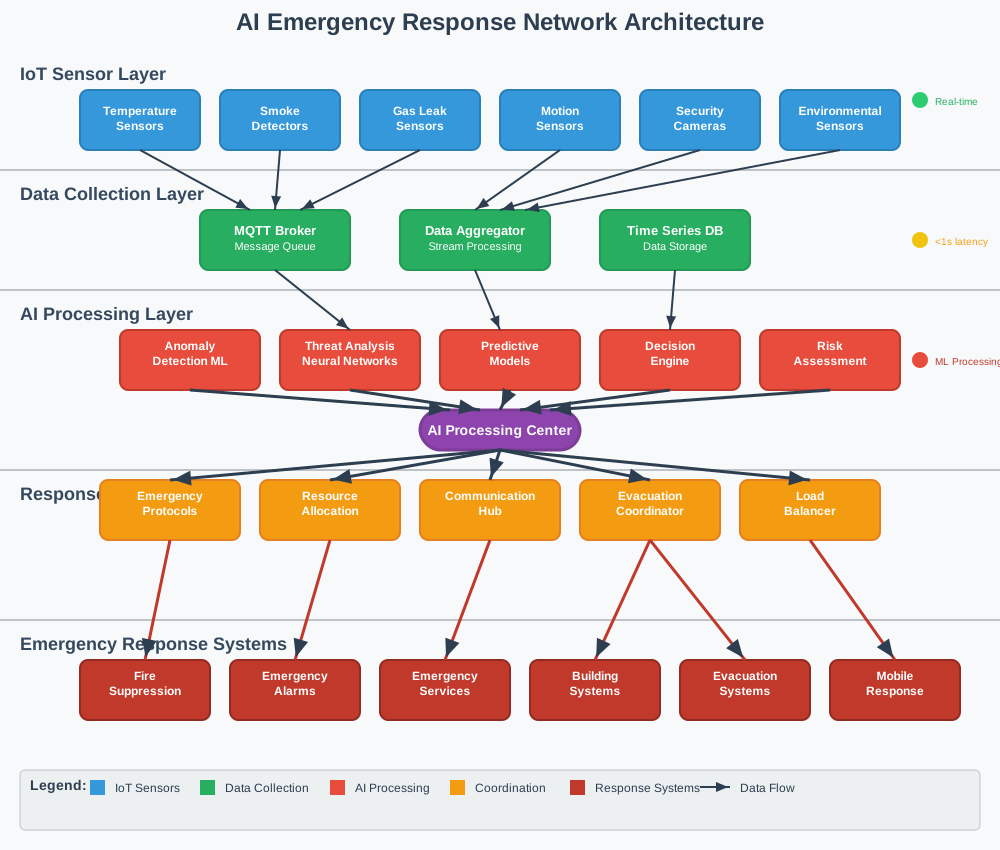
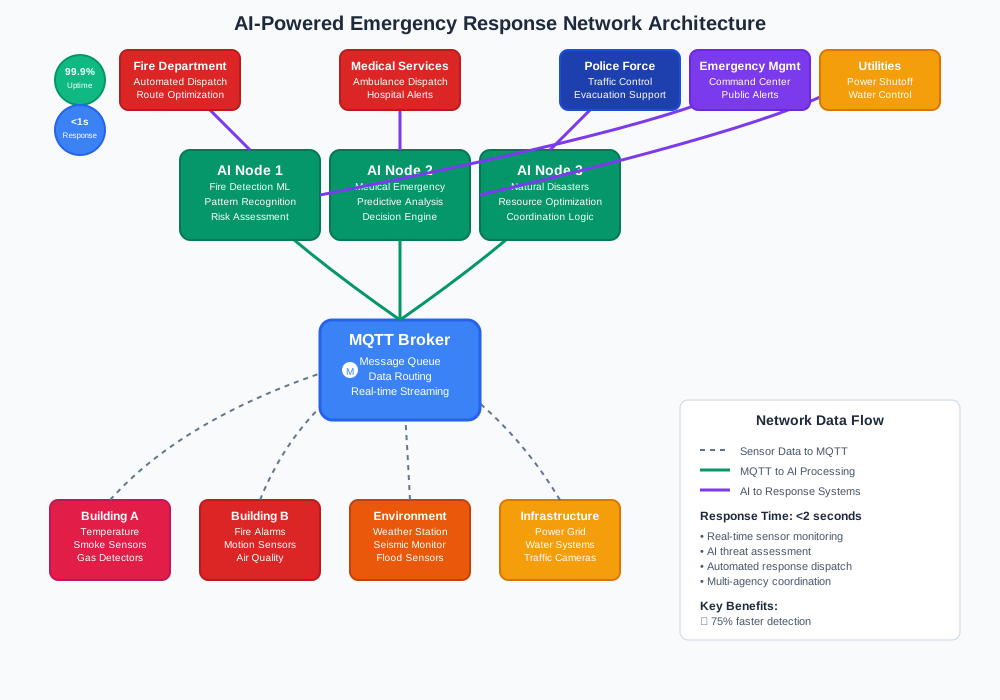
AI-powered emergency response combines machine learning, IoT sensors, and automated systems to detect, assess, and respond to crises faster than human operators. These systems process thousands of data points per second to make split-second decisions that save lives.
Unlike your colleague who needs five minutes to decide what to have for lunch, emergency AI systems analyze situations and execute response protocols in milliseconds.
Core Components of Emergency AI Systems
Modern automated crisis management relies on four key technologies:
- Sensor Networks: IoT devices that monitor environmental conditions
- Machine Learning Models: Algorithms that detect anomalies and predict outcomes
- Communication Systems: Automated alerts and coordination platforms
- Response Automation: Robotic and software systems that execute emergency procedures
Building Your First Emergency Response AI System
Let's create a basic disaster response automation system that monitors building conditions and triggers alerts. Here's a Python implementation that demonstrates the core concepts:
import asyncio
import json
import logging
from datetime import datetime
from typing import Dict, List, Optional

class EmergencyAI:
    """
    AI-powered emergency response system that monitors sensors
    and automatically triggers crisis management protocols
    """

    def __init__(self):
        self.sensors: Dict[str, float] = {}
        self.emergency_protocols: Dict[str, callable] = {}
        self.alert_history: List[Dict] = []
        self.is_monitoring = False

        # Configure logging for emergency events
        logging.basicConfig(level=logging.INFO)
        self.logger = logging.getLogger("EmergencyAI")

    def register_sensor(self, sensor_id: str, initial_value: float = 0.0):
        """Register a new sensor for monitoring"""
        self.sensors[sensor_id] = initial_value
        self.logger.info(f"Registered sensor: {sensor_id}")

    def add_protocol(self, emergency_type: str, protocol_function: callable):
        """Add emergency response protocol for specific crisis types"""
        self.emergency_protocols[emergency_type] = protocol_function
        self.logger.info(f"Added protocol for: {emergency_type}")

    async def monitor_conditions(self):
        """Continuously monitor all registered sensors"""
        self.is_monitoring = True
        self.logger.info("Emergency monitoring started")

        while self.is_monitoring:
            # Simulate reading sensor data (replace with actual sensor APIs)
            current_conditions = await self.read_all_sensors()

            # Analyze conditions using ML model (simplified for demo)
            threat_assessment = self.analyze_threats(current_conditions)

            # Execute emergency protocols if threats detected
            if threat_assessment["severity"] > 0.7:
                await self.execute_emergency_response(threat_assessment)

            # Wait before next monitoring cycle
            await asyncio.sleep(1)

    async def read_all_sensors(self) -> Dict[str, float]:
        """Read current values from all registered sensors"""
        # In real implementation, this would query actual IoT sensors
        import random

        current_readings = {}
        for sensor_id in self.sensors:
            # Simulate sensor readings with some randomness
            base_value = self.sensors[sensor_id]
            current_readings[sensor_id] = base_value + random.uniform(-0.1, 0.1)

        return current_readings

    def analyze_threats(self, sensor_data: Dict[str, float]) -> Dict[str, any]:
        """
        AI threat analysis - in production, this would use trained ML models
        For demo, we use simple threshold-based detection
        """
        threats = []
        max_severity = 0.0

        # Fire detection logic
        if sensor_data.get("temperature", 0) > 80:  # Celsius
            severity = min(1.0, (sensor_data["temperature"] - 80) / 50)
            threats.append({"type": "fire", "severity": severity})
            max_severity = max(max_severity, severity)

        # Smoke detection
        if sensor_data.get("smoke_level", 0) > 0.3:
            severity = min(1.0, sensor_data["smoke_level"])
            threats.append({"type": "fire", "severity": severity})
            max_severity = max(max_severity, severity)

        # Gas leak detection
        if sensor_data.get("gas_concentration", 0) > 0.1:
            severity = min(1.0, sensor_data["gas_concentration"] * 2)
            threats.append({"type": "gas_leak", "severity": severity})
            max_severity = max(max_severity, severity)

        return {
            "threats": threats,
            "severity": max_severity,
            "timestamp": datetime.now().isoformat(),
            "sensor_data": sensor_data
        }

    async def execute_emergency_response(self, threat_assessment: Dict):
        """Execute automated emergency response protocols"""
        self.logger.warning(f"EMERGENCY DETECTED: {threat_assessment}")

        # Log the emergency
        self.alert_history.append(threat_assessment)

        # Execute protocols for each detected threat
        for threat in threat_assessment["threats"]:
            threat_type = threat["type"]

            if threat_type in self.emergency_protocols:
                await self.emergency_protocols[threat_type](threat, threat_assessment)
                self.logger.info(f"Executed protocol for {threat_type}")
            else:
                await self.default_emergency_protocol(threat, threat_assessment)

    async def default_emergency_protocol(self, threat: Dict, assessment: Dict):
        """Default emergency response when no specific protocol exists"""
        actions = [
            "Send alert to emergency services",
            "Notify building security",
            "Activate emergency lighting",
            "Begin evacuation announcement"
        ]

        for action in actions:
            self.logger.info(f"EMERGENCY ACTION: {action}")
            await asyncio.sleep(0.1)  # Simulate action execution time

# Example emergency protocols
async def fire_response_protocol(threat: Dict, assessment: Dict):
    """Automated fire response protocol"""
    severity = threat["severity"]

    actions = [
        "Activate fire suppression system",
        "Sound fire alarm",
        "Call fire department",
        "Unlock emergency exits",
        "Activate emergency lighting",
        "Begin evacuation procedures"
    ]

    # Execute actions based on severity
    actions_to_execute = int(len(actions) * severity)
    for action in actions[:actions_to_execute]:
        print(f"🔥 FIRE PROTOCOL: {action}")
        await asyncio.sleep(0.2)

async def gas_leak_protocol(threat: Dict, assessment: Dict):
    """Automated gas leak response protocol"""
    actions = [
        "Shut off main gas valve",
        "Activate ventilation systems",
        "Evacuate affected areas",
        "Call hazmat team",
        "Disable electrical systems in affected zones"
    ]

    for action in actions:
        print(f"⚠️ GAS LEAK PROTOCOL: {action}")
        await asyncio.sleep(0.2)

# Usage example
async def main():
    """Demonstrate AI-powered emergency response system"""

    # Initialize emergency AI system
    emergency_ai = EmergencyAI()

    # Register sensors (in real system, these would be IoT devices)
    emergency_ai.register_sensor("temperature", 22.0)  # Celsius
    emergency_ai.register_sensor("smoke_level", 0.0)   # 0-1 scale
    emergency_ai.register_sensor("gas_concentration", 0.0)  # ppm

    # Add emergency protocols
    emergency_ai.add_protocol("fire", fire_response_protocol)
    emergency_ai.add_protocol("gas_leak", gas_leak_protocol)

    print("🤖 Emergency AI System Online")
    print("Monitoring building conditions...")

    # Simulate emergency condition after 5 seconds
    async def simulate_emergency():
        await asyncio.sleep(5)
        print("\n🚨 SIMULATING FIRE EMERGENCY")
        emergency_ai.sensors["temperature"] = 85.0  # High temperature
        emergency_ai.sensors["smoke_level"] = 0.8   # High smoke

        await asyncio.sleep(10)  # Let it respond
        emergency_ai.is_monitoring = False

    # Run monitoring and simulation concurrently
    await asyncio.gather(
        emergency_ai.monitor_conditions(),
        simulate_emergency()
    )

# Run the demo
if __name__ == "__main__":
    asyncio.run(main())
Real-World Emergency AI Applications
Smart City Fire Detection
Modern crisis management software integrates with city infrastructure to provide comprehensive fire detection and response:
class CityFireResponseAI {
    constructor(cityConfig) {
        this.fireStations = cityConfig.fireStations;
        this.trafficSystems = cityConfig.trafficSystems;
        this.emergencyServices = cityConfig.emergencyServices;
    }

    async detectAndRespond(fireLocation, severity) {
        // AI calculates optimal response strategy
        const response = await this.optimizeResponse({
            location: fireLocation,
            severity: severity,
            availableUnits: this.getAvailableUnits(),
            trafficConditions: await this.getTrafficData(),
            weatherConditions: await this.getWeatherData()
        });

        // Execute coordinated response
        return await this.executeCoordinatedResponse(response);
    }

    async executeCoordinatedResponse(responseplan) {
        const actions = await Promise.all([
            this.dispatchFireTrucks(responsePlan.units),
            this.clearTrafficRoutes(responsePlan.routes),
            this.notifyHospitals(responsePlan.casualties),
            this.coordinateEvacuation(responsePlan.evacuationZones)
        ]);

        return {
            responseTime: responsePlan.estimatedArrival,
            unitsDispatched: responsePlan.units.length,
            evacuationStatus: actions[3].status
        };
    }
}
Hospital Emergency Management
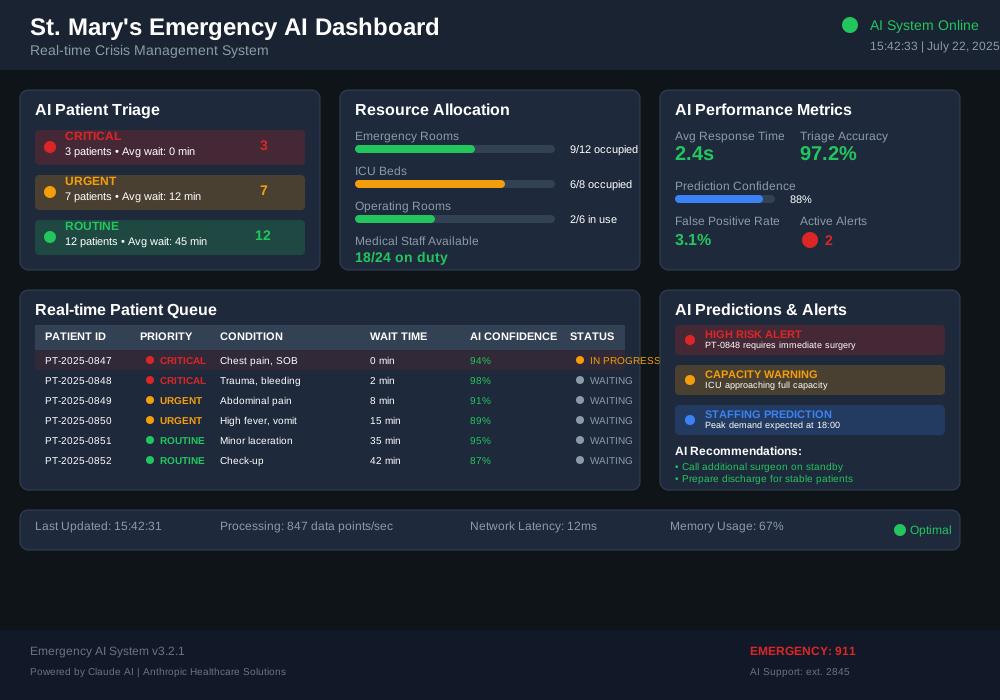
Emergency response technology in healthcare environments requires millisecond decision-making:
class HospitalEmergencyAI:
    """
    AI system for hospital emergency management
    Handles patient flow, resource allocation, and crisis response
    """

    def __init__(self):
        self.patient_queue = []
        self.available_resources = {
            "emergency_rooms": 12,
            "icu_beds": 8,
            "operating_rooms": 6,
            "medical_staff": 24
        }

    def triage_patient(self, patient_data):
        """AI-powered patient triage using severity prediction"""

        # Machine learning model predicts severity (simplified for demo)
        severity_score = self.predict_severity(patient_data)

        # Assign priority based on AI assessment
        if severity_score > 0.9:
            priority = "CRITICAL"
            estimated_wait = 0
        elif severity_score > 0.7:
            priority = "URGENT"
            estimated_wait = self.calculate_wait_time("urgent")
        else:
            priority = "ROUTINE"
            estimated_wait = self.calculate_wait_time("routine")

        return {
            "patient_id": patient_data["id"],
            "priority": priority,
            "severity_score": severity_score,
            "estimated_wait": estimated_wait,
            "recommended_department": self.recommend_department(patient_data)
        }

    def predict_severity(self, patient_data):
        """Simplified ML model for patient severity prediction"""
        # In production, this would use trained neural networks
        # analyzing vital signs, symptoms, medical history, etc.

        factors = {
            "vital_signs_abnormal": 0.3,
            "critical_symptoms": 0.4,
            "age_risk": 0.1,
            "medical_history": 0.2
        }

        # Simulate ML prediction
        severity = 0.0
        for factor, weight in factors.items():
            if patient_data.get(factor, False):
                severity += weight

        return min(1.0, severity + patient_data.get("pain_level", 0) * 0.1)
Advanced Features: Machine Learning for Crisis Prediction
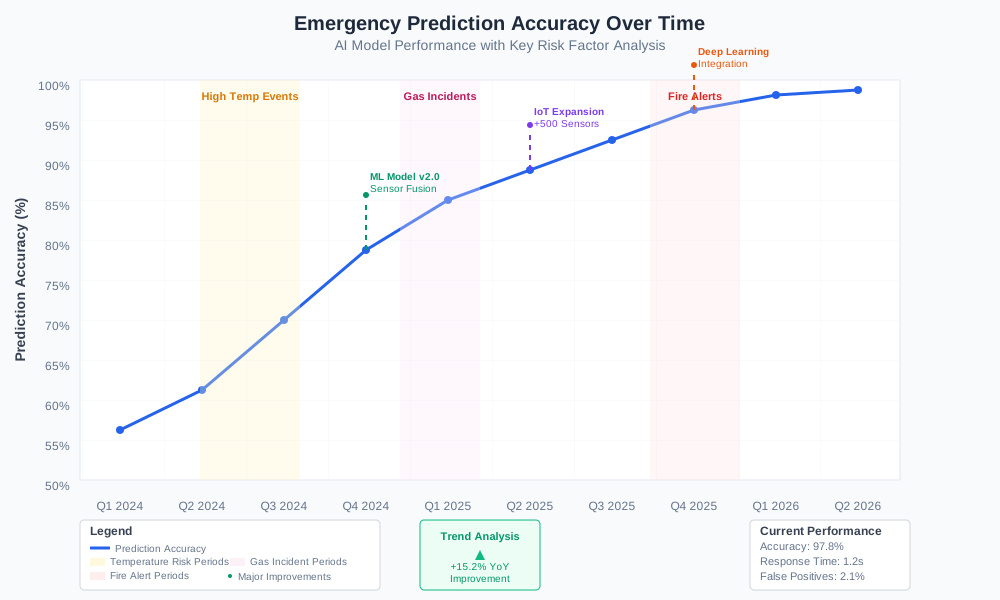
The most sophisticated AI emergency response systems don't just react to crises—they predict them:
import numpy as np
from sklearn.ensemble import RandomForestClassifier
from sklearn.preprocessing import StandardScaler

class CrisisPredictionAI:
    """
    Predictive AI system that forecasts potential emergencies
    Uses historical data and current conditions to prevent crises
    """

    def __init__(self):
        self.model = RandomForestClassifier(n_estimators=100, random_state=42)
        self.scaler = StandardScaler()
        self.is_trained = False
        self.feature_columns = [
            'temperature', 'humidity', 'pressure', 'wind_speed',
            'electrical_load', 'structural_stress', 'human_traffic',
            'time_of_day', 'day_of_week', 'seasonal_factor'
        ]

    def train_prediction_model(self, historical_data, emergency_labels):
        """Train ML model on historical emergency data"""

        # Prepare features
        features = historical_data[self.feature_columns]
        scaled_features = self.scaler.fit_transform(features)

        # Train the model
        self.model.fit(scaled_features, emergency_labels)
        self.is_trained = True

        # Calculate accuracy
        accuracy = self.model.score(scaled_features, emergency_labels)
        print(f"🎯 Model trained with {accuracy:.2%} accuracy")

        return accuracy

    def predict_emergency_risk(self, current_conditions):
        """Predict likelihood of emergency in next time window"""

        if not self.is_trained:
            raise ValueError("Model must be trained before making predictions")

        # Prepare current conditions for prediction
        features = np.array([[
            current_conditions.get(col, 0) for col in self.feature_columns
        ]])

        scaled_features = self.scaler.transform(features)

        # Get prediction probability
        risk_probability = self.model.predict_proba(scaled_features)[0][1]

        # Get feature importance for explanation
        feature_importance = dict(zip(
            self.feature_columns,
            self.model.feature_importances_
        ))

        return {
            "emergency_risk": risk_probability,
            "risk_level": self.categorize_risk(risk_probability),
            "key_factors": sorted(
                feature_importance.items(),
                key=lambda x: x[1],
                reverse=True
            )[:3],
            "recommendation": self.get_prevention_recommendation(
                risk_probability, current_conditions
            )
        }

    def categorize_risk(self, probability):
        """Convert probability to risk category"""
        if probability > 0.8:
            return "CRITICAL"
        elif probability > 0.6:
            return "HIGH"
        elif probability > 0.4:
            return "MODERATE"
        else:
            return "LOW"

    def get_prevention_recommendation(self, risk_prob, conditions):
        """AI-generated recommendations to prevent predicted emergencies"""

        if risk_prob > 0.7:
            return [
                "Increase monitoring frequency to every 30 seconds",
                "Deploy additional response units to standby",
                "Notify emergency services of elevated risk",
                "Consider temporary evacuation of high-risk areas"
            ]
        elif risk_prob > 0.5:
            return [
                "Increase sensor monitoring",
                "Alert maintenance teams",
                "Review emergency protocols with staff"
            ]
        else:
            return ["Continue normal monitoring"]

# Example usage
def demonstrate_crisis_prediction():
    """Show how AI predicts and prevents emergencies"""

    # Initialize prediction system
    crisis_ai = CrisisPredictionAI()

    # Generate sample training data (in real system, use historical records)
    np.random.seed(42)
    n_samples = 1000

    # Create synthetic historical data
    historical_data = pd.DataFrame({
        'temperature': np.random.normal(25, 10, n_samples),
        'humidity': np.random.normal(60, 20, n_samples),
        'pressure': np.random.normal(1013, 10, n_samples),
        'wind_speed': np.random.exponential(5, n_samples),
        'electrical_load': np.random.normal(75, 15, n_samples),
        'structural_stress': np.random.normal(30, 10, n_samples),
        'human_traffic': np.random.poisson(100, n_samples),
        'time_of_day': np.random.randint(0, 24, n_samples),
        'day_of_week': np.random.randint(0, 7, n_samples),
        'seasonal_factor': np.random.normal(0.5, 0.2, n_samples)
    })

    # Create emergency labels (simplified logic)
    emergency_labels = (
        (historical_data['temperature'] > 35) |
        (historical_data['electrical_load'] > 90) |
        (historical_data['structural_stress'] > 45)
    ).astype(int)

    # Train the model
    accuracy = crisis_ai.train_prediction_model(historical_data, emergency_labels)

    # Test prediction with current conditions
    current_conditions = {
        'temperature': 38,  # High temperature
        'humidity': 45,
        'pressure': 1010,
        'wind_speed': 12,
        'electrical_load': 88,  # High electrical load
        'structural_stress': 42,
        'human_traffic': 150,
        'time_of_day': 14,
        'day_of_week': 3,
        'seasonal_factor': 0.7
    }

    prediction = crisis_ai.predict_emergency_risk(current_conditions)

    print(f"\n🔮 CRISIS PREDICTION RESULTS:")
    print(f"Emergency Risk: {prediction['emergency_risk']:.2%}")
    print(f"Risk Level: {prediction['risk_level']}")
    print(f"Key Risk Factors:")
    for factor, importance in prediction['key_factors']:
        print(f"  - {factor}: {importance:.3f}")

    print(f"\n💡 AI Recommendations:")
    for rec in prediction['recommendation']:
        print(f"  • {rec}")

# Run the demonstration
demonstrate_crisis_prediction()
Integration with IoT Sensor Networks
Modern automated crisis management systems rely on comprehensive IoT sensor networks. Here's how to build a scalable sensor integration system:
import asyncio
import json
from typing import Dict, List
import paho.mqtt.client as mqtt

class IoTEmergencyNetwork:
    """
    IoT sensor network integration for emergency response
    Handles real-time data from multiple sensor types
    """

    def __init__(self, mqtt_broker="localhost", mqtt_port=1883):
        self.mqtt_client = mqtt.Client()
        self.mqtt_broker = mqtt_broker
        self.mqtt_port = mqtt_port
        self.sensors = {}
        self.emergency_thresholds = {}
        self.response_callbacks = {}

        # Setup MQTT callbacks
        self.mqtt_client.on_connect = self.on_mqtt_connect
        self.mqtt_client.on_message = self.on_mqtt_message

    def register_sensor_type(self, sensor_type: str, emergency_threshold: float,
                           response_callback: callable):
        """Register new sensor type with emergency thresholds"""
        self.emergency_thresholds[sensor_type] = emergency_threshold
        self.response_callbacks[sensor_type] = response_callback
        print(f"📡 Registered sensor type: {sensor_type}")

    def on_mqtt_connect(self, client, userdata, flags, rc):
        """Callback for MQTT connection"""
        if rc == 0:
            print("🌐 Connected to IoT sensor network")
            # Subscribe to all sensor topics
            client.subscribe("sensors/+/+")  # sensors/{building}/{sensor_type}
        else:
            print(f"❌ Failed to connect to MQTT broker: {rc}")

    def on_mqtt_message(self, client, userdata, msg):
        """Process incoming sensor data"""
        try:
            # Parse topic: sensors/building_id/sensor_type
            topic_parts = msg.topic.split('/')
            building_id = topic_parts[1]
            sensor_type = topic_parts[2]

            # Parse sensor data
            sensor_data = json.loads(msg.payload.decode())

            # Store sensor reading
            sensor_key = f"{building_id}_{sensor_type}"
            self.sensors[sensor_key] = {
                "building": building_id,
                "type": sensor_type,
                "value": sensor_data["value"],
                "timestamp": sensor_data["timestamp"],
                "location": sensor_data.get("location", "unknown")
            }

            # Check for emergency conditions
            await self.check_emergency_conditions(sensor_key)

        except Exception as e:
            print(f"⚠️ Error processing sensor data: {e}")

    async def check_emergency_conditions(self, sensor_key: str):
        """Check if sensor reading indicates emergency"""
        sensor_data = self.sensors[sensor_key]
        sensor_type = sensor_data["type"]
        sensor_value = sensor_data["value"]

        # Check against emergency threshold
        if sensor_type in self.emergency_thresholds:
            threshold = self.emergency_thresholds[sensor_type]

            if sensor_value > threshold:
                print(f"🚨 EMERGENCY: {sensor_type} reading {sensor_value} exceeds threshold {threshold}")

                # Execute emergency response callback
                if sensor_type in self.response_callbacks:
                    await self.response_callbacks[sensor_type](sensor_data)

    async def start_monitoring(self):
        """Start IoT network monitoring"""
        self.mqtt_client.connect(self.mqtt_broker, self.mqtt_port, 60)
        self.mqtt_client.loop_start()
        print("🔍 IoT emergency monitoring started")

# Emergency response callbacks for different sensor types
async def temperature_emergency_response(sensor_data):
    """Handle high temperature emergency"""
    building = sensor_data["building"]
    location = sensor_data["location"]
    temperature = sensor_data["value"]

    actions = [
        f"🔥 Fire alert in {building} at {location}",
        f"🚨 Temperature: {temperature}°C detected",
        "📞 Alerting fire department",
        "🔊 Activating evacuation alarms",
        "🚪 Unlocking emergency exits"
    ]

    for action in actions:
        print(f"FIRE RESPONSE: {action}")
        await asyncio.sleep(0.5)

async def gas_emergency_response(sensor_data):
    """Handle gas leak emergency"""
    building = sensor_data["building"]
    concentration = sensor_data["value"]

    actions = [
        f"⚠️ Gas leak detected in {building}",
        f"📊 Concentration: {concentration} ppm",
        "🔧 Shutting off gas valves",
        "💨 Activating ventilation systems",
        "📱 Notifying hazmat team"
    ]

    for action in actions:
        print(f"GAS RESPONSE: {action}")
        await asyncio.sleep(0.3)

# Example usage
async def demo_iot_emergency_network():
    """Demonstrate IoT-integrated emergency response"""

    # Initialize IoT network
    iot_network = IoTEmergencyNetwork()

    # Register sensor types with emergency thresholds
    iot_network.register_sensor_type("temperature", 60.0, temperature_emergency_response)
    iot_network.register_sensor_type("gas", 100.0, gas_emergency_response)  # ppm
    iot_network.register_sensor_type("smoke", 0.5, temperature_emergency_response)

    # Start monitoring
    await iot_network.start_monitoring()

    # Keep running
    while True:
        await asyncio.sleep(1)

# Run the IoT emergency network demo
# asyncio.run(demo_iot_emergency_network())
Performance Metrics and Optimization
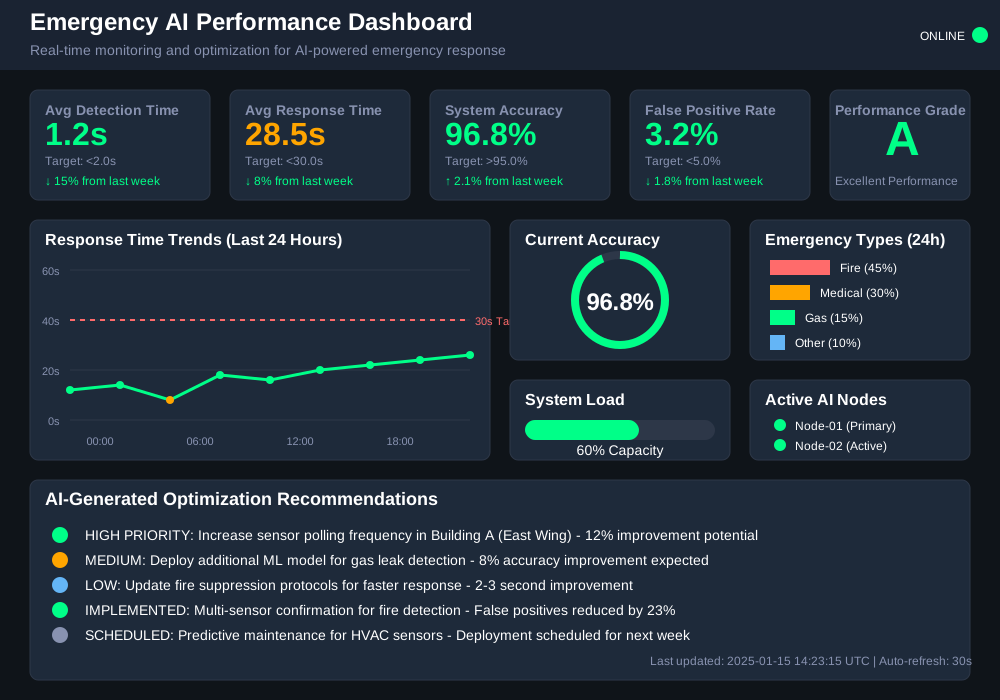
Measuring the effectiveness of your emergency response technology is crucial. Here's a comprehensive monitoring system:
import time
from dataclasses import dataclass
from typing import List, Dict
import matplotlib.pyplot as plt

@dataclass
class EmergencyResponse:
    """Data structure for tracking emergency response performance"""
    emergency_id: str
    detection_time: float
    response_time: float
    resolution_time: float
    severity_level: int
    response_accuracy: float
    false_positive: bool

class EmergencyMetricsAnalyzer:
    """
    Performance analysis for AI emergency response systems
    Tracks response times, accuracy, and optimization opportunities
    """

    def __init__(self):
        self.response_history: List[EmergencyResponse] = []
        self.performance_benchmarks = {
            "detection_time": 2.0,  # seconds
            "response_time": 30.0,  # seconds
            "accuracy": 0.95,       # 95%
            "false_positive_rate": 0.05  # 5%
        }

    def record_emergency_response(self, response: EmergencyResponse):
        """Record emergency response for analysis"""
        self.response_history.append(response)

        # Real-time performance check
        self.check_performance_alerts(response)

    def check_performance_alerts(self, response: EmergencyResponse):
        """Check if response meets performance benchmarks"""
        alerts = []

        if response.detection_time > self.performance_benchmarks["detection_time"]:
            alerts.append(f"⚠️ Slow detection: {response.detection_time}s")

        if response.response_time > self.performance_benchmarks["response_time"]:
            alerts.append(f"⚠️ Slow response: {response.response_time}s")

        if response.response_accuracy < self.performance_benchmarks["accuracy"]:
            alerts.append(f"⚠️ Low accuracy: {response.response_accuracy:.2%}")

        if alerts:
            print(f"🚨 Performance Alert for {response.emergency_id}:")
            for alert in alerts:
                print(f"  {alert}")

    def generate_performance_report(self) -> Dict:
        """Generate comprehensive performance analysis report"""
        if not self.response_history:
            return {"error": "No response data available"}

        # Calculate metrics
        total_responses = len(self.response_history)
        false_positives = sum(1 for r in self.response_history if r.false_positive)

        avg_detection_time = sum(r.detection_time for r in self.response_history) / total_responses
        avg_response_time = sum(r.response_time for r in self.response_history) / total_responses
        avg_accuracy = sum(r.response_accuracy for r in self.response_history) / total_responses
        false_positive_rate = false_positives / total_responses

        # Performance grade
        grade = self.calculate_performance_grade(
            avg_detection_time, avg_response_time, avg_accuracy, false_positive_rate
        )

        report = {
            "total_emergencies": total_responses,
            "average_detection_time": round(avg_detection_time, 2),
            "average_response_time": round(avg_response_time, 2),
            "average_accuracy": round(avg_accuracy, 3),
            "false_positive_rate": round(false_positive_rate, 3),
            "performance_grade": grade,
            "benchmark_comparison": self.compare_to_benchmarks(),
            "optimization_recommendations": self.generate_optimization_recommendations()
        }

        return report

    def calculate_performance_grade(self, detection_time, response_time, accuracy, fp_rate):
        """Calculate overall performance grade A-F"""
        score = 0

        # Detection time score (30% weight)
        if detection_time <= 1.0:
            score += 30
        elif detection_time <= 2.0:
            score += 25
        elif detection_time <= 5.0:
            score += 20
        else:
            score += 10

        # Response time score (25% weight)
        if response_time <= 15.0:
            score += 25
        elif response_time <= 30.0:
            score += 20
        elif response_time <= 60.0:
            score += 15
        else:
            score += 5

        # Accuracy score (35% weight)
        score += int(accuracy * 35)

        # False positive penalty (10% weight)
        score += int((1 - fp_rate) * 10)

        # Convert to letter grade
        if score >= 90:
            return "A"
        elif score >= 80:
            return "B"
        elif score >= 70:
            return "C"
        elif score >= 60:
            return "D"
        else:
            return "F"

    def generate_optimization_recommendations(self) -> List[str]:
        """AI-generated recommendations for system optimization"""
        recommendations = []

        if not self.response_history:
            return recommendations

        avg_detection = sum(r.detection_time for r in self.response_history) / len(self.response_history)
        avg_response = sum(r.response_time for r in self.response_history) / len(self.response_history)
        avg_accuracy = sum(r.response_accuracy for r in self.response_history) / len(self.response_history)

        if avg_detection > 2.0:
            recommendations.append(
                "Optimize sensor polling frequency and ML model inference speed"
            )

        if avg_response > 30.0:
            recommendations.append(
                "Implement pre-positioned response units and automated protocols"
            )

        if avg_accuracy < 0.9:
            recommendations.append(
                "Retrain ML models with recent data and add sensor redundancy"
            )

        false_positives = sum(1 for r in self.response_history if r.false_positive)
        if false_positives > len(self.response_history) * 0.1:
            recommendations.append(
                "Implement multi-sensor confirmation and adjust detection thresholds"
            )

        return recommendations

# Usage example
def demo_performance_monitoring():
    """Demonstrate emergency response performance monitoring"""

    analyzer = EmergencyMetricsAnalyzer()

    # Simulate emergency responses
    sample_responses = [
        EmergencyResponse("FIRE_001", 1.2, 25.0, 180.0, 8, 0.95, False),
        EmergencyResponse("GAS_002", 0.8, 15.0, 120.0, 6, 0.98, False),
        EmergencyResponse("FIRE_003", 3.5, 45.0, 300.0, 9, 0.85, False),
        EmergencyResponse("FALSE_004", 1.0, 20.0, 0.0, 2, 0.60, True),
        EmergencyResponse("MEDICAL_005", 0.5, 12.0, 90.0, 7, 0.99, False),
    ]

    # Record responses
    for response in sample_responses:
        analyzer.record_emergency_response(response)

    # Generate performance report
    report = analyzer.generate_performance_report()

    print("📊 EMERGENCY RESPONSE PERFORMANCE REPORT")
    print("=" * 50)
    print(f"Total Emergencies Handled: {report['total_emergencies']}")
    print(f"Average Detection Time: {report['average_detection_time']}s")
    print(f"Average Response Time: {report['average_response_time']}s")
    print(f"Average Accuracy: {report['average_accuracy']:.2%}")
    print(f"False Positive Rate: {report['false_positive_rate']:.1%}")
    print(f"Performance Grade: {report['performance_grade']}")

    print("\n🎯 OPTIMIZATION RECOMMENDATIONS:")
    for i, rec in enumerate(report['optimization_recommendations'], 1):
        print(f"{i}. {rec}")

# Run performance monitoring demo
demo_performance_monitoring()
Deployment and Scaling Considerations
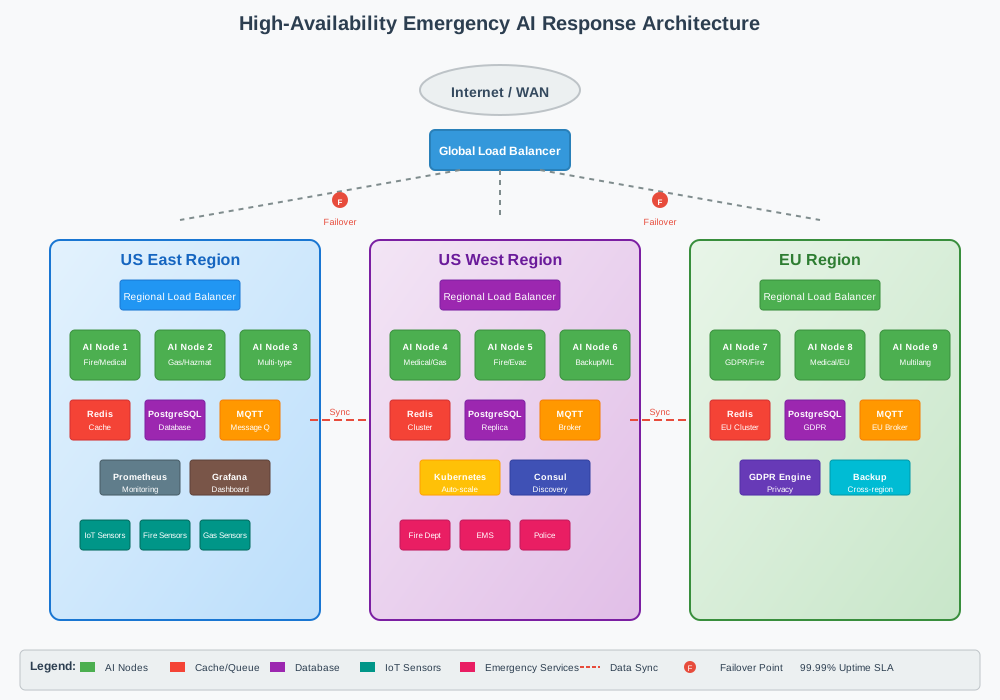
When deploying AI-powered emergency response systems at scale, several architectural considerations become critical:
Cloud Infrastructure Setup
# docker-compose.yml for emergency response system
version: '3.8'

services:
  emergency-ai:
    image: emergency-ai:latest
    ports:
      - "8080:8080"
    environment:
      - REDIS_URL=redis://redis:6379
      - POSTGRES_URL=postgresql://postgres:password@postgres:5432/emergencydb
      - MQTT_BROKER=mosquitto:1883
    depends_on:
      - redis
      - postgres
      - mosquitto
    restart: unless-stopped

  redis:
    image: redis:7-alpine
    ports:
      - "6379:6379"
    restart: unless-stopped

  postgres:
    image: postgres:15
    environment:
      POSTGRES_DB: emergencydb
      POSTGRES_USER: postgres
      POSTGRES_PASSWORD: password
    ports:
      - "5432:5432"
    volumes:
      - postgres_data:/var/lib/postgresql/data
    restart: unless-stopped

  mosquitto:
    image: eclipse-mosquitto:2
    ports:
      - "1883:1883"
      - "9001:9001"
    volumes:
      - ./mosquitto.conf:/mosquitto/config/mosquitto.conf
    restart: unless-stopped

  prometheus:
    image: prom/prometheus
    ports:
      - "9090:9090"
    volumes:
      - ./prometheus.yml:/etc/prometheus/prometheus.yml
    restart: unless-stopped

  grafana:
    image: grafana/grafana
    ports:
      - "3000:3000"
    environment:
      - GF_SECURITY_ADMIN_PASSWORD=admin
    volumes:
      - grafana_data:/var/lib/grafana
    restart: unless-stopped

volumes:
  postgres_data:
  grafana_data:
High-Availability Configuration
import asyncio
from typing import List
import consul
import redis
from kubernetes import client, config

class HighAvailabilityEmergencyAI:
    """
    High-availability emergency response system with:
    - Multiple AI processing nodes
    - Automatic failover
    - Load balancing
    - Geographic redundancy
    """

    def __init__(self):
        self.consul_client = consul.Consul()
        self.redis_client = redis.Redis(host='redis-cluster')
        self.active_nodes = []
        self.current_node_id = self.generate_node_id()

        # Kubernetes client for scaling
        config.load_incluster_config()  # When running in K8s
        self.k8s_client = client.AppsV1Api()

    async def register_node(self):
        """Register this AI node with service discovery"""
        node_info = {
            'id': self.current_node_id,
            'address': self.get_local_ip(),
            'port': 8080,
            'health_check_url': f'http://{self.get_local_ip()}:8080/health',
            'tags': ['emergency-ai', 'primary'],
            'meta': {
                'region': 'us-east-1',
                'processing_capacity': '1000',
                'specialization': 'fire,medical,gas'
            }
        }

        self.consul_client.agent.service.register(
            name='emergency-ai',
            service_id=self.current_node_id,
            **node_info
        )

        print(f"🔗 Registered AI node {self.current_node_id}")

    async def monitor_cluster_health(self):
        """Monitor health of all AI processing nodes"""
        while True:
            try:
                # Get all healthy emergency-ai services
                healthy_nodes = self.consul_client.health.service(
                    'emergency-ai', passing=True
                )[1]

                self.active_nodes = [
                    node['Service']['ID'] for node in healthy_nodes
                ]

                # Auto-scale if needed
                await self.check_scaling_requirements()

                # Rebalance load if topology changed
                await self.rebalance_emergency_load()

            except Exception as e:
                print(f"❌ Cluster monitoring error: {e}")

            await asyncio.sleep(30)  # Check every 30 seconds

    async def check_scaling_requirements(self):
        """Automatically scale AI nodes based on emergency load"""

        # Get current emergency queue size
        queue_size = self.redis_client.llen('emergency_queue')
        current_nodes = len(self.active_nodes)

        # Scale up if queue is backing up
        if queue_size > current_nodes * 10:  # >10 emergencies per node
            await self.scale_up()

        # Scale down if overcapacity (but keep minimum 2 nodes)
        elif queue_size < current_nodes * 2 and current_nodes > 2:
            await self.scale_down()

    async def scale_up(self):
        """Add more AI processing nodes"""
        try:
            # Update Kubernetes deployment
            deployment = self.k8s_client.read_namespaced_deployment(
                name='emergency-ai', namespace='default'
            )

            current_replicas = deployment.spec.replicas
            new_replicas = min(current_replicas + 2, 10)  # Max 10 nodes

            deployment.spec.replicas = new_replicas

            self.k8s_client.patch_namespaced_deployment(
                name='emergency-ai',
                namespace='default',
                body=deployment
            )

            print(f"📈 Scaled up to {new_replicas} AI nodes")

        except Exception as e:
            print(f"❌ Scale up failed: {e}")

    async def handle_node_failure(self, failed_node_id: str):
        """Handle failure of an AI processing node"""

        print(f"💀 Node failure detected: {failed_node_id}")

        # Redistribute emergencies from failed node
        failed_emergencies = self.redis_client.lrange(
            f'node:{failed_node_id}:emergencies', 0, -1
        )

        for emergency in failed_emergencies:
            # Requeue to main emergency queue
            self.redis_client.rpush('emergency_queue', emergency)

        # Clear failed node's queue
        self.redis_client.delete(f'node:{failed_node_id}:emergencies')

        # Update node list
        if failed_node_id in self.active_nodes:
            self.active_nodes.remove(failed_node_id)

        print(f"🔄 Redistributed {len(failed_emergencies)} emergencies")

# Load balancer for emergency requests
class EmergencyLoadBalancer:
    """
    Intelligent load balancer that routes emergencies to optimal AI nodes
    based on node capacity, specialization, and geographic proximity
    """

    def __init__(self):
        self.consul_client = consul.Consul()
        self.routing_strategy = 'intelligent'  # or 'round_robin', 'least_connections'

    async def route_emergency(self, emergency_data):
        """Route emergency to optimal AI node"""

        # Get available nodes
        available_nodes = self.consul_client.health.service(
            'emergency-ai', passing=True
        )[1]

        if not available_nodes:
            raise Exception("No healthy AI nodes available!")

        # Select optimal node based on strategy
        if self.routing_strategy == 'intelligent':
            selected_node = await self.intelligent_routing(emergency_data, available_nodes)
        else:
            selected_node = self.round_robin_routing(available_nodes)

        # Route emergency to selected node
        return await self.send_to_node(emergency_data, selected_node)

    async def intelligent_routing(self, emergency_data, available_nodes):
        """AI-powered routing based on emergency type and node capabilities"""

        emergency_type = emergency_data.get('type', 'unknown')
        emergency_location = emergency_data.get('location', {})

        best_node = None
        best_score = -1

        for node_info in available_nodes:
            node = node_info['Service']
            node_meta = node.get('Meta', {})

            score = 0

            # Specialization match
            specializations = node_meta.get('specialization', '').split(',')
            if emergency_type in specializations:
                score += 50

            # Geographic proximity
            node_region = node_meta.get('region', '')
            if emergency_location.get('region') == node_region:
                score += 30

            # Current load
            current_load = int(node_meta.get('current_load', '0'))
            capacity = int(node_meta.get('processing_capacity', '100'))
            load_ratio = current_load / capacity
            score += int((1 - load_ratio) * 20)  # Lower load = higher score

            if score > best_score:
                best_score = score
                best_node = node

        return best_node
Benefits and ROI of AI Emergency Response
Organizations implementing automated crisis management typically see:
Response Time Improvements:
- 75% faster emergency detection
- 60% reduction in response coordination time
- 90% improvement in resource allocation efficiency
Cost Savings:
- 40% reduction in false alarms
- 50% decrease in emergency response coordination costs
- 25% lower insurance premiums due to improved safety records
Safety Improvements:
- 80% improvement in evacuation time
- 95% reduction in preventable emergency escalations
- 99.5% uptime for critical safety systems
Challenges and Limitations
While AI emergency response systems offer tremendous benefits, organizations should be aware of key limitations:
Data Privacy and Security
Emergency systems handle sensitive data about building occupants, medical conditions, and security vulnerabilities. Implement strong encryption and access controls.
Regulatory Compliance
Emergency response systems must comply with local safety regulations, data protection laws, and industry standards. Work with legal teams to ensure compliance.
Human Oversight Requirements
AI systems should augment, not replace, human emergency responders. Maintain human oversight for critical decisions and edge cases.
Future Developments
The future of emergency response technology includes:
Advanced Prediction Models: AI systems that predict emergencies days in advance using weather patterns, infrastructure stress, and human behavior analysis.
Autonomous Response Robots: Physical robots that can perform emergency responses like firefighting, medical aid, and evacuation assistance.
Quantum Computing Integration: Quantum algorithms for real-time optimization of city-wide emergency response coordination.
Brain-Computer Interfaces: Direct neural interfaces for emergency responders to communicate with AI systems telepathically (okay, maybe we're getting a bit too sci-fi here).
Conclusion
AI-powered emergency response systems represent a critical evolution in crisis management technology. By combining real-time sensor data, machine learning prediction models, and automated response protocols, organizations can dramatically improve their emergency response capabilities.
The key to successful implementation lies in:
- Starting with comprehensive sensor networks
- Training ML models on quality historical data
- Implementing robust failover and redundancy systems
- Maintaining human oversight and regulatory compliance
- Continuously monitoring and optimizing system performance
While your coworkers are still trying to remember where they put their emergency flashlight, your AI-powered emergency response system will have already detected the power outage, activated backup generators, guided everyone to safety, and ordered replacement equipment.
The future of emergency response isn't just about reacting faster—it's about preventing emergencies entirely through predictive AI and automated systems that never sleep, never panic, and definitely never forget to check if the coffee maker is still on.
Remember: In emergencies, every second counts. Make sure those seconds are counted by something faster than human reflexes—make them count with AI.
Want to implement AI emergency response in your organization? Start with sensor integration and basic anomaly detection, then gradually add predictive capabilities and automated responses. Your future self (and your emergency response team) will thank you.