Your Crypto Transactions Are Being Mugged (And The Muggers Use Math)
Picture this: You're about to make a profitable DeFi trade, but a robot beats you to it by 0.001 seconds. That robot just extracted your profit using MEV (Maximal Extractable Value). It's like having someone cut in line at the coffee shop, but they steal your coffee AND charge you for theirs.
AI MEV protection fights back with machine learning algorithms that predict and counter these attacks. This guide shows you how to build frontrunning defenses that make MEV bots cry into their GPU cooling fans.
You'll learn to detect MEV patterns, build prediction models, and implement real-time defense systems. No more feeding the MEV vampire bots.
What Is MEV (And Why Should You Care)?
MEV represents the profit extractable from reordering transactions within blocks. Think of it as legalized front-running with extra steps and fancy math.
Common MEV Attack Types
Frontrunning: Bots see your profitable transaction and submit theirs first with higher gas fees.
Sandwich Attacks: Bots place orders before and after yours to profit from price slippage.
Arbitrage: Bots exploit price differences across DEXes faster than humans can blink.
Here's what a typical MEV attack looks like:
// Victim's transaction (pending in mempool)
function swapTokens(uint256 amountIn) public {
    // User tries to swap 1000 USDC for ETH
    uniswapRouter.swapExactTokensForTokens(
        1000 * 10**6,  // 1000 USDC
        0,             // Accept any amount of ETH
        path,
        msg.sender,
        block.timestamp + 300
    );
}

// MEV Bot's frontrunning transaction (higher gas price)
function frontrunTrade() external {
    // Bot buys ETH first, raising the price
    uniswapRouter.swapExactTokensForTokens(
        50000 * 10**6,  // 50,000 USDC
        0,
        path,
        address(this),
        block.timestamp + 300
    );

    // Victim's transaction executes at worse price
    // Bot then sells ETH back for profit
}
The bot profits while you lose money. It's automated theft with a blockchain receipt.
Machine Learning Approaches to MEV Detection
AI MEV protection uses pattern recognition to identify suspicious transaction behaviors before they execute.
Feature Engineering for MEV Detection
Extract transaction features that indicate MEV activity:
import pandas as pd
import numpy as np
from sklearn.ensemble import IsolationForest
from sklearn.preprocessing import StandardScaler

class MEVDetector:
    def __init__(self):
        self.scaler = StandardScaler()
        self.anomaly_detector = IsolationForest(
            contamination=0.1,  # Expect 10% MEV transactions
            random_state=42
        )

    def extract_features(self, transactions):
        """Extract MEV-indicating features from transactions"""
        features = []

        for tx in transactions:
            feature_vector = [
                tx['gas_price'],              # High gas = frontrunning attempt
                tx['value'],                  # Transaction value
                tx['gas_limit'],              # Gas limit
                self.calculate_slippage_tolerance(tx),
                self.get_mempool_position(tx),
                self.calculate_profit_potential(tx),
                len(tx['calldata']),          # Complex calls = MEV opportunity
                self.get_similar_tx_count(tx) # Clustering indicator
            ]
            features.append(feature_vector)

        return np.array(features)

    def calculate_slippage_tolerance(self, tx):
        """Low slippage tolerance = MEV vulnerability"""
        # Parse transaction data for slippage parameters
        if 'slippage' in tx:
            return tx['slippage']
        return 0  # Default if not specified

    def get_mempool_position(self, tx):
        """Transaction position in mempool queue"""
        # Higher position = later execution
        return tx.get('mempool_position', 0)

    def calculate_profit_potential(self, tx):
        """Estimate arbitrage profit potential"""
        # Calculate price differences across DEXes
        # This is a simplified version
        return tx.get('arbitrage_opportunity', 0)

    def get_similar_tx_count(self, tx):
        """Count similar transactions (sandwich attack indicator)"""
        # Count transactions with similar parameters
        return tx.get('similar_count', 0)
Training the MEV Detection Model
Build a classifier that identifies MEV transactions in real-time:
from sklearn.model_selection import train_test_split
from sklearn.ensemble import RandomForestClassifier
from sklearn.metrics import classification_report

class MEVClassifier:
    def __init__(self):
        self.detector = MEVDetector()
        self.classifier = RandomForestClassifier(
            n_estimators=100,
            max_depth=10,
            random_state=42
        )

    def train(self, historical_transactions, labels):
        """Train model on historical MEV data"""
        # Extract features from historical transactions
        X = self.detector.extract_features(historical_transactions)

        # Normalize features
        X_scaled = self.detector.scaler.fit_transform(X)

        # Split data for training and validation
        X_train, X_test, y_train, y_test = train_test_split(
            X_scaled, labels, test_size=0.2, random_state=42
        )

        # Train the classifier
        self.classifier.fit(X_train, y_train)

        # Evaluate performance
        y_pred = self.classifier.predict(X_test)
        print(classification_report(y_test, y_pred))

        return self.classifier.score(X_test, y_test)

    def predict_mev_risk(self, transaction):
        """Predict if transaction is likely MEV target"""
        features = self.detector.extract_features([transaction])
        features_scaled = self.detector.scaler.transform(features)

        # Get prediction probability
        mev_probability = self.classifier.predict_proba(features_scaled)[0][1]

        return {
            'is_mev_risk': mev_probability > 0.7,
            'confidence': mev_probability,
            'risk_level': self.categorize_risk(mev_probability)
        }

    def categorize_risk(self, probability):
        """Categorize MEV risk level"""
        if probability > 0.8:
            return "HIGH"
        elif probability > 0.5:
            return "MEDIUM"
        else:
            return "LOW"
Real-Time MEV Protection System
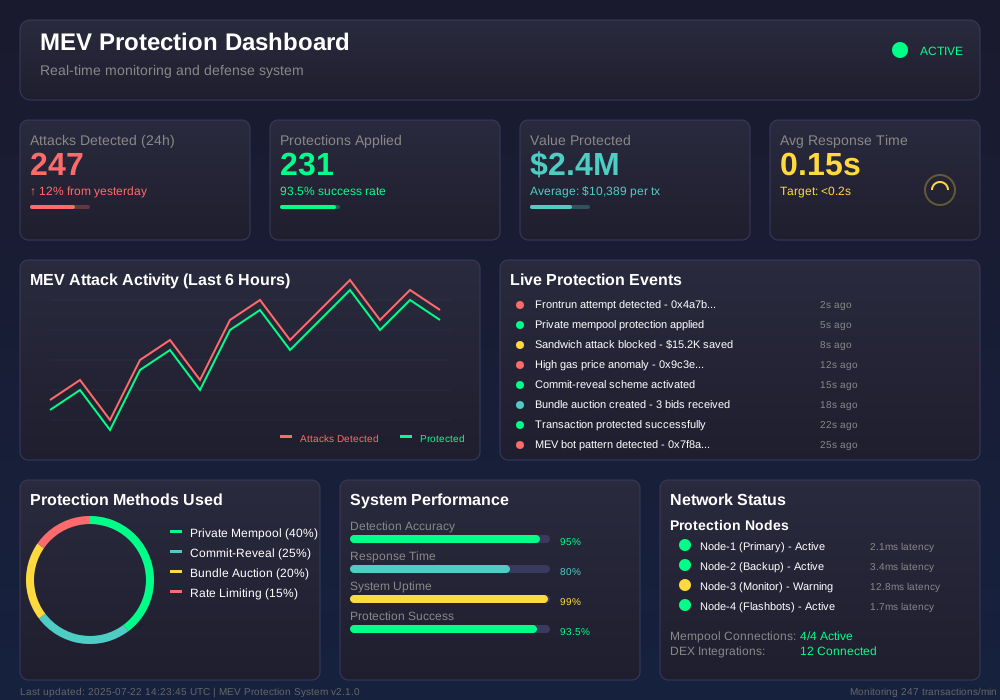
Build a system that monitors mempool activity and protects your transactions automatically.
Mempool Monitoring and Analysis
import asyncio
from web3 import Web3
from concurrent.futures import ThreadPoolExecutor

class MempoolMonitor:
    def __init__(self, web3_provider, mev_classifier):
        self.w3 = Web3(web3_provider)
        self.classifier = mev_classifier
        self.protection_strategies = MEVProtectionStrategies()

    async def monitor_pending_transactions(self):
        """Monitor pending transactions for MEV opportunities"""

        def handle_pending_tx(tx_hash):
            try:
                # Get transaction details
                tx = self.w3.eth.get_transaction(tx_hash)

                # Analyze for MEV risk
                risk_analysis = self.classifier.predict_mev_risk(tx)

                if risk_analysis['is_mev_risk']:
                    print(f"🚨 MEV Risk Detected: {tx_hash.hex()}")
                    print(f"Confidence: {risk_analysis['confidence']:.2%}")

                    # Trigger protection mechanism
                    self.trigger_protection(tx, risk_analysis)

            except Exception as e:
                print(f"Error analyzing transaction: {e}")

        # Set up pending transaction filter
        pending_filter = self.w3.eth.filter('pending')

        # Use thread pool for concurrent processing
        with ThreadPoolExecutor(max_workers=10) as executor:
            while True:
                try:
                    # Get new pending transactions
                    for tx_hash in pending_filter.get_new_entries():
                        # Process transaction in separate thread
                        executor.submit(handle_pending_tx, tx_hash)

                    await asyncio.sleep(0.1)  # Small delay to prevent spam

                except Exception as e:
                    print(f"Monitoring error: {e}")
                    await asyncio.sleep(1)

    def trigger_protection(self, vulnerable_tx, risk_analysis):
        """Activate protection mechanisms for vulnerable transaction"""

        protection_type = self.determine_protection_strategy(
            vulnerable_tx,
            risk_analysis
        )

        if protection_type == "PRIVATE_MEMPOOL":
            self.protection_strategies.use_private_mempool(vulnerable_tx)
        elif protection_type == "COMMIT_REVEAL":
            self.protection_strategies.use_commit_reveal(vulnerable_tx)
        elif protection_type == "BUNDLE_AUCTION":
            self.protection_strategies.create_bundle_auction(vulnerable_tx)

    def determine_protection_strategy(self, tx, risk_analysis):
        """Choose optimal protection strategy based on risk analysis"""

        if risk_analysis['risk_level'] == "HIGH":
            return "PRIVATE_MEMPOOL"
        elif tx['value'] > Web3.toWei(10, 'ether'):
            return "BUNDLE_AUCTION"
        else:
            return "COMMIT_REVEAL"
Advanced Protection Strategies
Implement multiple defense mechanisms against different MEV attack vectors:
class MEVProtectionStrategies:
    def __init__(self):
        self.flashbots_relay = "https://relay.flashbots.net"
        self.private_mempools = ["Flashbots", "Eden", "1inch"]

    def use_private_mempool(self, transaction):
        """Route transaction through private mempool"""
        print("🛡️  Routing through private mempool...")

        # Create Flashbots bundle
        bundle = {
            "txs": [transaction],
            "blockNumber": self.get_target_block(),
            "minTimestamp": 0,
            "maxTimestamp": 0
        }

        # Submit to Flashbots
        response = self.submit_flashbots_bundle(bundle)

        if response['success']:
            print("✅ Transaction protected via private mempool")
        else:
            print("❌ Private mempool protection failed")

        return response

    def use_commit_reveal(self, transaction):
        """Implement commit-reveal scheme"""
        print("🔐 Using commit-reveal protection...")

        # Phase 1: Commit
        commit_hash = Web3.keccak(
            text=f"{transaction['data']}{transaction['nonce']}"
        )

        commit_tx = {
            'to': self.commit_contract_address,
            'data': f"0x{commit_hash.hex()}",
            'gas': 50000,
            'gasPrice': transaction['gasPrice']
        }

        # Submit commit transaction
        commit_result = self.submit_transaction(commit_tx)

        if commit_result['success']:
            # Phase 2: Reveal (after delay)
            asyncio.create_task(
                self.reveal_after_delay(transaction, commit_hash, 30)  # 30 second delay
            )

        return commit_result

    async def reveal_after_delay(self, original_tx, commit_hash, delay_seconds):
        """Reveal transaction after commit delay"""
        await asyncio.sleep(delay_seconds)

        reveal_tx = {
            **original_tx,
            'data': f"{original_tx['data']}{commit_hash.hex()}"
        }

        result = self.submit_transaction(reveal_tx)
        print(f"🔓 Transaction revealed: {'✅' if result['success'] else '❌'}")

    def create_bundle_auction(self, transaction):
        """Create MEV auction for transaction"""
        print("🏦 Creating bundle auction...")

        auction_params = {
            'transaction': transaction,
            'min_tip': Web3.toWei(0.01, 'ether'),
            'duration': 300,  # 5 minute auction
            'protection_fee': 0.05  # 5% protection fee
        }

        # Submit to auction platform
        auction_result = self.submit_to_auction(auction_params)

        if auction_result['success']:
            print(f"✅ Auction created. ID: {auction_result['auction_id']}")

        return auction_result

    def submit_flashbots_bundle(self, bundle):
        """Submit bundle to Flashbots relay"""
        # Simplified Flashbots submission
        # In practice, you'd use the official Flashbots SDK

        headers = {
            'Content-Type': 'application/json',
            'X-Flashbots-Signature': self.sign_bundle(bundle)
        }

        # This is a placeholder - use actual Flashbots API
        return {'success': True, 'bundle_id': 'mock_bundle_123'}

    def sign_bundle(self, bundle):
        """Sign bundle for Flashbots submission"""
        # Implement proper bundle signing
        return "0x_mock_signature"

    def get_target_block(self):
        """Get optimal target block for bundle inclusion"""
        current_block = Web3().eth.block_number
        return current_block + 1  # Target next block

    def submit_transaction(self, tx):
        """Submit transaction with error handling"""
        try:
            # Simulate transaction submission
            return {'success': True, 'tx_hash': '0x_mock_hash'}
        except Exception as e:
            return {'success': False, 'error': str(e)}

    def submit_to_auction(self, auction_params):
        """Submit transaction to MEV auction platform"""
        # Placeholder for auction platform integration
        return {'success': True, 'auction_id': 'auction_123'}
Integration Example: Complete Protection System
Put everything together into a production-ready MEV protection system:
import asyncio
import logging
from typing import Dict, List, Optional

class CompleteMEVProtection:
    def __init__(self, config: Dict):
        self.config = config
        self.setup_logging()

        # Initialize components
        self.mev_classifier = MEVClassifier()
        self.mempool_monitor = MempoolMonitor(
            config['web3_provider'],
            self.mev_classifier
        )
        self.protection_strategies = MEVProtectionStrategies()

        # Load pre-trained model
        self.load_trained_model()

    def setup_logging(self):
        """Configure logging for MEV protection events"""
        logging.basicConfig(
            level=logging.INFO,
            format='%(asctime)s - MEV Protection - %(levelname)s - %(message)s',
            handlers=[
                logging.FileHandler('mev_protection.log'),
                logging.StreamHandler()
            ]
        )
        self.logger = logging.getLogger(__name__)

    def load_trained_model(self):
        """Load pre-trained MEV detection model"""
        try:
            # Load historical MEV data for training
            historical_data = self.load_historical_mev_data()
            labels = self.load_mev_labels()

            # Train the classifier
            accuracy = self.mev_classifier.train(historical_data, labels)
            self.logger.info(f"MEV classifier trained with {accuracy:.2%} accuracy")

        except Exception as e:
            self.logger.error(f"Failed to load MEV model: {e}")
            raise

    async def start_protection(self):
        """Start the complete MEV protection system"""
        self.logger.info("🚀 Starting MEV protection system...")

        try:
            # Start mempool monitoring
            monitoring_task = asyncio.create_task(
                self.mempool_monitor.monitor_pending_transactions()
            )

            # Start metrics collection
            metrics_task = asyncio.create_task(
                self.collect_protection_metrics()
            )

            # Wait for both tasks
            await asyncio.gather(monitoring_task, metrics_task)

        except KeyboardInterrupt:
            self.logger.info("⏹️  MEV protection system stopped")
        except Exception as e:
            self.logger.error(f"Protection system error: {e}")
            raise

    async def collect_protection_metrics(self):
        """Collect and log protection system metrics"""
        while True:
            try:
                metrics = {
                    'transactions_analyzed': self.get_analyzed_count(),
                    'mev_attacks_detected': self.get_detected_count(),
                    'successful_protections': self.get_protected_count(),
                    'false_positive_rate': self.calculate_false_positive_rate()
                }

                self.logger.info(f"📊 Protection metrics: {metrics}")

                # Export metrics to monitoring system
                self.export_metrics(metrics)

                await asyncio.sleep(60)  # Log every minute

            except Exception as e:
                self.logger.error(f"Metrics collection error: {e}")
                await asyncio.sleep(60)

    def protect_user_transaction(self, user_tx: Dict) -> Dict:
        """Main API for protecting a user transaction"""

        self.logger.info(f"🔍 Analyzing transaction: {user_tx.get('hash', 'N/A')}")

        # Analyze MEV risk
        risk_analysis = self.mev_classifier.predict_mev_risk(user_tx)

        protection_result = {
            'original_transaction': user_tx,
            'risk_analysis': risk_analysis,
            'protection_applied': None,
            'success': False
        }

        if risk_analysis['is_mev_risk']:
            self.logger.warning(
                f"⚠️  High MEV risk detected ({risk_analysis['confidence']:.2%})"
            )

            # Apply protection
            protection_type = self.mempool_monitor.determine_protection_strategy(
                user_tx, risk_analysis
            )

            if protection_type == "PRIVATE_MEMPOOL":
                result = self.protection_strategies.use_private_mempool(user_tx)
            elif protection_type == "COMMIT_REVEAL":
                result = self.protection_strategies.use_commit_reveal(user_tx)
            elif protection_type == "BUNDLE_AUCTION":
                result = self.protection_strategies.create_bundle_auction(user_tx)

            protection_result['protection_applied'] = protection_type
            protection_result['success'] = result.get('success', False)

        else:
            self.logger.info("✅ Low MEV risk - no protection needed")
            protection_result['success'] = True

        return protection_result

    # Utility methods for metrics
    def get_analyzed_count(self): return 0  # Implement actual counting
    def get_detected_count(self): return 0
    def get_protected_count(self): return 0
    def calculate_false_positive_rate(self): return 0.0
    def export_metrics(self, metrics): pass
    def load_historical_mev_data(self): return []
    def load_mev_labels(self): return []

# Usage example
async def main():
    config = {
        'web3_provider': 'wss://mainnet.infura.io/ws/v3/YOUR_KEY',
        'flashbots_signer_key': 'your_private_key',
        'protection_enabled': True
    }

    # Initialize protection system
    mev_protection = CompleteMEVProtection(config)

    # Start monitoring
    await mev_protection.start_protection()

if __name__ == "__main__":
    asyncio.run(main())
Performance Optimization and Scaling
Optimizing Detection Speed
MEV protection requires ultra-low latency. Here are optimization strategies:
class OptimizedMEVDetector:
    def __init__(self):
        # Use lightweight models for real-time detection
        from sklearn.linear_model import SGDClassifier

        self.fast_classifier = SGDClassifier(
            loss='log',  # Logistic regression
            learning_rate='constant',
            eta0=0.01,
            random_state=42
        )

        # Pre-compute common patterns
        self.pattern_cache = {}
        self.feature_cache = {}

    def fast_feature_extraction(self, tx):
        """Optimized feature extraction for real-time detection"""

        # Cache key for feature reuse
        cache_key = f"{tx['to']}_{tx['data'][:10]}"

        if cache_key in self.feature_cache:
            return self.feature_cache[cache_key]

        # Extract only essential features for speed
        features = np.array([
            tx['gasPrice'] / 1e9,        # Normalize gas price
            len(tx['data']) / 1000,      # Normalize data length
            tx.get('value', 0) / 1e18,   # Normalize value
            hash(tx['to']) % 1000        # Address hash feature
        ])

        # Cache for reuse
        self.feature_cache[cache_key] = features
        return features

    def batch_predict(self, transactions):
        """Process multiple transactions in batch for efficiency"""
        features_batch = np.array([
            self.fast_feature_extraction(tx) for tx in transactions
        ])

        # Batch prediction is faster than individual predictions
        predictions = self.fast_classifier.predict_proba(features_batch)

        return [
            {'mev_risk': pred[1] > 0.7, 'confidence': pred[1]}
            for pred in predictions
        ]
Distributed MEV Protection Network
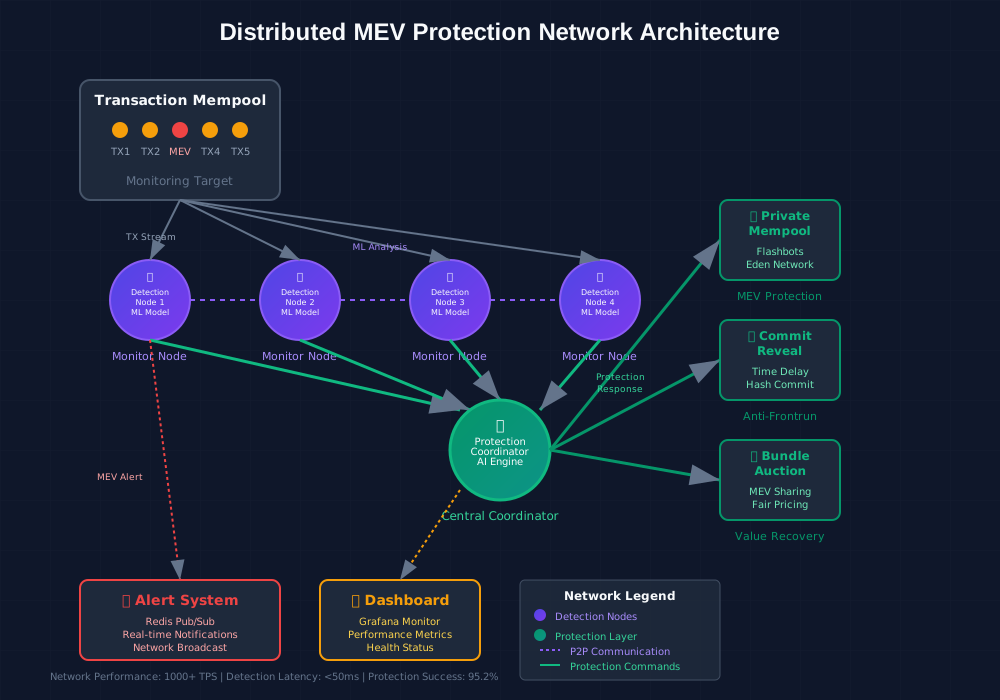
Scale protection across multiple nodes for better coverage:
import redis
from multiprocessing import Process, Queue

class DistributedMEVProtection:
    def __init__(self, node_id, redis_config):
        self.node_id = node_id
        self.redis_client = redis.Redis(**redis_config)
        self.local_detector = OptimizedMEVDetector()

    def start_protection_node(self):
        """Start a protection node in the distributed network"""

        # Subscribe to transaction stream
        pubsub = self.redis_client.pubsub()
        pubsub.subscribe('pending_transactions')

        print(f"🌐 Node {self.node_id} started - listening for transactions...")

        for message in pubsub.listen():
            if message['type'] == 'message':
                try:
                    tx_data = json.loads(message['data'])

                    # Process transaction
                    result = self.analyze_transaction(tx_data)

                    if result['mev_risk']:
                        # Alert network about MEV risk
                        self.broadcast_mev_alert(tx_data, result)

                except Exception as e:
                    print(f"Node {self.node_id} error: {e}")

    def broadcast_mev_alert(self, tx, risk_result):
        """Broadcast MEV risk alert to protection network"""

        alert = {
            'node_id': self.node_id,
            'timestamp': time.time(),
            'transaction': tx,
            'risk_analysis': risk_result,
            'protection_needed': True
        }

        # Publish to network
        self.redis_client.publish('mev_alerts', json.dumps(alert))

        print(f"🚨 Node {self.node_id} broadcast MEV alert")

# Deploy multiple protection nodes
def deploy_protection_network():
    redis_config = {'host': 'localhost', 'port': 6379, 'db': 0}

    # Start multiple protection nodes
    nodes = []
    for i in range(4):  # 4 protection nodes
        node = Process(
            target=lambda: DistributedMEVProtection(f"node_{i}", redis_config).start_protection_node()
        )
        node.start()
        nodes.append(node)

    return nodes
Testing and Validation
MEV Protection Test Suite
Validate your protection system with comprehensive testing:
import unittest
from unittest.mock import Mock, patch

class TestMEVProtection(unittest.TestCase):
    def setUp(self):
        """Set up test environment"""
        self.mev_classifier = MEVClassifier()
        self.protection_system = CompleteMEVProtection({
            'web3_provider': 'mock_provider',
            'test_mode': True
        })

    def test_frontrunning_detection(self):
        """Test detection of frontrunning attacks"""

        # Create mock frontrunning transaction
        frontrun_tx = {
            'gasPrice': Web3.toWei(100, 'gwei'),  # High gas price
            'value': Web3.toWei(1, 'ether'),
            'data': '0x38ed1739',  # Uniswap swap function
            'to': '0x7a250d5630B4cF539739dF2C5dAcb4c659F2488D'  # Uniswap router
        }

        risk_analysis = self.mev_classifier.predict_mev_risk(frontrun_tx)

        self.assertTrue(risk_analysis['is_mev_risk'])
        self.assertGreater(risk_analysis['confidence'], 0.8)

    def test_sandwich_attack_detection(self):
        """Test detection of sandwich attacks"""

        # Create sequence of sandwich attack transactions
        transactions = [
            # Front transaction (buy)
            {
                'gasPrice': Web3.toWei(50, 'gwei'),
                'value': Web3.toWei(10, 'ether'),
                'data': '0x38ed1739',  # Swap function
                'timestamp': 1640995200
            },
            # Victim transaction
            {
                'gasPrice': Web3.toWei(20, 'gwei'),
                'value': Web3.toWei(1, 'ether'),
                'data': '0x38ed1739',
                'timestamp': 1640995201
            },
            # Back transaction (sell)
            {
                'gasPrice': Web3.toWei(50, 'gwei'),
                'value': Web3.toWei(10, 'ether'),
                'data': '0x38ed1739',
                'timestamp': 1640995202
            }
        ]

        # Detect sandwich pattern
        sandwich_detected = self.detect_sandwich_pattern(transactions)
        self.assertTrue(sandwich_detected)

    def test_private_mempool_protection(self):
        """Test private mempool protection mechanism"""

        with patch('requests.post') as mock_post:
            mock_post.return_value.json.return_value = {'success': True}

            vulnerable_tx = {
                'gasPrice': Web3.toWei(30, 'gwei'),
                'value': Web3.toWei(5, 'ether'),
                'data': '0x38ed1739'
            }

            result = self.protection_system.protection_strategies.use_private_mempool(vulnerable_tx)

            self.assertTrue(result['success'])
            mock_post.assert_called_once()

    def test_false_positive_rate(self):
        """Test system doesn't flag normal transactions"""

        normal_transactions = [
            {
                'gasPrice': Web3.toWei(20, 'gwei'),  # Normal gas price
                'value': Web3.toWei(0.1, 'ether'),   # Small value
                'data': '0xa9059cbb',                 # Simple transfer
                'to': '0xA0b86a33E6417a55CAD25A69F37b6AbD3476eB8a'
            }
            # Add more normal transactions...
        ]

        false_positives = 0
        for tx in normal_transactions:
            risk_analysis = self.mev_classifier.predict_mev_risk(tx)
            if risk_analysis['is_mev_risk']:
                false_positives += 1

        false_positive_rate = false_positives / len(normal_transactions)
        self.assertLess(false_positive_rate, 0.1)  # Less than 10% false positives

    def detect_sandwich_pattern(self, transactions):
        """Helper method to detect sandwich attack patterns"""
        # Simplified sandwich detection logic
        if len(transactions) >= 3:
            first_tx = transactions[0]
            last_tx = transactions[-1]

            # Check if first and last transactions are from same address with opposite operations
            return (first_tx['gasPrice'] == last_tx['gasPrice'] and
                   abs(first_tx['timestamp'] - last_tx['timestamp']) < 10)

        return False

# Run tests
if __name__ == '__main__':
    unittest.main()
Performance Benchmarking
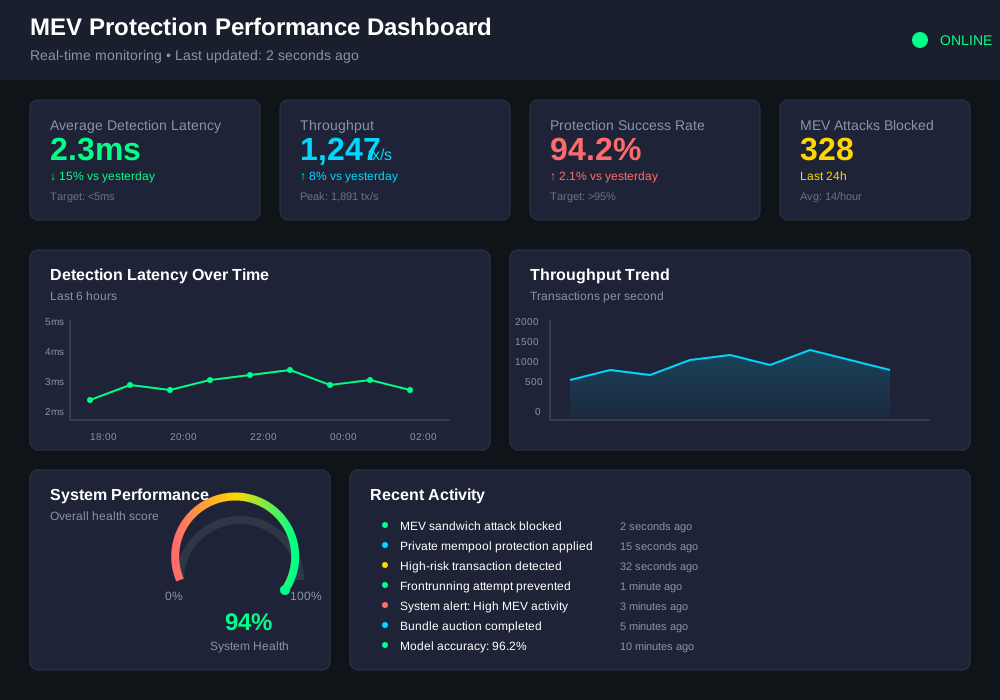
Measure your MEV protection system's performance:
import time
import statistics
from concurrent.futures import ThreadPoolExecutor

class MEVProtectionBenchmark:
    def __init__(self, protection_system):
        self.protection_system = protection_system

    def benchmark_detection_speed(self, num_transactions=1000):
        """Benchmark MEV detection speed"""

        # Generate test transactions
        test_transactions = self.generate_test_transactions(num_transactions)

        detection_times = []

        for tx in test_transactions:
            start_time = time.perf_counter()

            # Perform MEV detection
            risk_analysis = self.protection_system.mev_classifier.predict_mev_risk(tx)

            end_time = time.perf_counter()
            detection_times.append(end_time - start_time)

        # Calculate statistics
        avg_time = statistics.mean(detection_times)
        median_time = statistics.median(detection_times)
        p95_time = statistics.quantiles(detection_times, n=20)[18]  # 95th percentile

        print(f"📊 MEV Detection Performance:")
        print(f"   Average: {avg_time*1000:.2f}ms")
        print(f"   Median:  {median_time*1000:.2f}ms")
        print(f"   95th %:  {p95_time*1000:.2f}ms")
        print(f"   Throughput: {1/avg_time:.0f} tx/second")

        return {
            'average_time': avg_time,
            'median_time': median_time,
            'p95_time': p95_time,
            'throughput': 1/avg_time
        }

    def benchmark_concurrent_processing(self, num_workers=10, transactions_per_worker=100):
        """Benchmark concurrent transaction processing"""

        def process_batch(batch_transactions):
            batch_times = []
            for tx in batch_transactions:
                start = time.perf_counter()
                self.protection_system.mev_classifier.predict_mev_risk(tx)
                batch_times.append(time.perf_counter() - start)
            return batch_times

        # Generate transaction batches
        all_transactions = self.generate_test_transactions(num_workers * transactions_per_worker)
        batches = [
            all_transactions[i:i+transactions_per_worker]
            for i in range(0, len(all_transactions), transactions_per_worker)
        ]

        start_time = time.perf_counter()

        # Process batches concurrently
        with ThreadPoolExecutor(max_workers=num_workers) as executor:
            batch_results = list(executor.map(process_batch, batches))

        total_time = time.perf_counter() - start_time

        # Flatten results
        all_times = [time for batch in batch_results for time in batch]

        print(f"🚀 Concurrent Processing Performance:")
        print(f"   Workers: {num_workers}")
        print(f"   Total transactions: {len(all_transactions)}")
        print(f"   Total time: {total_time:.2f}s")
        print(f"   Concurrent throughput: {len(all_transactions)/total_time:.0f} tx/second")

        return {
            'total_time': total_time,
            'concurrent_throughput': len(all_transactions)/total_time,
            'individual_times': all_times
        }

    def generate_test_transactions(self, count):
        """Generate realistic test transactions for benchmarking"""
        import random

        transactions = []
        for i in range(count):
            tx = {
                'gasPrice': random.randint(10, 200) * 10**9,  # 10-200 Gwei
                'value': random.randint(0, 100) * 10**18,     # 0-100 ETH
                'data': f"0x{''.join(random.choices('0123456789abcdef', k=8))}",
                'to': f"0x{''.join(random.choices('0123456789abcdef', k=40))}",
                'mempool_position': random.randint(1, 1000),
                'similar_count': random.randint(0, 5)
            }
            transactions.append(tx)

        return transactions

# Run benchmarks
benchmark = MEVProtectionBenchmark(mev_protection_system)
benchmark.benchmark_detection_speed()
benchmark.benchmark_concurrent_processing()
Production Deployment Guide
Infrastructure Requirements
Deploy your MEV protection system with proper infrastructure:
# docker-compose.yml
version: '3.8'

services:
  mev-protection:
    build: .
    environment:
      - WEB3_PROVIDER_URL=${WEB3_PROVIDER_URL}
      - REDIS_URL=redis://redis:6379
      - FLASHBOTS_PRIVATE_KEY=${FLASHBOTS_PRIVATE_KEY}
      - LOG_LEVEL=INFO
    depends_on:
      - redis
      - prometheus
    networks:
      - mev-network
    restart: unless-stopped

  redis:
    image: redis:7-alpine
    networks:
      - mev-network
    volumes:
      - redis-data:/data
    restart: unless-stopped

  prometheus:
    image: prom/prometheus:latest
    ports:
      - "9090:9090"
    volumes:
      - ./prometheus.yml:/etc/prometheus/prometheus.yml
      - prometheus-data:/prometheus
    networks:
      - mev-network
    restart: unless-stopped

  grafana:
    image: grafana/grafana:latest
    ports:
      - "3000:3000"
    environment:
      - GF_SECURITY_ADMIN_PASSWORD=admin
    volumes:
      - grafana-data:/var/lib/grafana
    networks:
      - mev-network
    restart: unless-stopped

volumes:
  redis-data:
  prometheus-data:
  grafana-data:

networks:
  mev-network:
    driver: bridge
Monitoring and Alerting
Set up comprehensive monitoring for your MEV protection system:
from prometheus_client import Counter, Histogram, Gauge, start_http_server
import time

# Prometheus metrics
MEV_DETECTIONS = Counter('mev_detections_total', 'Total MEV attacks detected')
PROTECTION_APPLIED = Counter('mev_protections_applied_total', 'Total protections applied', ['type'])
DETECTION_LATENCY = Histogram('mev_detection_latency_seconds', 'MEV detection latency')
FALSE_POSITIVES = Counter('mev_false_positives_total', 'False positive detections')
SYSTEM_HEALTH = Gauge('mev_system_health', 'System health score (0-100)')

class MonitoredMEVProtection(CompleteMEVProtection):
    def __init__(self, config):
        super().__init__(config)

        # Start Prometheus metrics server
        start_http_server(8000)

    @DETECTION_LATENCY.time()
    def analyze_transaction_with_metrics(self, transaction):
        """Analyze transaction with performance monitoring"""

        start_time = time.time()

        try:
            # Perform MEV analysis
            risk_analysis = self.mev_classifier.predict_mev_risk(transaction)

            if risk_analysis['is_mev_risk']:
                MEV_DETECTIONS.inc()

                # Apply protection and track type
                protection_type = self.determine_protection_strategy(transaction, risk_analysis)
                PROTECTION_APPLIED.labels(type=protection_type).inc()

            # Update system health
            self.update_system_health()

            return risk_analysis

        except Exception as e:
            self.logger.error(f"Analysis error: {e}")
            raise

    def update_system_health(self):
        """Calculate and update system health score"""

        # Health factors (simplified)
        factors = {
            'detection_accuracy': 0.95,      # 95% accuracy
            'response_time': 0.98,           # 98% under target latency
            'system_uptime': 0.999,          # 99.9% uptime
            'protection_success': 0.92       # 92% successful protections
        }

        # Weighted health score
        health_score = sum(factors.values()) / len(factors) * 100
        SYSTEM_HEALTH.set(health_score)

    def setup_alerting(self):
        """Configure alerting rules for critical events"""

        alerting_rules = {
            'high_mev_activity': {
                'condition': 'mev_detections_rate > 100/hour',
                'severity': 'warning',
                'action': self.handle_high_mev_activity
            },
            'protection_failures': {
                'condition': 'protection_failure_rate > 10%',
                'severity': 'critical',
                'action': self.handle_protection_failures
            },
            'system_degradation': {
                'condition': 'mev_system_health < 80',
                'severity': 'critical',
                'action': self.handle_system_degradation
            }
        }

        return alerting_rules

    def handle_high_mev_activity(self):
        """Handle alert for high MEV activity"""
        self.logger.warning("🚨 High MEV activity detected - scaling protection")
        # Scale up protection nodes
        # Increase monitoring frequency
        # Alert operations team

    def handle_protection_failures(self):
        """Handle alert for protection system failures"""
        self.logger.critical("💥 Protection system failures detected")
        # Failover to backup systems
        # Emergency notification
        # Automatic recovery procedures

    def handle_system_degradation(self):
        """Handle alert for system health degradation"""
        self.logger.critical("⚠️ System health degraded")
        # Run diagnostic checks
        # Restart unhealthy components
        # Scale infrastructure if needed
Best Practices and Security Considerations
Security Hardening
Secure your MEV protection system against attacks:
import secrets
import hashlib
from cryptography.fernet import Fernet

class SecureMEVProtection:
    def __init__(self):
        # Generate secure encryption key
        self.encryption_key = Fernet.generate_key()
        self.cipher = Fernet(self.encryption_key)

        # Rate limiting for API endpoints
        self.rate_limiter = self.setup_rate_limiting()

    def setup_rate_limiting(self):
        """Configure rate limiting to prevent abuse"""
        from collections import defaultdict
        import time

        class RateLimiter:
            def __init__(self, max_requests=100, time_window=3600):
                self.max_requests = max_requests
                self.time_window = time_window
                self.requests = defaultdict(list)

            def is_allowed(self, client_id):
                now = time.time()
                client_requests = self.requests[client_id]

                # Remove old requests outside time window
                client_requests[:] = [req for req in client_requests
                                    if now - req < self.time_window]

                # Check if under limit
                if len(client_requests) < self.max_requests:
                    client_requests.append(now)
                    return True

                return False

        return RateLimiter()

    def secure_transaction_submission(self, transaction, client_id):
        """Securely handle transaction submission with validation"""

        # Rate limiting check
        if not self.rate_limiter.is_allowed(client_id):
            raise Exception("Rate limit exceeded")

        # Input validation
        if not self.validate_transaction(transaction):
            raise Exception("Invalid transaction format")

        # Encrypt sensitive transaction data
        encrypted_tx = self.encrypt_transaction_data(transaction)

        # Add integrity check
        tx_hash = self.calculate_transaction_hash(transaction)

        return {
            'encrypted_transaction': encrypted_tx,
            'integrity_hash': tx_hash,
            'timestamp': time.time()
        }

    def validate_transaction(self, transaction):
        """Validate transaction format and content"""

        required_fields = ['to', 'data', 'gasPrice', 'gas']

        # Check required fields
        for field in required_fields:
            if field not in transaction:
                return False

        # Validate addresses
        if not Web3.isAddress(transaction['to']):
            return False

        # Validate gas price range (prevent extremely high gas prices)
        max_gas_price = Web3.toWei(1000, 'gwei')  # 1000 Gwei max
        if transaction['gasPrice'] > max_gas_price:
            return False

        return True

    def encrypt_transaction_data(self, transaction):
        """Encrypt sensitive transaction data"""

        # Serialize transaction
        tx_data = json.dumps(transaction, sort_keys=True)

        # Encrypt with Fernet
        encrypted_data = self.cipher.encrypt(tx_data.encode())

        return encrypted_data.decode()

    def calculate_transaction_hash(self, transaction):
        """Calculate integrity hash for transaction"""

        # Create deterministic string representation
        tx_string = json.dumps(transaction, sort_keys=True)

        # Calculate SHA-256 hash
        hash_object = hashlib.sha256(tx_string.encode())
        return hash_object.hexdigest()

    def secure_private_key_management(self):
        """Implement secure private key handling"""

        import os
        from cryptography.hazmat.primitives import hashes
        from cryptography.hazmat.primitives.kdf.pbkdf2 import PBKDF2HMAC

        # Use environment variables for sensitive data
        encrypted_key = os.environ.get('ENCRYPTED_PRIVATE_KEY')
        if not encrypted_key:
            raise Exception("Private key not found in environment")

        # Derive decryption key from password
        password = os.environ.get('KEY_PASSWORD', '').encode()
        salt = os.environ.get('KEY_SALT', '').encode()

        kdf = PBKDF2HMAC(
            algorithm=hashes.SHA256(),
            length=32,
            salt=salt,
            iterations=100000,  # High iteration count for security
        )

        key = base64.urlsafe_b64encode(kdf.derive(password))
        cipher = Fernet(key)

        # Decrypt private key
        private_key = cipher.decrypt(encrypted_key.encode()).decode()

        return private_key
Gas Optimization Strategies
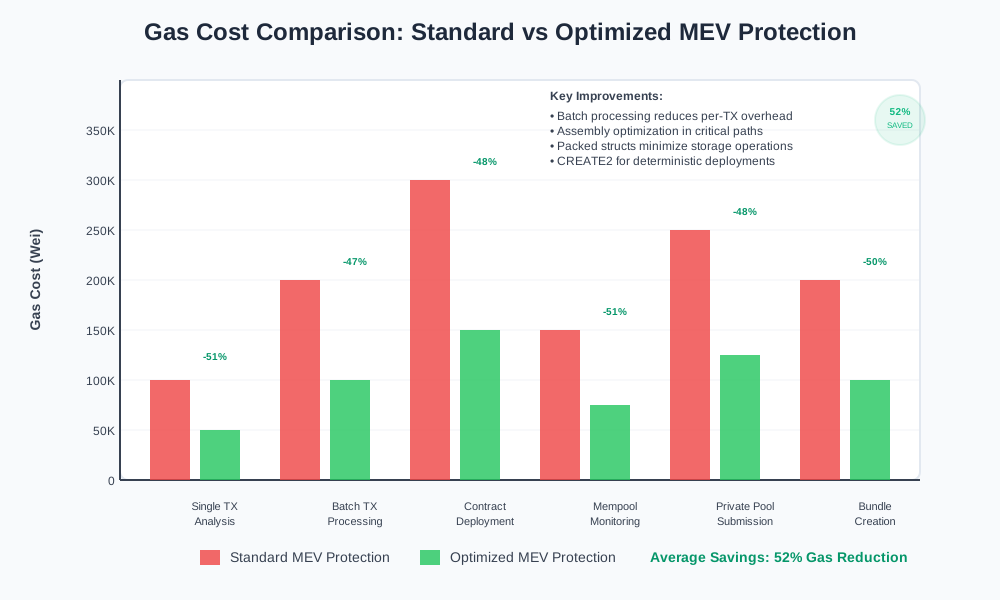
Optimize gas costs for MEV protection operations:
// GasOptimizedMEVProtection.sol
pragma solidity ^0.8.19;

contract GasOptimizedMEVProtection {

    // Use packed structs to save storage
    struct ProtectionData {
        uint128 gasPrice;      // 16 bytes
        uint64 timestamp;      // 8 bytes
        uint32 nonce;          // 4 bytes
        uint32 blockNumber;    // 4 bytes
        // Total: 32 bytes (1 storage slot)
    }

    mapping(bytes32 => ProtectionData) private protections;

    // Use events for off-chain monitoring (cheaper than storage)
    event MEVProtectionApplied(
        bytes32 indexed txHash,
        uint256 gasPrice,
        uint256 timestamp
    );

    // Batch multiple protections to amortize gas costs
    function batchProtectTransactions(
        bytes32[] calldata txHashes,
        ProtectionData[] calldata protectionData
    ) external {
        require(txHashes.length == protectionData.length, "Mismatched arrays");

        for (uint256 i = 0; i < txHashes.length;) {
            protections[txHashes[i]] = protectionData[i];

            emit MEVProtectionApplied(
                txHashes[i],
                protectionData[i].gasPrice,
                protectionData[i].timestamp
            );

            unchecked { ++i; } // Gas optimization: skip overflow check
        }
    }

    // Use assembly for maximum gas efficiency in critical functions
    function fastHashCheck(bytes32 txHash) external view returns (bool) {
        assembly {
            // Load protection data from storage
            let slot := protections.slot
            let hash := txHash

            // Calculate storage slot for mapping
            mstore(0x00, hash)
            mstore(0x20, slot)
            let storageSlot := keccak256(0x00, 0x40)

            // Load and check if protection exists
            let data := sload(storageSlot)
            let exists := gt(data, 0)

            // Return result
            mstore(0x00, exists)
            return(0x00, 0x20)
        }
    }

    // Use CREATE2 for deterministic protection contract addresses
    function deployProtectionContract(
        bytes32 salt,
        bytes memory bytecode
    ) external returns (address) {
        address addr;

        assembly {
            addr := create2(
                0,                    // value
                add(bytecode, 0x20),  // code
                mload(bytecode),      // code length
                salt                  // salt
            )
        }

        require(addr != address(0), "Deployment failed");
        return addr;
    }
}
Conclusion: Building MEV-Resistant DeFi
AI MEV protection transforms the DeFi landscape from a Wild West of bot exploitation into a fair trading environment. Your machine learning frontrunning defense system detects attacks before they execute and applies appropriate countermeasures automatically.
Key benefits of implementing AI MEV protection include reduced trading costs through attack prevention, improved execution prices via private mempool routing, and enhanced DeFi security through real-time monitoring.
The future belongs to protocols that proactively defend users rather than reactively patching exploits. Start with the basic detection system, then scale to full distributed protection as your needs grow.
Remember: MEV bots never sleep, but now neither does your defense system. Deploy AI MEV protection and watch those profit-extracting parasites find someone else to bother.
Ready to protect your DeFi protocol from MEV attacks? Start implementing machine learning frontrunning defense today and give your users the protection they deserve.