Picture this: You're holding crypto assets that sit idle like a couch potato watching Netflix reruns. Meanwhile, smart DeFi users earn passive income through Aave V3 yield farming while you scroll through price charts hoping for moon missions.
Stop leaving money on the table. Aave V3 offers multiple yield farming strategies that can generate consistent returns through supply incentives, borrowing rewards, and leveraged positions.
This guide reveals proven Aave V3 strategies that help you maximize returns while managing risks effectively. You'll learn supply optimization techniques, strategic borrowing methods, and advanced yield farming tactics used by experienced DeFi traders.
What is Aave V3 Yield Farming?
Aave V3 yield farming combines lending protocols with incentive mechanisms to generate multiple income streams. Users supply assets to earn interest while receiving additional token rewards from liquidity mining programs.
Core Aave V3 yield farming components:
- Supply yields: Interest earned from lending assets to borrowers
- Liquidity incentives: Additional token rewards for providing liquidity
- Borrowing rewards: Tokens earned for borrowing specific assets
- Leveraged strategies: Amplified returns through recursive lending
Why Aave V3 Dominates DeFi Lending
Aave V3 introduces several improvements over previous versions that enhance yield farming opportunities:
Efficiency Mode (eMode) allows higher leverage ratios for correlated assets like ETH/stETH pairs. Users can achieve 90%+ loan-to-value ratios instead of traditional 75% limits.
Cross-chain functionality enables yield farming across multiple networks including Ethereum, Polygon, Arbitrum, and Optimism. This expands opportunities and reduces gas costs.
Isolation mode protects the protocol by limiting borrowing against volatile assets while still allowing yield generation.
Aave V3 Supply Strategies
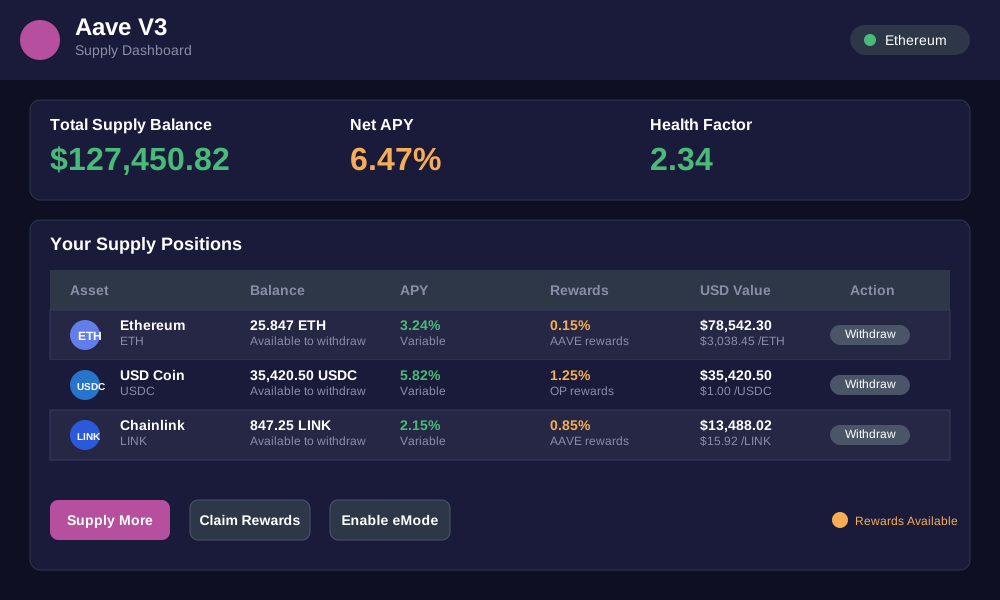
Supply strategies focus on depositing assets to earn interest plus liquidity incentives. Success depends on choosing optimal assets and timing market conditions.
High-Yield Stablecoin Strategy
Stablecoin supplies offer consistent returns with minimal price risk. This strategy works best during volatile market periods when borrowing demand increases.
Target assets for maximum yields:
- USDC: Typically 3-8% APY plus incentives
- USDT: Similar returns with slightly higher risk
- DAI: Often higher rates due to lower supply
Implementation steps:
- Analyze current rates: Check Aave V3 dashboard for highest-yielding stablecoins
- Supply gradually: Deposit in batches to capture rate fluctuations
- Monitor incentives: Track additional token rewards beyond interest
- Compound earnings: Reinvest interest to maximize compounding effects
// Example: Supply USDC to Aave V3
contract YieldFarmer {
    IPool public constant AAVE_POOL = IPool(0x87870Bca3F3fD6335C3F4ce8392D69350B4fA4E2);
    IERC20 public constant USDC = IERC20(0xA0b86a33E6417b99a0C164e8c47Ff6FB2F6f0B7f);

    function supplyUSDC(uint256 amount) external {
        // Approve Aave to spend USDC
        USDC.approve(address(AAVE_POOL), amount);

        // Supply USDC to earn yield + incentives
        AAVE_POOL.supply(
            address(USDC),     // Asset to supply
            amount,            // Amount to supply
            msg.sender,        // On behalf of
            0                  // Referral code
        );
    }
}
Volatile Asset Supply Strategy
Supplying volatile assets like ETH or BTC can generate higher yields but requires careful risk management. This strategy performs well during bull markets with strong borrowing demand.
Optimal volatile assets:
- ETH: Highest liquidity and consistent demand
- WBTC: Lower yields but more stable than altcoins
- LINK: Higher risk but potentially higher rewards
Risk management techniques:
- Diversify supplies: Spread across 3-5 different assets
- Set stop-losses: Monitor asset prices and withdraw if needed
- Track utilization: High utilization (>80%) indicates good yields
- Hedge positions: Consider shorting perpetuals to reduce price exposure
Aave V3 Borrow Strategies
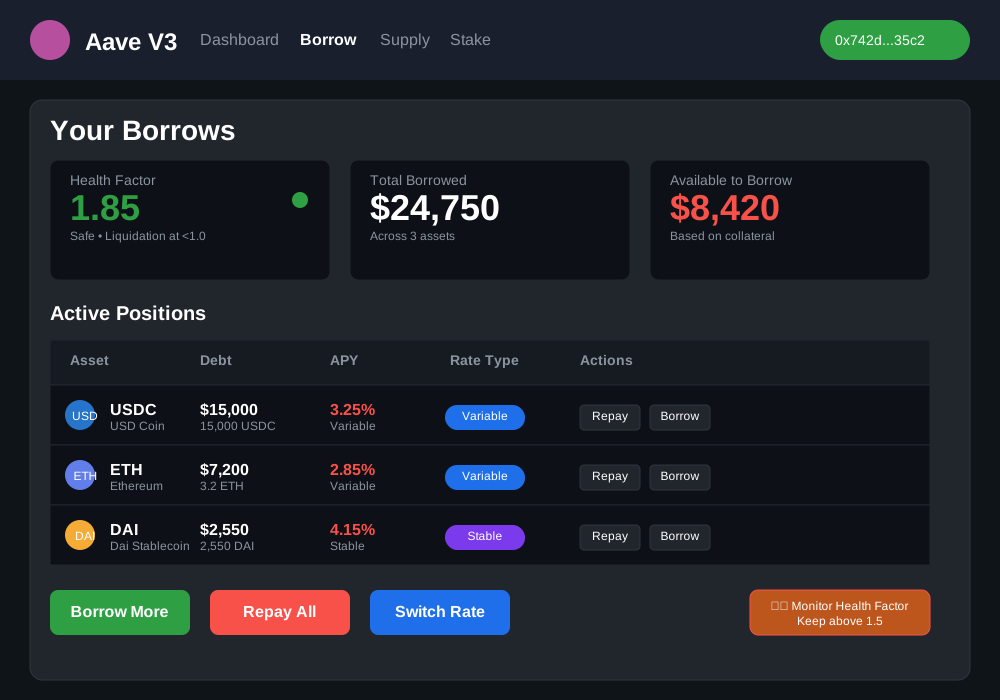
Strategic borrowing unlocks advanced yield farming opportunities through leveraged positions and arbitrage trades. These strategies require higher skill but offer superior returns.
Recursive Lending Strategy
Recursive lending multiplies exposure by borrowing against supplied collateral to supply more assets. This strategy amplifies both yields and risks.
Example recursive USDC strategy:
- Supply $10,000 USDC → Earn 5% APY
- Borrow $7,500 USDC at 75% LTV → Pay 3% APY
- Supply borrowed $7,500 → Earn another 5% APY
- Repeat 2-3 times → Achieve 8-12% net APY
Calculation breakdown:
- Total supplied: $24,375 USDC
- Total borrowed: $14,375 USDC
- Net position: $10,000 initial capital
- Effective leverage: 2.44x
- Net APY: ~9.2% (assuming 5% supply, 3% borrow rates)
// Recursive lending implementation
function recursiveLend(uint256 initialAmount, uint8 iterations) external {
    uint256 currentSupply = initialAmount;

    // Initial supply
    supplyUSDC(currentSupply);

    for (uint8 i = 0; i < iterations; i++) {
        // Calculate max borrow (75% LTV with safety margin)
        uint256 borrowAmount = currentSupply * 70 / 100;

        // Borrow USDC
        AAVE_POOL.borrow(
            address(USDC),
            borrowAmount,
            2,              // Variable rate
            0,              // Referral code
            msg.sender
        );

        // Supply borrowed amount
        supplyUSDC(borrowAmount);
        currentSupply = borrowAmount;
    }
}
Arbitrage Borrowing Strategy
Borrow assets on Aave V3 to exploit yield opportunities on other protocols. This strategy requires quick execution and careful monitoring.
Common arbitrage opportunities:
- Curve pool farming: Borrow stablecoins to earn CRV rewards
- Convex staking: Leverage Curve positions for additional CVX tokens
- Cross-chain farming: Borrow on Ethereum, farm on L2 networks
- Liquid staking: Borrow ETH to stake for stETH rewards
Risk factors to monitor:
- Health factor: Keep above 1.5 for safety
- Rate fluctuations: Borrowing costs can spike quickly
- Smart contract risks: External protocols may have vulnerabilities
- Impermanent loss: LP positions can lose value
Carry Trade Strategy
Borrow low-yield assets to supply high-yield alternatives. This strategy profits from interest rate differentials between assets.
Example ETH/USDC carry trade:
- Supply $50,000 worth of ETH as collateral
- Borrow $30,000 USDC at variable rates (~2-4%)
- Supply USDC to higher-yielding protocol (6-10%)
- Profit from spread while maintaining ETH exposure
Monitoring requirements:
- Track ETH price movements affecting health factor
- Watch USDC borrowing rates for cost increases
- Monitor alternative protocol yields for optimization
- Maintain adequate collateral ratios
Advanced Aave V3 Yield Farming Techniques
Advanced strategies combine multiple protocols and leverage sophisticated DeFi mechanics for maximum yield generation.
Efficiency Mode (eMode) Optimization
eMode allows higher leverage for correlated assets, enabling more aggressive yield farming strategies.
Optimal eMode pairs:
- ETH/stETH: Up to 90% LTV for liquid staking yields
- USDC/USDT: High leverage stablecoin farming
- wBTC/tBTC: Bitcoin-based carry trades
eMode implementation strategy:
- Enable eMode for chosen asset category
- Supply primary asset (e.g., ETH)
- Borrow correlated asset (e.g., stETH) at high LTV
- Deploy borrowed assets for additional yield
- Monitor health factor more closely due to higher leverage
// Enable eMode for ETH category
function enableEMode() external {
    AAVE_POOL.setUserEMode(1); // ETH eMode category
}

// High leverage ETH/stETH strategy
function stETHLeverage(uint256 ethAmount) external {
    // Supply ETH
    WETH.deposit{value: ethAmount}();
    supplyAsset(address(WETH), ethAmount);

    // Borrow stETH at 90% LTV (eMode)
    uint256 borrowAmount = ethAmount * 90 / 100;
    AAVE_POOL.borrow(
        address(STETH),
        borrowAmount,
        2,
        0,
        msg.sender
    );

    // Deploy stETH for additional yield
    deployStETH(borrowAmount);
}
Cross-Chain Yield Optimization
Leverage Aave V3's multi-chain presence to optimize yields across different networks.
Network comparison for yield farming:
| Network | Gas Costs | Yields | Liquidity | Best For |
|---|---|---|---|---|
| Ethereum | High | Moderate | Highest | Large positions |
| Polygon | Low | High | Good | Small/medium positions |
| Arbitrum | Medium | High | Growing | Active strategies |
| Optimism | Medium | Moderate | Moderate | ETH-focused plays |
Cross-chain strategy execution:
- Analyze yields across all networks
- Consider gas costs for position management
- Bridge assets to optimal networks
- Monitor bridge risks and delays
- Rebalance regularly based on yield changes
Leveraged Staking Strategy
Combine liquid staking with Aave V3 borrowing for amplified staking rewards.
Strategy overview:
- Supply ETH to Aave V3 as collateral
- Borrow additional ETH at maximum safe LTV
- Stake all ETH for stETH/rETH rewards
- Supply staking tokens back to Aave V3
- Repeat process for higher leverage
Risk calculation:
- Staking rewards: ~4-6% APY
- Borrowing costs: ~2-4% APY
- Net yield: 2-4% on leveraged amount
- Leverage ratio: 2-3x typical
- Total enhanced yield: 4-12% APY
Risk Management for Aave V3 Yield Farming
Successful yield farming requires systematic risk management to protect capital and ensure consistent returns.
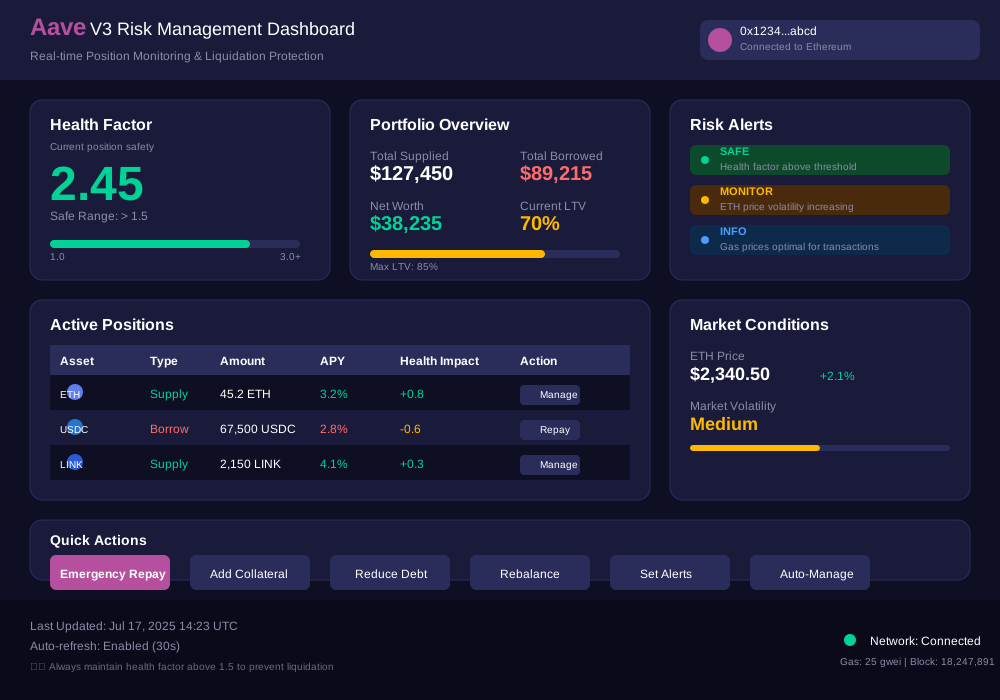
Health Factor Monitoring
Health factor measures position safety. Values below 1.0 trigger liquidation.
Health factor guidelines:
- Above 2.0: Safe for volatile markets
- 1.5-2.0: Moderate risk, monitor closely
- 1.2-1.5: High risk, reduce leverage
- Below 1.2: Liquidation risk, urgent action needed
Automated monitoring setup:
// Health factor monitoring contract
contract HealthMonitor {
    IPool public immutable aavePool;
    uint256 public constant MIN_HEALTH_FACTOR = 150; // 1.5

    function checkHealthFactor(address user) external view returns (
        uint256 healthFactor,
        bool needsRebalancing
    ) {
        (, , , , , healthFactor) = aavePool.getUserAccountData(user);
        needsRebalancing = healthFactor < MIN_HEALTH_FACTOR * 1e16;

        return (healthFactor, needsRebalancing);
    }

    function emergencyRepay(address asset, uint256 amount) external {
        // Implement emergency repayment logic
        aavePool.repay(asset, amount, 2, msg.sender);
    }
}
Liquidation Prevention
Prevent liquidations through proactive position management and automated systems.
Prevention strategies:
- Set health factor alerts at 1.8, 1.5, and 1.3 levels
- Maintain emergency funds for quick repayments
- Use stop-loss mechanisms for volatile collateral
- Implement auto-deleveraging when health factor drops
- Monitor borrowing rate changes that affect costs
Emergency response plan:
- Health factor 1.5: Reduce leverage by 25%
- Health factor 1.3: Reduce leverage by 50%
- Health factor 1.1: Emergency deleveraging to 1.8+
- Market crash: Close all leveraged positions immediately
Interest Rate Risk Management
Borrowing rates fluctuate based on utilization and market conditions. High rates can eliminate profit margins.
Rate monitoring techniques:
- Track utilization ratios for borrowed assets
- Set rate alerts when costs exceed thresholds
- Monitor stable vs variable rate advantages
- Plan exit strategies for rate spike scenarios
- Diversify borrowing across multiple assets
Rate optimization strategies:
- Switch to stable rates during volatile periods
- Reduce positions when rates spike above profit thresholds
- Exploit rate arbitrage between different protocols
- Time entries during low utilization periods
Yield Farming Tools and Resources
Essential tools and platforms help optimize Aave V3 yield farming strategies.
Analytics Platforms
DeFiLlama provides comprehensive yield tracking across protocols:
- Compare Aave V3 yields with competitors
- Track historical APY trends
- Monitor total value locked (TVL) changes
- Analyze risk-adjusted returns
Aave Analytics offers protocol-specific insights:
- Real-time utilization rates
- Interest rate model predictions
- Liquidation data and trends
- User position analytics
DeBank enables portfolio tracking:
- Aggregate positions across chains
- Calculate net worth and yields
- Track transaction history
- Monitor health factors
Automation Tools
Gelato Network provides automated position management:
- Auto-compound yields
- Health factor monitoring
- Emergency liquidation protection
- Cross-chain rebalancing
Instadapp offers advanced DeFi automation:
- Strategy templates for Aave V3
- Automated leveraging and deleveraging
- Cross-protocol yield optimization
- Risk management tools
Security Considerations
Smart contract audits: Only use audited protocols and verified contracts Insurance options: Consider Nexus Mutual or similar DeFi insurance Hardware wallets: Store significant funds in cold storage Multi-sig wallets: Use multi-signature wallets for large positions
Tax Implications of Aave V3 Yield Farming
Understanding tax obligations helps avoid compliance issues and optimize after-tax returns.
Taxable Events
Supply transactions: Generally not taxable events Interest earnings: Taxed as income at receipt Incentive token rewards: Taxed at fair market value when received Borrowing: Not taxable income Repayment: Not deductible unless business-related Asset swaps: Trigger capital gains/losses
Record Keeping Requirements
Maintain detailed records for tax compliance:
- Transaction timestamps and block numbers
- Token prices at transaction time
- Gas fees for expense deductions
- Yield calculations and compound tracking
- Cross-chain bridge transactions
- Liquidation events and associated losses
Recommended tools:
- Koinly: Automated DeFi tax reporting
- CoinTracker: Portfolio and tax tracking
- TokenTax: Specialized DeFi calculations
- Custom spreadsheets: Manual tracking for complex strategies
Tax Optimization Strategies
Harvest losses: Realize losses to offset gains Timing income: Delay rewards to optimize tax brackets Entity structure: Consider LLC/corporation for large operations Geographic arbitrage: Explore tax-friendly jurisdictions (where legal)
Common Aave V3 Yield Farming Mistakes
Avoid these frequent errors that reduce profitability and increase risks.
Overleveraging Positions
Mistake: Using maximum leverage without safety margins Solution: Maintain health factors above 1.8 in volatile markets
Example: User supplies $10,000 ETH, borrows $8,000 stablecoins at 80% LTV. ETH drops 15%, triggering liquidation. Better approach: Borrow only $6,000 (60% LTV) for safety margin.
Ignoring Gas Costs
Mistake: Frequent small transactions that exceed profit margins Solution: Batch transactions and optimize for network conditions
Gas optimization techniques:
- Use Layer 2 networks for smaller positions
- Batch multiple operations in single transaction
- Time transactions during low gas periods
- Consider gas costs in yield calculations
Poor Timing
Mistake: Entering strategies during rate peaks or market volatility Solution: Monitor market conditions and time entries strategically
Timing indicators:
- Low utilization rates (better borrowing costs)
- High incentive multipliers
- Stable market conditions
- Low volatility periods
Neglecting Monitoring
Mistake: Setting positions and forgetting about them Solution: Implement systematic monitoring and alert systems
Monitoring checklist:
- Daily health factor checks
- Weekly yield optimization reviews
- Monthly strategy performance analysis
- Quarterly risk assessment updates
Conclusion
Aave V3 yield farming offers multiple pathways to generate passive income through strategic supply and borrow positions. Success requires understanding protocol mechanics, implementing proper risk management, and maintaining disciplined monitoring practices.
Key takeaways for profitable Aave V3 yield farming:
- Start with simple supply strategies before advancing to leveraged positions
- Maintain health factors above 1.8 for safety in volatile markets
- Monitor interest rates and utilization to optimize timing
- Use automation tools to reduce manual monitoring burden
- Keep detailed records for tax compliance and performance tracking
- Diversify across assets and strategies to minimize concentration risk
Ready to start earning? Begin with conservative stablecoin supplies to learn the platform, then gradually implement more advanced strategies as you gain experience. Remember that consistent returns beat aggressive plays that risk liquidation.
The DeFi landscape evolves rapidly, but Aave V3's robust infrastructure and continuous improvements make it a reliable foundation for long-term yield farming success. Start building your passive income streams today.
Disclaimer: This content is for educational purposes only. Cryptocurrency investments carry significant risks including potential total loss. Always conduct your own research and consider consulting with financial advisors before making investment decisions.