Why chase pennies in traditional savings accounts when DeFi protocols offer double-digit returns? Welcome to 1inch yield farming, where your crypto works harder than a caffeinated trader on bull market Monday.
What Is 1inch Yield Farming and Why Should You Care?
1inch yield farming transforms idle cryptocurrency into active income streams through liquidity provision. You deposit crypto pairs into liquidity pools and earn rewards from trading fees plus additional token incentives.
This guide covers 1inch liquidity protocol setup, reward mechanisms, and optimization strategies. You'll learn to maximize returns while managing risks in the decentralized finance ecosystem.
Getting Started with 1inch Protocol
Prerequisites for 1inch Yield Farming
Before starting 1inch liquidity mining, you need:
- MetaMask wallet or compatible Web3 wallet
- Ethereum (ETH) for gas fees
- Target crypto pairs for liquidity provision
- Basic understanding of impermanent loss concepts
Understanding 1inch's Automated Market Maker
1inch operates as a DEX aggregation protocol that routes trades across multiple decentralized exchanges. The platform offers liquidity farming through:
- Mooniswap pools (1inch's native AMM)
- External protocol integrations
- Cross-chain yield opportunities
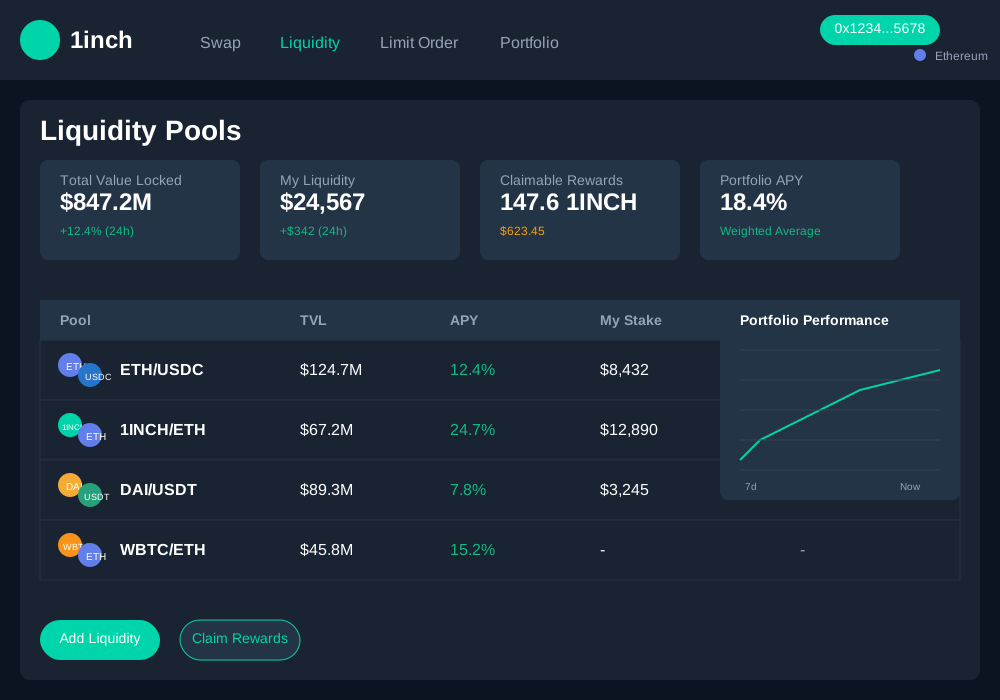
Liquidity Pool Setup Process
Step 1: Connect Your Wallet to 1inch
Navigate to the 1inch app and connect your wallet:
// Example Web3 connection (for developers)
const Web3 = require('web3');
const web3 = new Web3(window.ethereum);

// Connect to 1inch contract
const oneinchContract = new web3.eth.Contract(
  ONEINCH_ABI,
  '0x111111125434b319222CdBf8C261674aDB56F3ae' // 1inch router v5
);

// Check wallet connection
async function connectWallet() {
  try {
    const accounts = await window.ethereum.request({
      method: 'eth_requestAccounts'
    });
    console.log('Connected account:', accounts[0]);
    return accounts[0];
  } catch (error) {
    console.error('Wallet connection failed:', error);
  }
}
Step 2: Choose Your Liquidity Pool
Select pools based on:
- APY percentage (annual percentage yield)
- Pool stability and trading volume
- Token pair correlation
- Your risk tolerance
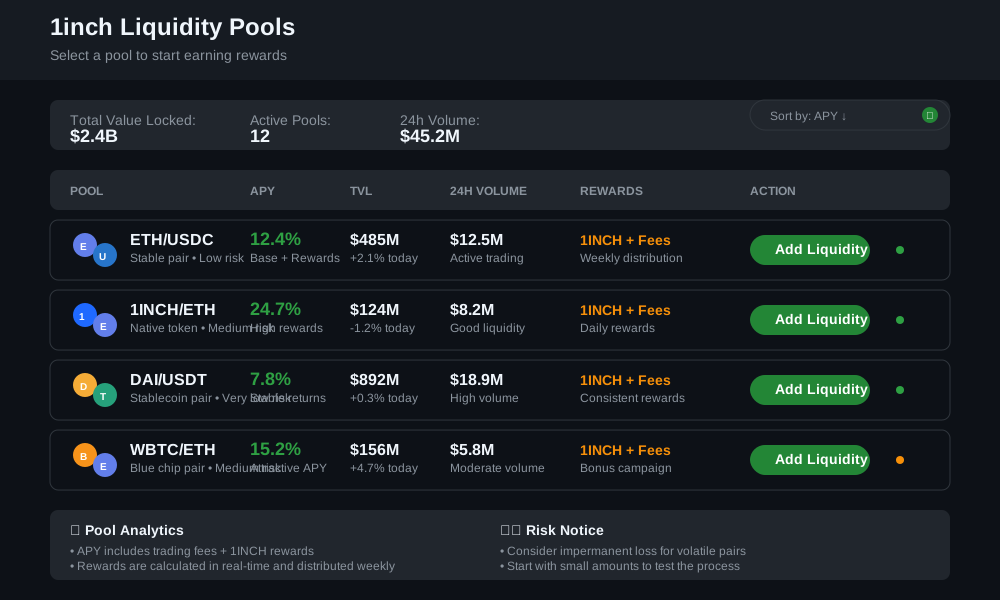
Popular 1inch farming pools include:
| Pool | Current APY | Risk Level | Minimum Deposit |
|---|---|---|---|
| ETH/USDC | 8-12% | Low | 0.1 ETH |
| 1INCH/ETH | 15-25% | Medium | 100 1INCH |
| DAI/USDT | 5-8% | Low | $500 |
Step 3: Add Liquidity to Selected Pool
// Smart contract interaction example
pragma solidity ^0.8.0;

interface IMooniswap {
    function deposit(
        uint256[2] calldata amounts,
        uint256[2] calldata minAmounts
    ) external payable returns (uint256 fairSupply);
}

contract LiquidityProvider {
    IMooniswap public mooniswap;

    // Add liquidity with slippage protection
    function addLiquidity(
        uint256 amount0,
        uint256 amount1,
        uint256 minAmount0,
        uint256 minAmount1
    ) external {
        // Approve tokens first
        IERC20(token0).approve(address(mooniswap), amount0);
        IERC20(token1).approve(address(mooniswap), amount1);

        // Deposit to pool
        mooniswap.deposit(
            [amount0, amount1],
            [minAmount0, minAmount1]
        );
    }
}
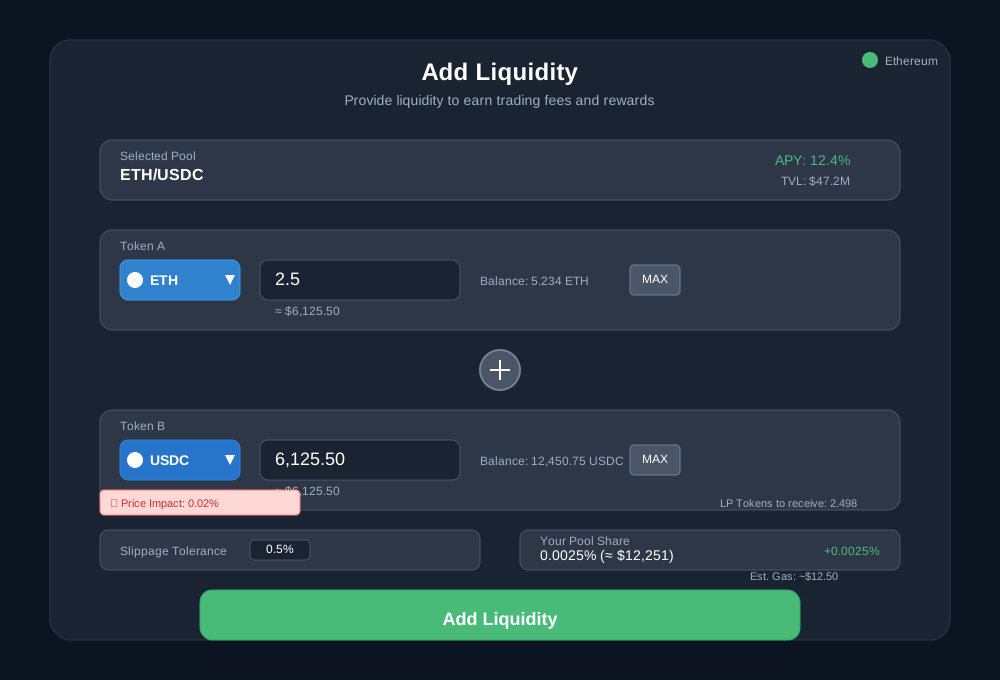
Manual Process Steps:
- Navigate to the Pools section
- Select your desired liquidity pool
- Enter token amounts (maintain pool ratio)
- Set slippage tolerance (0.5-1% recommended)
- Confirm transaction and pay gas fees
- Receive LP tokens representing your pool share
Reward Calculation and Optimization
How 1inch Yield Farming Rewards Work
1inch farming rewards come from three sources:
- Trading fees (0.3% of each swap)
- 1INCH token incentives (additional rewards)
- External protocol rewards (when applicable)
Calculating Your Expected Returns
# Python example for reward calculation
def calculate_farming_rewards(
    liquidity_amount,
    pool_apr,
    trading_volume_24h,
    pool_tvl,
    days_farming
):
    # Base APR from trading fees
    daily_fee_rate = (trading_volume_24h * 0.003) / pool_tvl / 365

    # Your share of daily fees
    daily_fees = liquidity_amount * daily_fee_rate

    # Additional token rewards (APR)
    daily_token_rewards = liquidity_amount * (pool_apr / 365)

    # Total daily earnings
    total_daily = daily_fees + daily_token_rewards

    # Project total earnings
    total_earnings = total_daily * days_farming

    return {
        'daily_earnings': total_daily,
        'projected_earnings': total_earnings,
        'effective_apr': (total_earnings / liquidity_amount) * (365 / days_farming)
    }

# Example calculation
result = calculate_farming_rewards(
    liquidity_amount=10000,  # $10,000 USD
    pool_apr=0.15,          # 15% APR
    trading_volume_24h=1000000,  # $1M daily volume
    pool_tvl=50000000,      # $50M total value locked
    days_farming=30         # 30 days
)

print(f"Daily earnings: ${result['daily_earnings']:.2f}")
print(f"Monthly projection: ${result['projected_earnings']:.2f}")
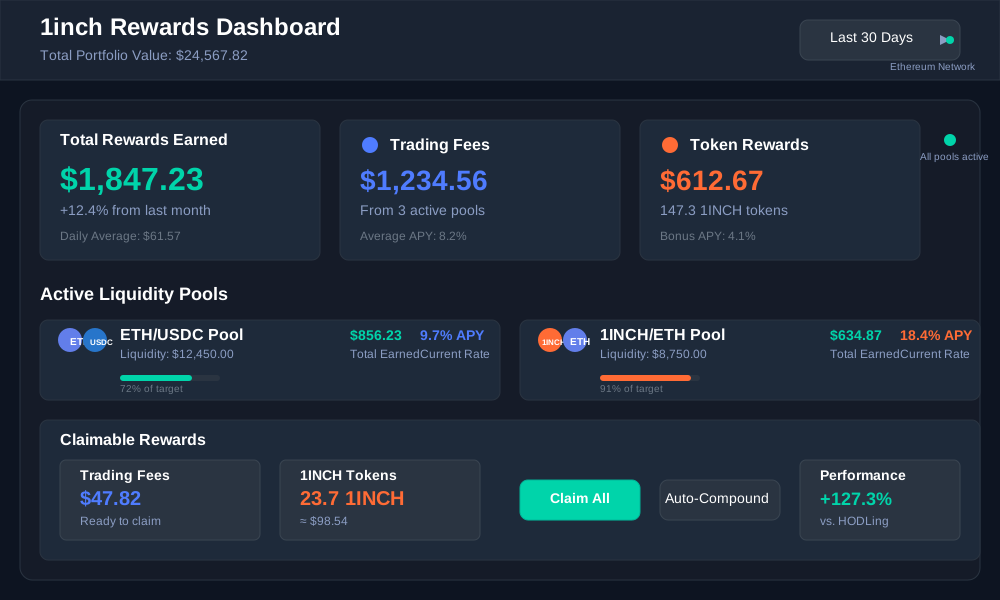
Maximizing Your Yield Farming Returns
Compound your rewards by:
- Reinvesting earned tokens back into pools
- Switching to higher-yield opportunities
- Balancing multiple pools for risk distribution
Auto-compounding strategies:
// Auto-compound function example
async function autoCompound(poolAddress, minRewardThreshold) {
    const pendingRewards = await getPendingRewards(poolAddress);

    if (pendingRewards >= minRewardThreshold) {
        // Claim rewards
        await claimRewards(poolAddress);

        // Swap half rewards to pair token
        const halfRewards = pendingRewards / 2;
        await swapTokens(rewardToken, pairToken, halfRewards);

        // Add liquidity with both tokens
        await addLiquidity(poolAddress, halfRewards, halfRewards);

        console.log('Auto-compound completed');
    }
}

// Run every 24 hours
setInterval(() => autoCompound(POOL_ADDRESS, 10), 86400000);
Advanced Farming Strategies
Strategy 1: Multi-Pool Diversification
Spread liquidity across multiple pools to reduce risk:
const portfolioAllocation = {
    'ETH/USDC': 0.4,    // 40% - stable, high volume
    '1INCH/ETH': 0.3,   // 30% - higher yield, medium risk
    'DAI/USDT': 0.2,    // 20% - stable, lower yield
    'WBTC/ETH': 0.1     // 10% - diversification
};

// Calculate total portfolio APY
function calculatePortfolioAPY(allocations, poolAPYs) {
    let weightedAPY = 0;

    for (const [pool, weight] of Object.entries(allocations)) {
        weightedAPY += poolAPYs[pool] * weight;
    }

    return weightedAPY;
}
Strategy 2: Yield Curve Optimization
Monitor and switch between pools based on yield changes:
import requests
import time

def monitor_pool_yields():
    """Monitor 1inch pool APYs and alert on changes"""

    while True:
        # Fetch current APYs (pseudo-API call)
        current_yields = fetch_1inch_apys()

        for pool, apy in current_yields.items():
            # Alert if APY drops below threshold
            if apy < MINIMUM_APY_THRESHOLD:
                print(f"Alert: {pool} APY dropped to {apy}%")
                suggest_alternative_pools(pool)

            # Alert if new high-yield opportunity
            if apy > HIGH_YIELD_THRESHOLD:
                print(f"Opportunity: {pool} APY increased to {apy}%")

        time.sleep(3600)  # Check every hour

# Set your thresholds
MINIMUM_APY_THRESHOLD = 8.0  # 8%
HIGH_YIELD_THRESHOLD = 20.0  # 20%
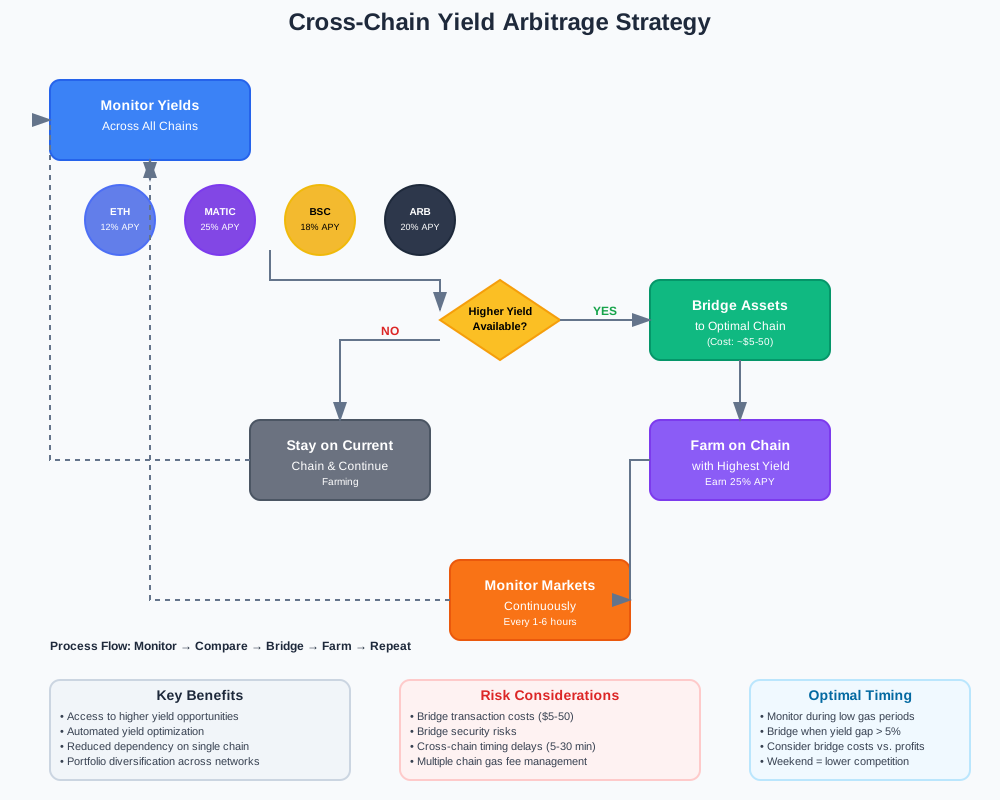
Strategy 3: Cross-Chain Yield Arbitrage
Utilize 1inch's cross-chain capabilities:
- Monitor yields across different networks
- Bridge assets to higher-yield chains
- Farm on optimal networks
- Bridge back when opportunities shift
Risk Management and Security
Understanding Impermanent Loss
Impermanent loss occurs when token prices diverge significantly. Calculate potential loss:
def calculate_impermanent_loss(price_ratio_change):
    """
    Calculate impermanent loss percentage
    price_ratio_change: final_price_ratio / initial_price_ratio
    """

    # Formula for impermanent loss in AMM pools
    loss_multiplier = (2 * (price_ratio_change ** 0.5)) / (1 + price_ratio_change)
    impermanent_loss = (loss_multiplier - 1) * 100

    return impermanent_loss

# Example: ETH price doubles relative to USDC
price_change = 2.0
loss_percentage = calculate_impermanent_loss(price_change)
print(f"Impermanent loss: {loss_percentage:.2f}%")  # Output: ~5.72%
Security Best Practices
- Use hardware wallets for large amounts
- Verify contract addresses before interacting
- Start small with test transactions
- Monitor positions regularly
- Set stop-loss limits for major holdings
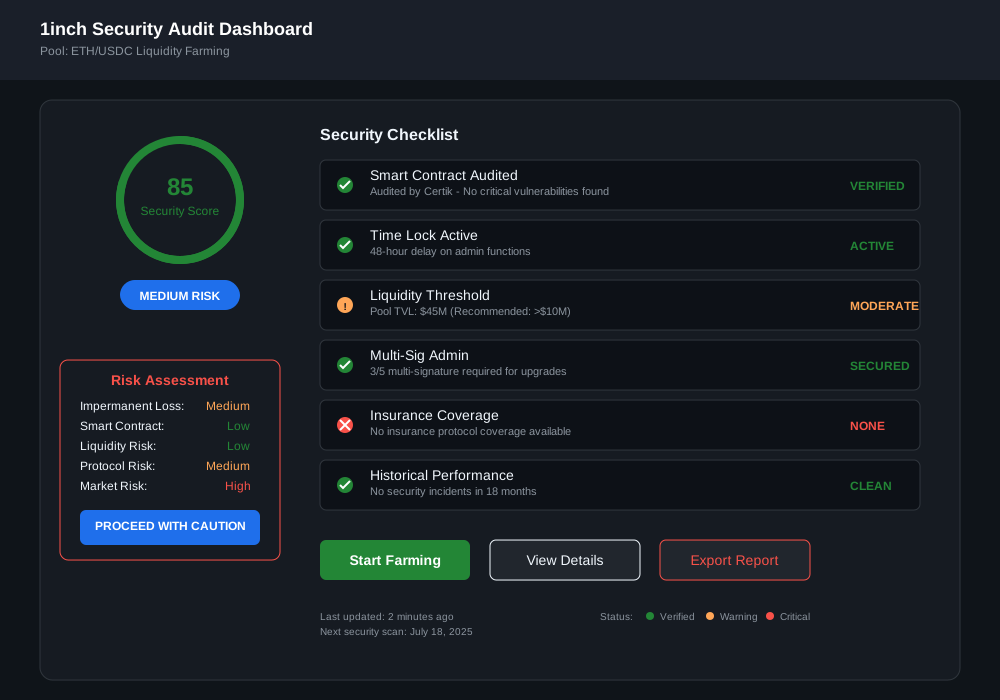
Smart Contract Risk Assessment
Before joining any pool, check:
- Audit reports from reputable firms
- Time-lock mechanisms on critical functions
- Admin key control structures
- Historical security incidents
// Contract verification example
async function verifyPoolSecurity(poolAddress) {
    const contract = new web3.eth.Contract(POOL_ABI, poolAddress);

    // Check if contract is verified
    const isVerified = await checkEtherscanVerification(poolAddress);

    // Check for time locks
    const timeLock = await contract.methods.timelock().call();

    // Check admin functions
    const owner = await contract.methods.owner().call();

    return {
        verified: isVerified,
        hasTimeLock: timeLock !== '0x0000000000000000000000000000000000000000',
        owner: owner
    };
}
Monitoring and Managing Your Positions
Essential Metrics to Track
Track these key performance indicators:
- Current APY vs. historical average
- Impermanent loss progression
- Total value locked in your pools
- Reward accumulation rate
- Gas costs vs. earnings
Automated Monitoring Setup
import json
from web3 import Web3

class YieldFarmMonitor:
    def __init__(self, wallet_address, pools):
        self.wallet = wallet_address
        self.pools = pools
        self.web3 = Web3(Web3.HTTPProvider('YOUR_RPC_URL'))

    def get_position_value(self, pool_address):
        """Get current value of LP position"""
        # Implementation for fetching LP token balance and calculating USD value
        pass

    def check_rewards(self, pool_address):
        """Check pending rewards for a pool"""
        # Implementation for checking claimable rewards
        pass

    def generate_report(self):
        """Generate daily performance report"""
        report = {
            'date': datetime.now().isoformat(),
            'total_value': 0,
            'total_rewards': 0,
            'pools': []
        }

        for pool in self.pools:
            position_value = self.get_position_value(pool['address'])
            pending_rewards = self.check_rewards(pool['address'])

            pool_data = {
                'name': pool['name'],
                'value': position_value,
                'rewards': pending_rewards,
                'apy': pool['current_apy']
            }

            report['pools'].append(pool_data)
            report['total_value'] += position_value
            report['total_rewards'] += pending_rewards

        return report

# Usage example
monitor = YieldFarmMonitor('0xYourAddress', your_pools)
daily_report = monitor.generate_report()
Troubleshooting Common Issues
Transaction Failures
High gas fees: Use gas trackers and time transactions during low-congestion periods.
Slippage errors: Increase slippage tolerance or split large transactions.
Insufficient liquidity: Check pool depth before large deposits.
Reward Claiming Problems
// Handle failed reward claims
async function claimRewardsWithRetry(poolAddress, maxRetries = 3) {
    for (let i = 0; i < maxRetries; i++) {
        try {
            const gasPrice = await getOptimalGasPrice();
            const tx = await farmingContract.methods.claimRewards(poolAddress).send({
                from: userAddress,
                gasPrice: gasPrice,
                gas: 200000
            });

            console.log('Rewards claimed successfully:', tx.transactionHash);
            return tx;
        } catch (error) {
            console.log(`Attempt ${i + 1} failed:`, error.message);

            if (i === maxRetries - 1) {
                throw error;
            }

            // Wait before retry
            await new Promise(resolve => setTimeout(resolve, 5000));
        }
    }
}
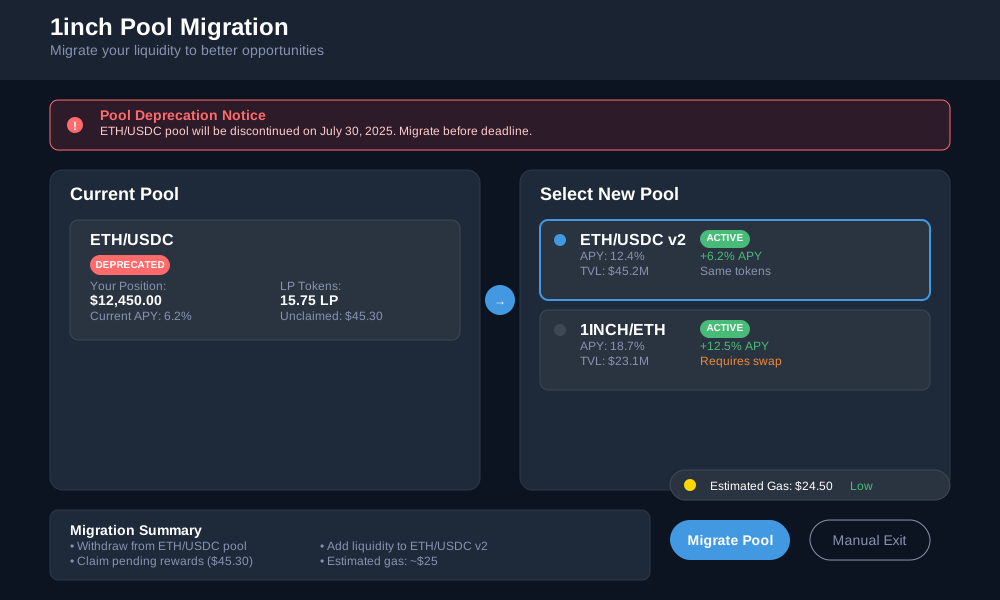
Pool Migration Scenarios
When pools close or rewards end:
- Monitor protocol announcements
- Withdraw liquidity before deadline
- Migrate to alternative pools
- Claim all pending rewards
Advanced Analytics and Optimization
Performance Tracking Dashboard
# Create performance tracking system
class FarmingAnalytics:
    def __init__(self):
        self.positions = []
        self.historical_data = []

    def calculate_roi(self, initial_investment, current_value, days_elapsed):
        """Calculate return on investment"""
        roi = ((current_value - initial_investment) / initial_investment) * 100
        annualized_roi = roi * (365 / days_elapsed)
        return {
            'roi': roi,
            'annualized_roi': annualized_roi
        }

    def compare_strategies(self, strategy_a, strategy_b):
        """Compare performance of different farming strategies"""
        return {
            'strategy_a_roi': strategy_a['annualized_roi'],
            'strategy_b_roi': strategy_b['annualized_roi'],
            'difference': strategy_a['annualized_roi'] - strategy_b['annualized_roi']
        }

    def optimize_allocation(self, available_capital, pool_data):
        """Suggest optimal capital allocation across pools"""
        # Implementation of portfolio optimization algorithm
        pass
Tax Considerations for Yield Farming
Record keeping requirements:
- Initial liquidity provision date and amount
- Reward claiming transactions and values
- Impermanent loss calculations for tax purposes
- Pool exit dates and final values
# Tax tracking helper
class TaxTracker:
    def __init__(self):
        self.transactions = []

    def record_liquidity_addition(self, pool, tokens, amounts, timestamp):
        """Record LP token creation"""
        self.transactions.append({
            'type': 'liquidity_add',
            'pool': pool,
            'tokens': tokens,
            'amounts': amounts,
            'timestamp': timestamp,
            'usd_value': self.get_usd_value(tokens, amounts, timestamp)
        })

    def record_reward_claim(self, pool, reward_token, amount, timestamp):
        """Record reward token claiming"""
        self.transactions.append({
            'type': 'reward_claim',
            'pool': pool,
            'token': reward_token,
            'amount': amount,
            'timestamp': timestamp,
            'usd_value': self.get_usd_value([reward_token], [amount], timestamp)
        })

    def generate_tax_report(self, year):
        """Generate annual tax report"""
        # Filter transactions by year and calculate totals
        pass
Conclusion
1inch yield farming offers substantial earning potential through strategic liquidity provision and reward optimization. Success requires understanding pool mechanics, managing impermanent loss risks, and staying updated on protocol changes.
Key takeaways for 1inch liquidity protocol success:
- Start small while learning the mechanics
- Diversify across multiple pools and strategies
- Monitor positions regularly and adjust as needed
- Compound rewards to maximize long-term returns
- Prioritize security through proper wallet management
The DeFi rewards landscape evolves rapidly. Stay informed about new opportunities, protocol updates, and emerging risks. With proper strategy and risk management, 1inch yield farming can generate consistent passive income from your cryptocurrency holdings.
Ready to start earning? Connect your wallet to 1inch and begin with a small test position in a stable pool. Your journey into decentralized finance rewards starts now.
Disclaimer: Yield farming involves significant risks including impermanent loss, smart contract vulnerabilities, and market volatility. This guide is for educational purposes only and not financial advice. Always do your own research and never invest more than you can afford to lose.